
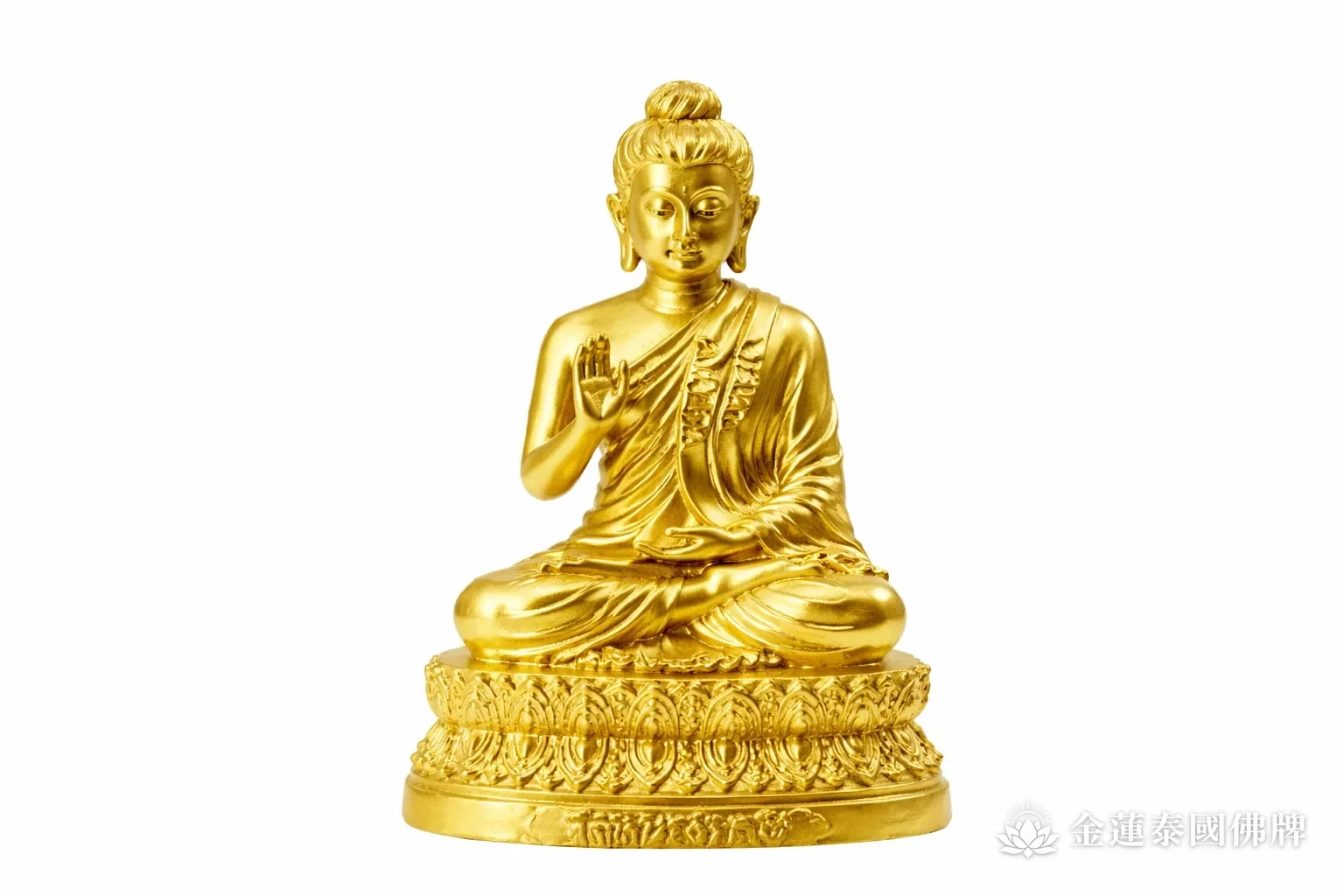
A Buddha altar statue blessed in BE 2559 by Luang Phor Jon (หลวงพ่อจอน วฑฺฒจิตฺโต) of Wat Bunyarit, Pak Chong district, Nakhon Ratchasima. Cast bronze, gold all over, about 14 cm tall, for an altar.
Details
| Monk | Luang Phor Jon (Luang Phor Jon Watthachitto, หลวงพ่อจอน วฑฺฒจิตฺโต) |
|---|---|
| Temple | Wat Bunyarit (วัดบุญฤทธิ์), Phaya Yen subdistrict, Pak Chong district, Nakhon Ratchasima |
| Name | Buddha altar statue |
| Year | BE 2559 (2016) |
| Material | Bronze |
| Size | About 14 cm tall |
| Type | Altar type |
| Benefits | Guarding the home, commanding spirits, warding off evil, blocking misfortune and protection |
| Price | US$94 |
More amulets from the same monk? See the Luang Phor Jon profile (2 amulets) ›
This Buddha
The Buddha sits cross-legged on a two-tier lotus base, a tall topknot on his head and his hair combed upward in strands, his expression gentle; right hand raised before his chest, palm outward, left hand flat in his lap. The robe falls across the left shoulder in layer upon layer of folds, finely engraved at the back. The rows of lotus petals are full and rounded, with a line of Thai giving the temple name on the front of the base. The whole statue is gold and stands out on an altar.
Luang Phor Jon
According to reports in the Thai papers Khaosod and Prachachat, Luang Phor Jon was born in 1942 (BE 2485) in Ban Bueng, Chon Buri, and ordained at the local Wat Bunyarit (Bueng Bon); he was a disciple of LP Thon (หลวงปู่โทน กันตสีโล) of Wat Khao Noi Khiriwan, Chon Buri, later became abbot of Wat Bunyarit in Pak Chong district, Nakhon Ratchasima, and was a well-known local monk; he passed away in BE 2565 aged 80. The seller says he also studied with a monk in Cambodia; the newspapers name him as LP Chanphum (หลวงพ่อจันภูมิ) of Battambang, who passed on old Khmer-style blessing arts. For his life, see the Luang Phor Jon profile.
Other altar statues are in the Bucha Statues section; for how to set up an altar, see Taboos and tips for worshipping deities and Buddhas. Every item in our shop comes with a permanent authenticity guarantee.
Frequently asked questions
What does this Buddha’s hand gesture mean?
The right hand raised with the palm outward is generally called the “fearlessness gesture” (abhaya mudra), a gesture of reassurance that takes away fear.
Where should a Buddha image go at home?
On the top level of the altar, with nothing else placed higher than it; see Taboos and tips for worshipping deities and Buddhas.
Is this from the monk’s lifetime?
Yes. This statue is from BE 2559, and the monk only passed away in 2565.
More Bucha Statues in our shop
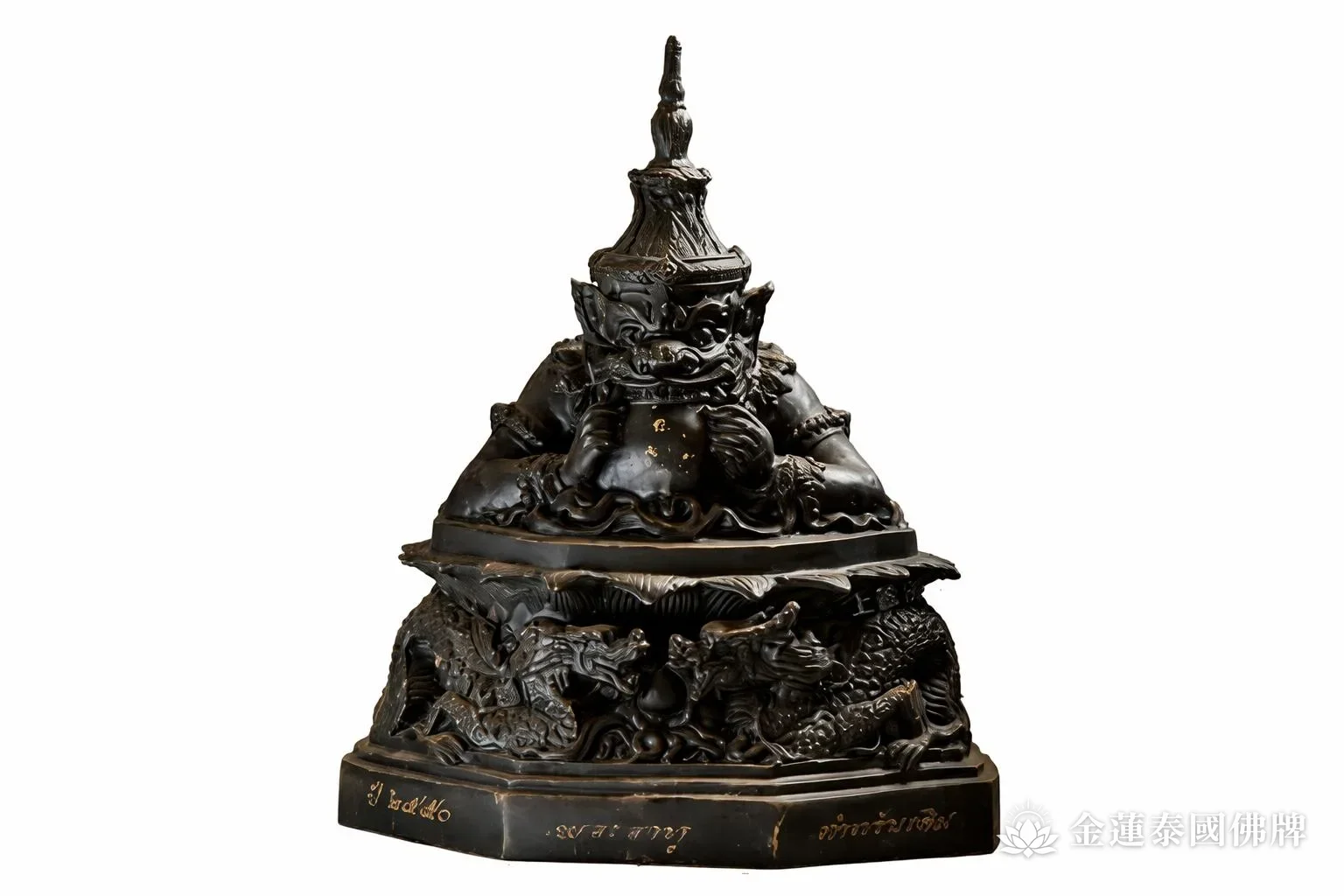 Wat Sisa Thong (Rahu Temple) BE 2555–2562 Rahu Altar Statue (Bronze, Coconut Shell Amulet in Base, Extra-large / Large / Medium / Small)US$75
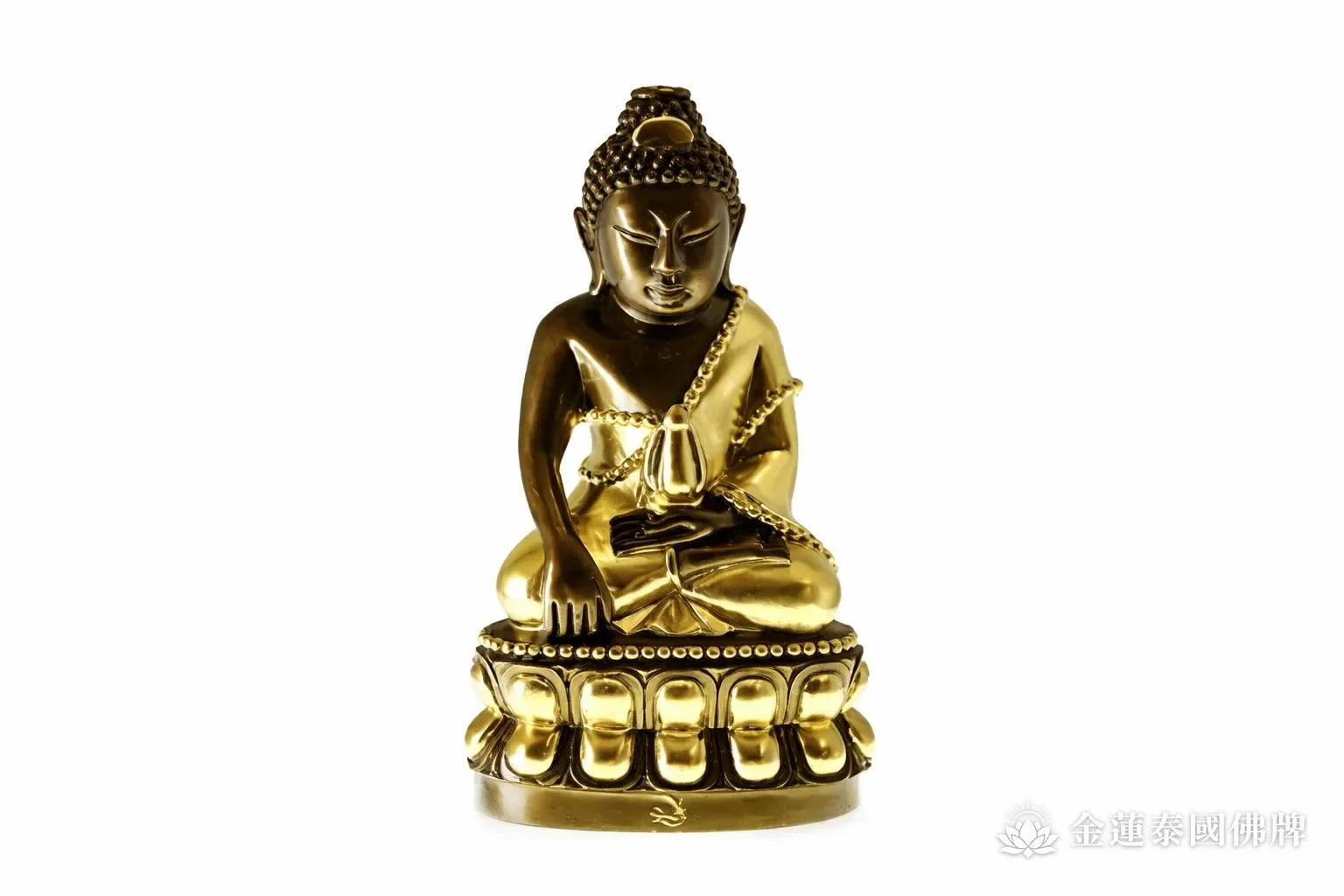 LP Mee (Wat Phon Thong) BE 2562 Medicine Buddha Altar Statue (Bronze, About 22 cm, Limited to 299)US$230
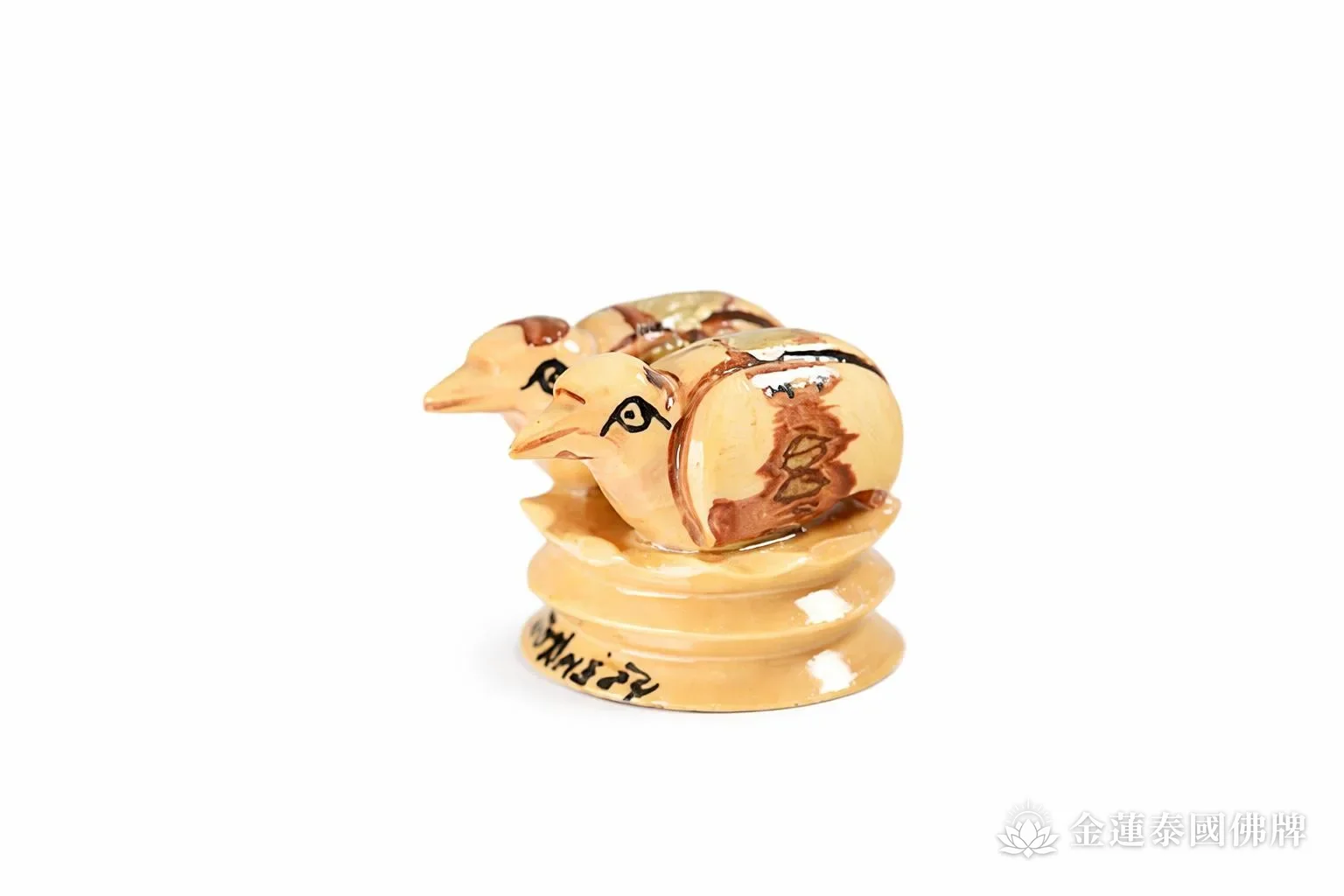 LP Phat (Wat Huai Duan) BE 2564 Goodwill Birds (Sacred Wood, About 4.5 cm)US$36