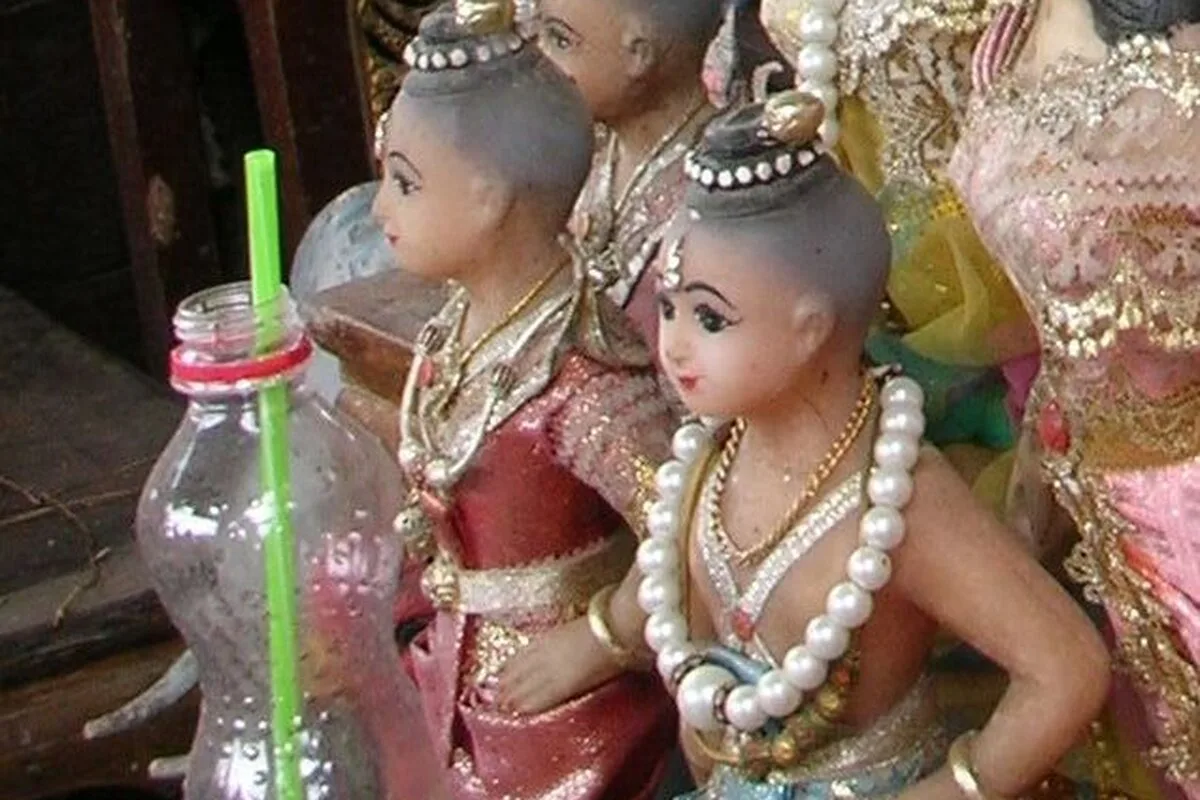
Kuman Thong (กุมารทอง) translates as “golden boy”, a belief found only in Thailand: you bring home a figure in the shape of a child and look after him as you would a child, and he guards the home and brings good luck. On Thai altars you often see a bottle of red soda standing next to a Kuman Thong figure. Where does this belief come from, and how are Kuman Thong made today?
From a classic sung tale
When Thais talk about Kuman Thong, they think of Khun Chang Khun Phaen (ขุนช้างขุนแผน). It is one of Thailand’s best-known classic sung tales, and the Thai magazine Silpa Watthanatham (Art and Culture) notes that it grew longer generation by generation in the hands of storytellers from the Ayutthaya period into the Bangkok period. It is literature, not history.
The hero, Khun Phaen, is a general skilled in magic. In the story he falls out with the father of his wife Bua Khli, and in the end Bua Khli dies at his hand too. Khun Phaen takes their unborn son and by magic turns the child’s spirit into a Kuman Thong, and from then on this golden boy goes with him, calling out warnings when he is in danger and scouting for news. The cloister murals at Wat Pa Lelai in Suphan Buri include a scene of Khun Phaen making his Kuman Thong.
The episode is very dark, but it explains the role Kuman Thong holds in Thai minds: a loyal child who protects his master.
Kuman Thong in our shop
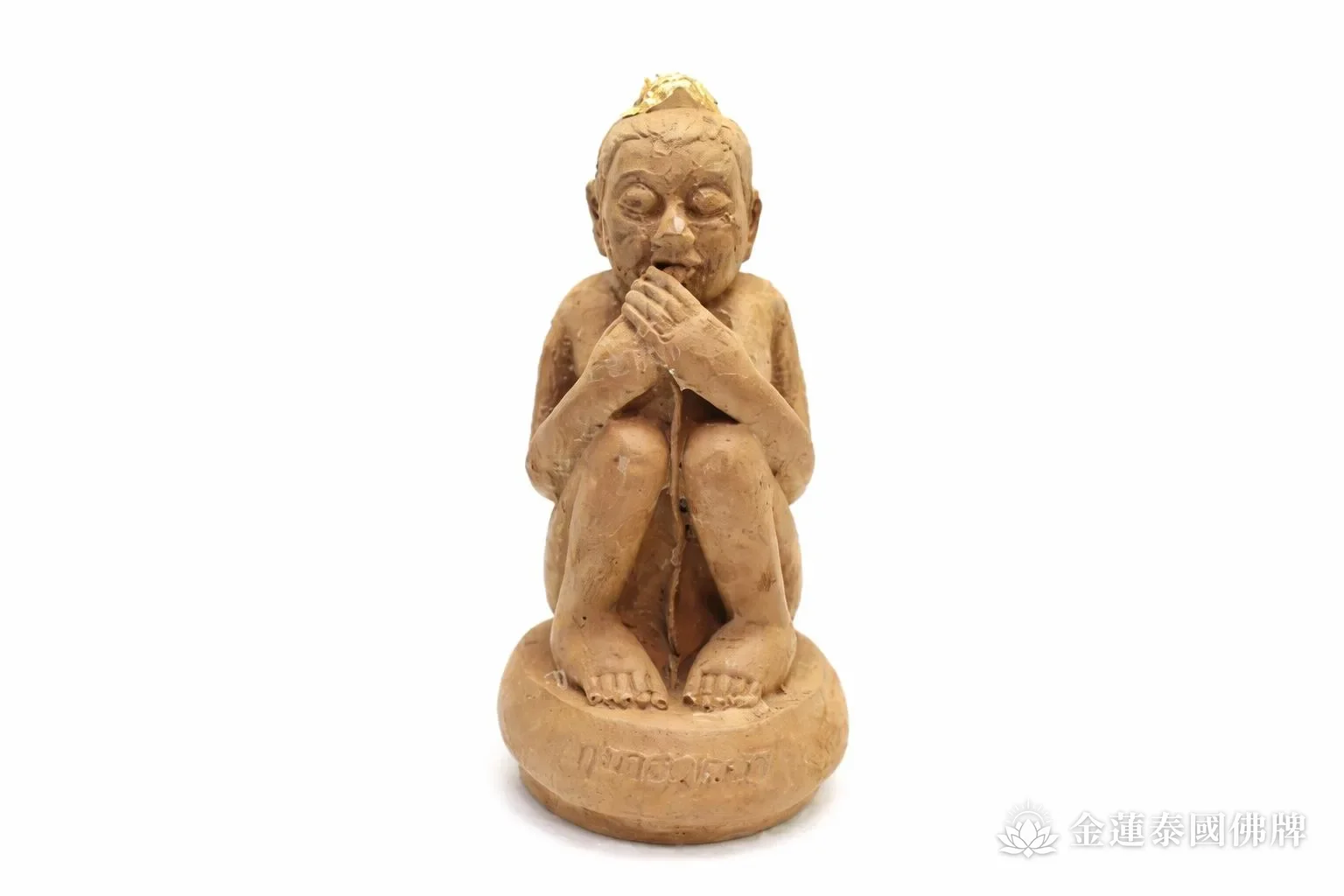 Wat Takong (LP Cheam's Temple) BE 2531 Nulok Kuman Thong Altar Statue (Ceramic and Stone, About 16 cm)US$178
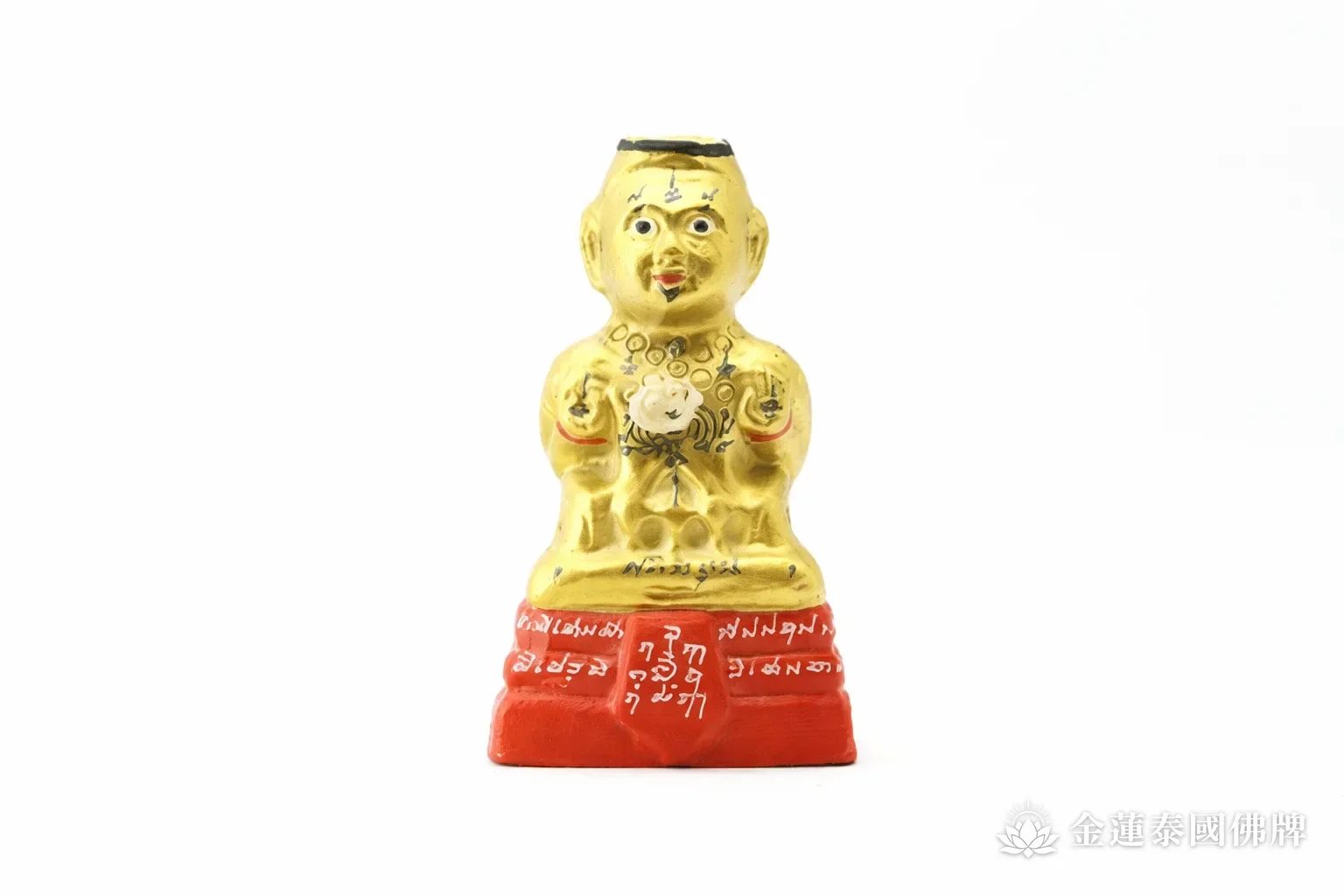 LP Yaem Wat Sam Ngam Kuman Thong Bucha Statues (2551 / 2555 / 2557 / 2558, Seven to Choose From, With Authentication Card)US$165
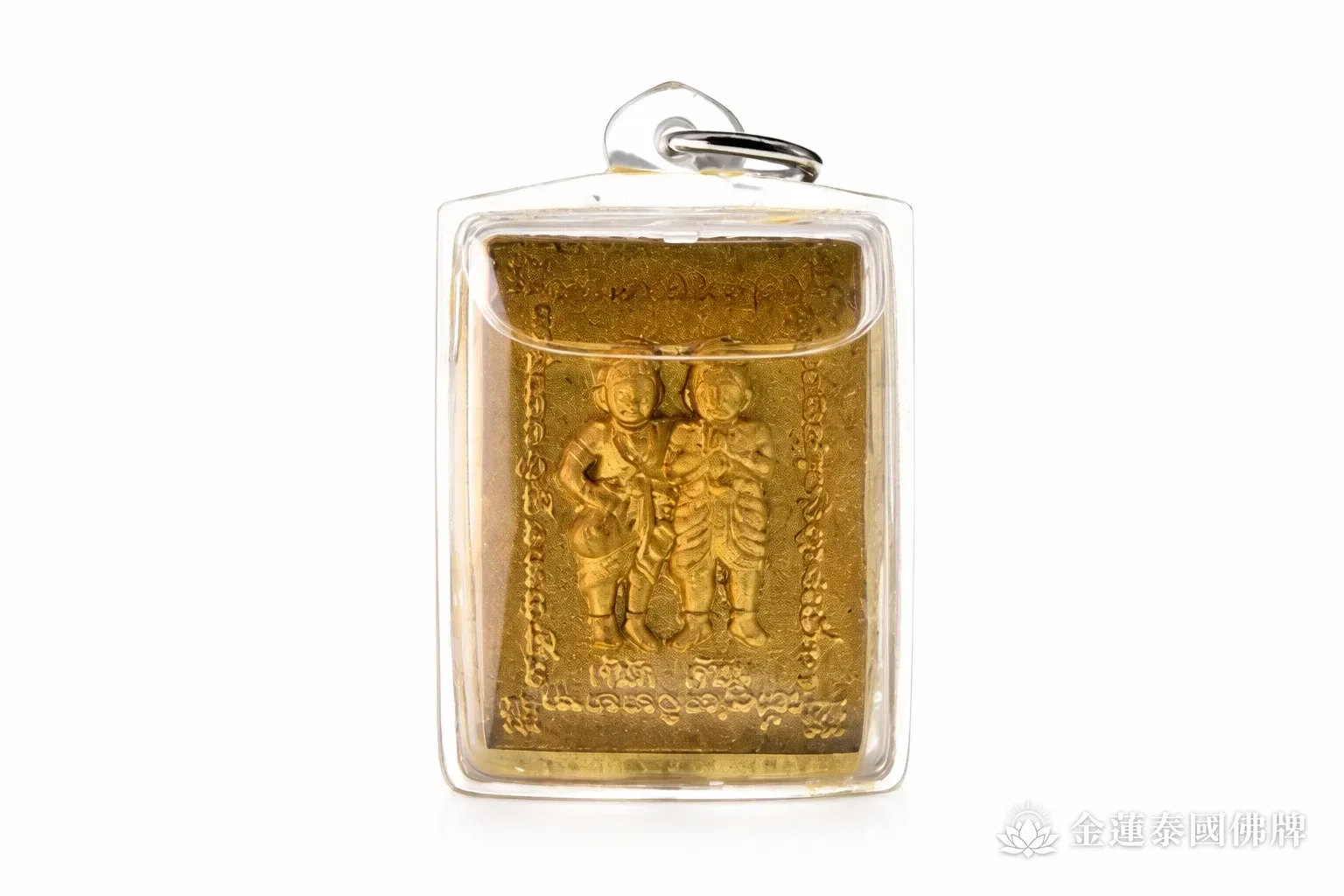 LP Nien BE 2554 Rak-Yom Twin Kuman Thong (Standard / Takrut Version, Waterproof Case)US$43
The old practice and Kuman Thong today
The Kuman Thong of old folk practice were bound up with foetuses and belonged to black magic. Mainstream Buddhism does not accept this kind of Kuman Thong. What Thais call a “mainstream” Kuman Thong is a figure made by a temple or a senior monk and blessed through the Dharma, which is something else entirely.
The best known today come from the lineage of LP Tae of Wat Sam Ngam in Nakhon Pathom. According to AFP, the temple makes its Kuman Thong from clay mixed with bone ash; they used to be shaped entirely by hand and are now made in metal moulds. Once made, monks write scripture on the base, dab sacred oil on the face and chant over them before handing them to devotees to take home. Thairath has also reported that the temple once held a Chinese-style banquet for LP Tae’s Kuman Thong, which shows how far devotees treat them as real children.
Why red soda?
Since Kuman Thong is treated as a child, the offerings are naturally things children like: sweets, snacks, toys, and red soda, which Thais set in front of the figure with a straw in it. The bottles in the photo above are just that. Many people also silently invite their Kuman Thong to eat with them at mealtimes. How to keep one and what to watch out for is covered in the Kuman Thong section of dos and don’ts for keeping a shrine.
Before taking on a Kuman Thong, the most important thing is to be sure you can look after him for the long term. If one day you really can no longer keep him, return him to a temple rather than throwing him away. For the difference between mainstream and spirit amulets, see mainstream vs spirit amulets.
Our shop only offers Kuman Thong blessed by temples and senior monks, all in the Kuman Thong section, for example LP Hong’s BE 2554 Kuman Thong. LP Tae’s life is on the LP Tae master page.
FAQ
Is Kuman Thong a spirit amulet?
It depends how it was made. A Kuman Thong blessed through the Dharma by a temple or senior monk is mainstream; only those made with spirit materials and spirit methods are spirit amulets. Ask where it comes from before you take one.
We have children at home. Can we keep a Kuman Thong?
Yes. In Thailand Kuman Thong is regarded as one of the family’s children; give him a fixed, clean spot and look after him well.
Does a Kuman Thong need offerings every day?
For a figure, ideally change the water once a day and offer a little snack; for an amulet worn on the body, simply invite him to eat with you in your mind at mealtimes.