LP Kalong BE 2551 Ruesi Powder Amulet Pu Ruesi Sing Saming Phrai (Mineral Powder, Waterproof Case)
A Ruesi powder amulet "Pu Rues…
LP Kalong (Luang Pu Kalong Khiao Kaeo) of Wat Khao Laem, Sa Kaeo, "the monk of the precious tooth", known for meditation, sak yant and blessing amulets. Born 1919, passed away September 2009. His life, teachers and amulets.
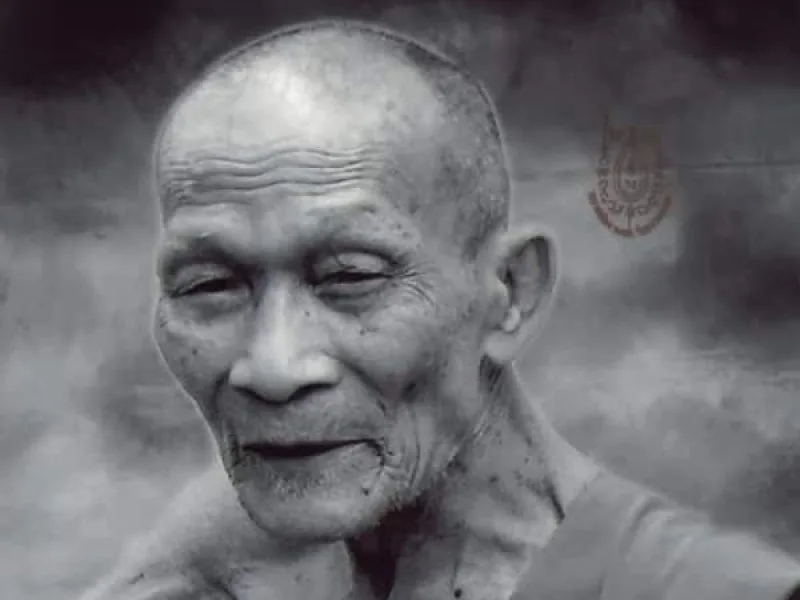
LP Kalong was born with an unusual, crystal-clear tooth in the middle of his upper jaw, which the Thai faithful called his "crystal tooth" (Khiao Kaeo), so everyone called him "the monk of the precious tooth". He was the late abbot of Wat Khao Laem (วัดเขาแหลม) in Wang Sombun district, Sa Kaeo, eastern Thailand, with the monastic name Techawanno. He studied with several famous monks, was well known for meditation, sak yant and blessing amulets, and took part in the great 25th Buddhist Century ceremony of BE 2500. He was born in January 1919 and passed away in Bangkok in mid-September 2009, in his nineties.
| Thai name | หลวงปู่กาหลง เตชวัณโณ, called หลวงปู่กาหลง เขี้ยวแก้ว by the faithful |
|---|---|
| Monastic name | Techawanno, meaning "one of radiant majesty" |
| Temple | Wat Khao Laem, Wang Sombun district, Sa Kaeo, Thailand |
| Born | 10 January BE 2461 (old reckoning, i.e. 1919), family name Nongnut |
| Ordained | At 20 at Wat Nabun, Pathum Thani, under LP Chang of Wat Khian Khet |
| Passed away | September BE 2552 (2009), Paolo Memorial Hospital, Bangkok; for the date, see below |
| Teachers | LP Niam, LP Sueng, LP Thongsuk, LP Tha, LP Chong, Phra Ratchamongkhonmuni (Son) of Wat Suthat, LP Cheam and others |
| Best-known amulets | Monk image amulets, LP Thuat powder amulets, Kotchasi, the BE 2547 Hanuman-riding-lion coin, Narai-on-Garuda yant cloth, Phra Pidta |
Thais see such a tooth as a very rare auspicious sign, which older people believe only those of great merit have, and often compare it with the monkey god Hanuman of the epic. According to Khaosod's amulet column, when blessing amulets he would put his hand in his mouth to touch the precious tooth, then press and rub his finger on the amulet, and the faithful believe this strengthened it.
His family name was Nongnut. Khaosod writes that he was from Phetchaburi and his family later moved to Pathum Thani; Thai Wikipedia says he was from Khlong 7 in Pathum Thani. He was the eldest of four children.
The faithful tell a story from before he was born. A fisherman in the village called Bang went fishing one night and saw a ball of light drift to the family's door and become a hermit, leading a child into the house. Bang joined his palms then and there and vowed that if the family had a boy, he would never again kill or fish. A boy was indeed born and named Kalong, and Bang really did put down his nets. It's said that only on the day the monk ordained did Bang tell the story he'd kept for twenty years, and he looked after the monk from then on.
From childhood he liked to pay respect to the Buddha and meditate, and at twenty he ordained at Wat Nabun in Pathum Thani. His uncle, LP Niam, was at Wat Nabun and taught him popularity, protection and exorcism; LP Sueng of the same temple, a disciple in the line of LP Suk of Wat Pak Khlong Makham Thao, he revered greatly.
He then sought teachers everywhere: LP Tha of Wat Phaniang Taek in Nakhon Pathom, LP Chong of Wat Na Tang Nok in Ayutthaya, LP Thongsuk of Wat Tanod Luang in Phetchaburi (also the teacher of LP Unn), and Phra Ratchamongkhonmuni (Son) of Bangkok's Wat Suthat, heir to Supreme Patriarch Phae's casting tradition. Collectors also say LP Cheam of Wat Takong in Nakhon Pathom taught him protective practices.
When the government held the great 25th Buddhist Century ceremony in BE 2500, blessing amulets at Sanam Luang and in the main hall of Wat Suthat, he was one of the monks present; that ceremony is described in Amulets of BE 2500. After that he was often invited to major blessing ceremonies. Thai Wikipedia records that once, after blessing alongside LP Toh of Wat Pradu Chimphli in Bangkok, LP Toh pointed at him and asked those nearby: "Which temple is he from? His mind is so powerful; I've never seen anything like it."
The master he revered most was Somdej Toh, and the core chant he used when blessing amulets was the Chinabanchorn handed down by Somdej Toh.
He was known for sak yant from a young age, mostly Hanuman in various poses. He also carried on LP Suk's line of "golden-face magic" (Na Na Thong), blessing gold leaf for charm and protection. Thai Wikipedia quotes him as saying he had been giving sak yant and making protective charms since BE 2485, never advertising, all by word of mouth.
He lived very simply and kept strict discipline; Khaosod mentions that he is said to have bathed only once a year. Whatever money he had, he mostly gave to temples in need.
In BE 2505 he went to help build Wat Nam Sap in the Pattana Nikhom area of Lopburi, and afterwards moved between several temples, building an ordination hall at each before moving on to the next. He is said to have built eight in all. Around BE 2513 to 2515 (sources differ) he went to Sa Kaeo as abbot of Wat Khao Laem, where he stayed into old age.
According to Khaosod, he made over ten batches of amulets between BE 2500 and 2551, among them a monk coin of BE 2541 marking Wang Sombun's upgrade to a minor district, 20,000 in all, very popular today. In his later years he often blessed new amulets in retreat at the temple for a long time before sending them to Wat Suthat for consecration, and many batches numbered 4,999 with anti-counterfeit marks and individual numbers. Thai Wikipedia also records his words: "What I make with my own hands and heart will one day be worth more than gold and harder to find than diamonds."
In May BE 2552 he was admitted to Paolo Memorial Hospital in Bangkok with chest tightness and a cough, and was later found to have throat cancer. Doctors advised him to take on fewer duties and rest more, but he kept running the temple, often travelling between Bangkok and Sa Kaeo. On 11 September he suddenly became very weak; his disciples rushed him to hospital, his condition kept worsening, and he passed away there.
Sources give different dates: Khaosod records 1:09 a.m. on 13 September 2552, the date commemorated each year; Thai Wikipedia says 11 September, and some websites say the 12th. For his age, Khaosod gives 92 by Thai reckoning with 72 years as a monk; Thai Wikipedia says 91. Thai Wikipedia also records that his body was returned to the temple for seven nights of chanting, kept for a hundred days, and then placed in a glass coffin for the faithful to pay respect.
The BE 2550 LP Thuat "Yiap Nam Thale Chuet" black sacred soil amulet was blessed in over three months of Rains Retreat seclusion and then consecrated at Wat Suthat, for protection and safety. The BE 2549 roaring Kotchasi (ancient war gong bronze) was cast from old bronze ritual objects such as ancient Khmer war gongs and bronze drums, with three ceremonies at Wat Suthat, for authority and reputation. The BE 2551 Wua Thanu bull "Thong Khanong Rit" is a wearable bronze bull consecrated twice at Wat Suthat, for guarding the home and warding off bad influences. The BE 2549 first-batch four-armed Hanuman (large Nawaloha mould) draws on the meaning of his crystal tooth, for favour from superiors and protection from danger. All four are covered by our lifetime authenticity guarantee.
Because he was born with an unusual crystal-clear tooth in the middle of his upper jaw, called Khiao Kaeo (crystal tooth) in Thai. The faithful saw it as an auspicious sign, and he also used it when blessing amulets.
Both studied with LP Thongsuk of Wat Tanod Luang in Phetchaburi, so they were disciples of the same teacher.
In mid-September 2009, in a Bangkok hospital. Khaosod records 13 September; other sources say the 11th or 12th. The year, BE 2552, is certain.
Only batches from his lifetime. Our roaring Kotchasi (2549), LP Thuat powder amulet (2550) and Wua Thanu bull (2551) were all made late in his life.