LP Poon, LP Ruay and LP Perm BE 2549 Ceremony Phra Pidta "Ruay Perm Poon" (Waterproof Case)
Ruay, Perm, Poon: put the name…
LP Poon (Phra Mongkhon Wutthachan) of Wat Ban Paen, Ayutthaya, one of the three great modern monks of Ayutthaya, best known for the golden lotus takrut. Born 1932, passed away January 2019. His life, teachers and amulets.
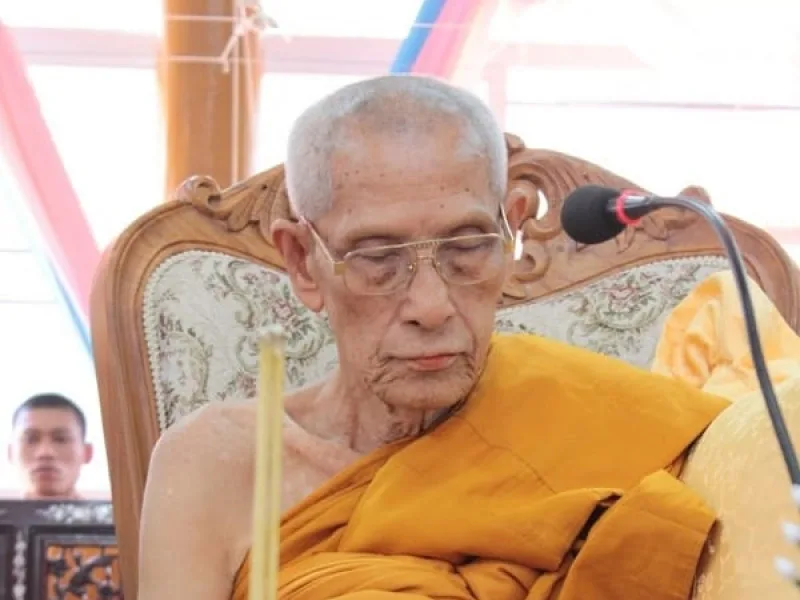
In Ayutthaya, collectors name LP Poon together with LP Ruay and LP Phong as the three great monks of recent times. He was the late abbot of Wat Ban Paen in Sena district, served as Sena's district ecclesiastical head, and in BE 2559 received the royal title Phra Mongkhon Wutthachan. His best-known work is the "golden lotus" takrut, which was also his main source of funds for restoring the temple. He was born on 16 November BE 2475 (1932) and passed away on 17 January BE 2562 (2019), aged 86, after 66 years as a monk.
| Thai name | หลวงพ่อพูน ฐิตสีโล (พระมงคลวุฒาจารย์) |
|---|---|
| Lay name | Thongpoon Sanyasophi (ทองพูน สัญญะโสภี) |
| Monastic name | Thitsilo, meaning "one firm in the precepts" |
| Temple | Wat Ban Paen, Sena district, Ayutthaya, Thailand |
| Born | Wednesday 16 November BE 2475 (1932), Ban Sam Ko, Sam Ko subdistrict, Sena district |
| Ordained | Novice at seventeen; higher ordination at Wat Ban Paen on 31 May BE 2495 |
| Posts | Assistant abbot 2499, deputy abbot 2513, abbot 2527, Sena district ecclesiastical head 2545, adviser to the district head 2555 |
| Monastic titles | Phra Khru Suwan Silathikhun in 2549; Phra Mongkhon Wutthachan on 12 August 2559 |
| Passed away | 8:29 a.m., 17 January BE 2562, Mission Hospital, Bangkok |
| Teachers | LP Wat of Wat Ban Paen, LP Mee, lay master Ajarn Lop, LP Sanan (Wat Sao Thong Thong) |
| Best-known amulets | Golden lotus takrut, takrut, Phra Pidta, Phra Sangkajai |
According to the biography Khaosod published on the day he died, he was born Thongpoon Sanyasophi in Ban Sam Ko, Sena district, and as a boy studied to fourth grade at the Si Rattananukun school run by Wat Ban Paen. He was interested in magic even before ordaining, became a novice at Wat Ban Paen at seventeen, and passed the elementary Dhamma exam the same year. Collectors also say that at fourteen he spent a year wandering in the North with an elder monk and learned astrology, and the Thai press mentions he knew a great deal about the stars.
After three years as a novice, on 31 May BE 2495, at twenty, he received higher ordination. His preceptor was LP Wat (Phra Khru Pariyat Khunupakan), abbot of Wat Ban Paen; the ceremony teacher was LP Mee of Wat Manwichai, and LP Sangwan of Wat Kradong Thong was the instructor; his monastic name was Thitsilo. He went on to pass the intermediate and advanced Dhamma exams.
His practices came mainly from a few sources: his ordination ceremony teacher LP Mee, who taught him chants including the Chinabanchorn; his temple's abbot, LP Wat; and LP Wat's lay brother, Ajarn Lop Ketbut. Ajarn Lop passed on the "Tri Ni Singhe" yant, which became the yant LP Poon engraved most often on yant sheets and rings.
In BE 2499 he heard that LP Sanan of Wat Sao Thong Thong in Pa Mok district, Ang Thong, a disciple of LP Khiao, was very skilled at making takrut, and went specially to study with him; he learned to make takrut, and that's where the golden lotus takrut comes from. He was also very good at making holy water, and other temples often invited him to lead or join their blessing ceremonies.
LP Wat thought highly of this disciple. In BE 2499, only four years after ordaining, LP Poon was appointed the temple's resident Patimokkha reciter and assistant abbot; in 2513 he became deputy abbot. On 22 July BE 2527, LP Wat, then 85, stepped down to become honorary abbot, and LP Poon formally became abbot of Wat Ban Paen.
His first task as abbot was to build a row of eight monks' cells. To raise the money, he offered the faithful the golden lotus takrut he had learned to make from LP Sanan; the money came in, the cells were built, eight more were added, and over time he restored the temple's other buildings too. That's how Wat Ban Paen flourished step by step.
His posts rose steadily: Sena district ecclesiastical head in BE 2545, then adviser to the district head in 2555. He received the title Phra Khru Suwan Silathikhun in 2549, and on 12 August 2559, at the celebrations of Queen Sirikit's seventh-cycle birthday, was raised to the royally conferred title Phra Mongkhon Wutthachan. He also had many followers outside Thailand.
The golden lotus takrut (Takrud Dok Mai Thong) is his best-known work; collectors say it was originally called "gold takrut" and was renamed because the name was sensitive. Thai faithful believe it covers attraction, popularity, authority, protection from danger and business. His takrut keep to the old Thai method, the yant sheet rolled and bound with sacred thread, for safety, avoiding danger and authority. The Thai press also notes the popularity of his Phra Sangkajai.
He also blessed a batch of Phra Pidta together with LP Ruay and LP Phong; their three names together mean "rich, increase, multiply", the famous "Ruay Perm Poon".
At 8:29 a.m. on Thursday 17 January BE 2562, he passed away of old age at Mission Hospital in Bangkok, aged 86, after 66 years as a monk. When the news spread, many disciples paid tribute online, and the temple committee decided to bring his body back to Wat Ban Paen the next day for funeral rites.
We currently have the BE 2557 animal hair takrut (clear tube, steel caps), for safety, protection from danger and authority, and the BE 2549 ceremony Phra Pidta "Ruay Perm Poon", for wealth and popularity. Both carry our lifetime authenticity guarantee, with no time limit.
It joins the names of LP Ruay, LP Phong (Perm) and LP Poon, meaning in Thai rich, increase and multiply, so it's mostly worn for wealth and popularity.
When LP Poon received higher ordination in 2495, LP Mee was his ceremony teacher, and later also taught him chants; they were teacher and disciple.
A common Thai protective yant, which LP Poon learned from the lay master Ajarn Lop and often engraved on yant sheets and rings. You'll often see it on his takrut and rings.
Yes, but only batches from his lifetime; there have been no new ones since 2562. Our Ruay Perm Poon Phra Pidta is from 2549 and the animal hair takrut from 2557.