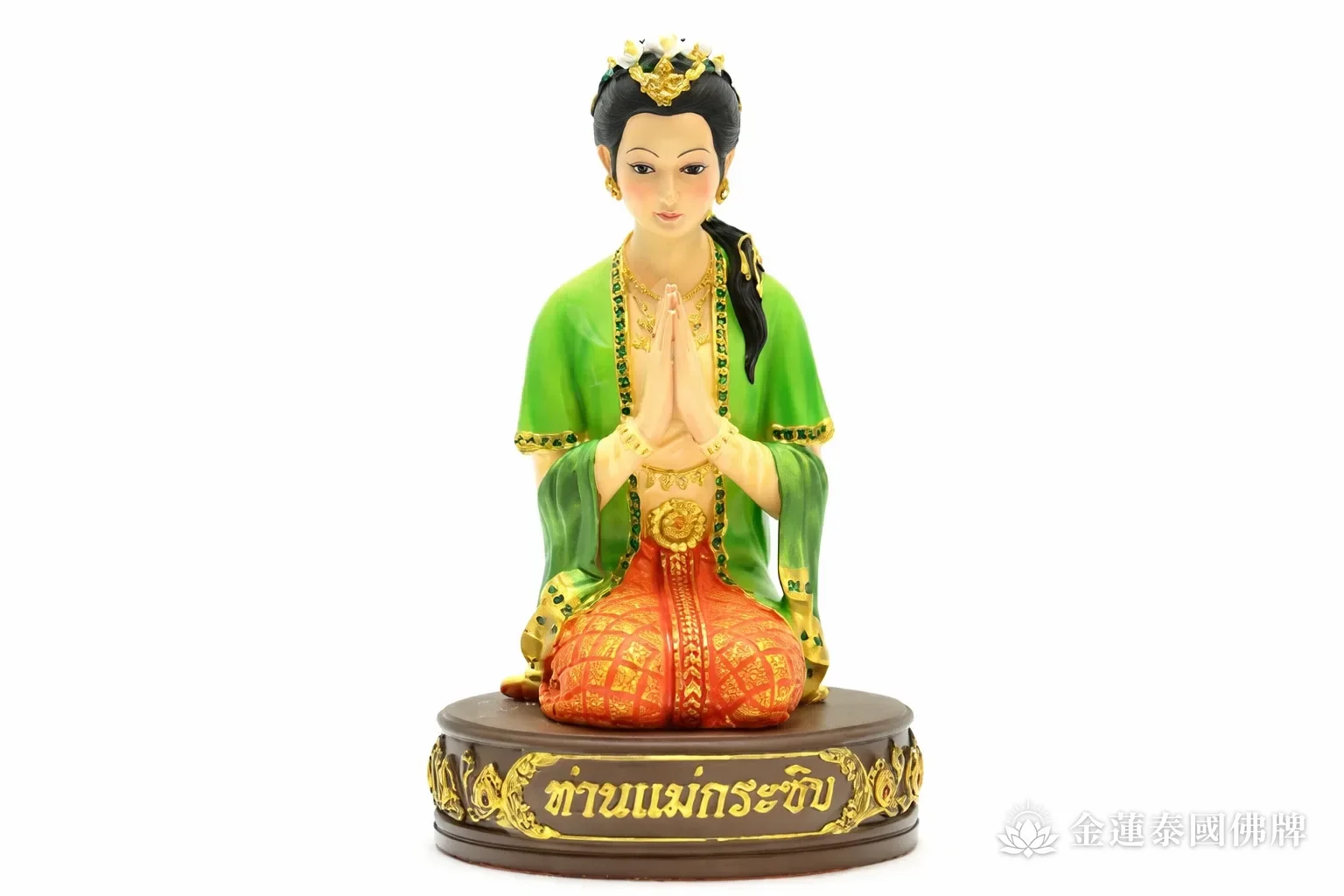
Bucha statues of the wishing goddess (Chao Mae Krasip, เจ้าแม่กระซิบ) made from BE 2556 by Kruba Ariyachat (ครูบาอริยชาติ) of Wat Saeng Kaew Phothiyan, Chiang Rai, northern Thailand. The goddess kneels with palms together, in large, medium and small sizes and different colours, for worship at home or in a shop.
Details
| Monk | Kruba Ariyachat (ครูบาอริยชาติ) |
|---|---|
| Temple | Wat Saeng Kaew Phothiyan (วัดแสงแก้วโพธิญาณ), Chiang Rai |
| Image | Wishing goddess (Chao Mae Krasip), also called the whispering goddess |
| Year | From BE 2556 |
| Material | Ceramic, coins, mixed resin ceramic |
| Size | Large about 23 cm / medium about 14 cm / small about 8 cm |
| Type | Bucha statue |
| Benefits | Helping business, helping career, wishes fulfilled, adding good fortune |
| Versions and price | Large (green or pink) US$152 / medium (silver and gold) US$101 / small (pink or silver and gold) US$49 |
More amulets from the same monk? See the Kruba Ariyachat profile (3 amulets) ›
This goddess
The goddess’s long hair is braided down behind her shoulder, decorated with white or pink flowers and gold ornaments; she kneels on a round base with palms together. She wears a wide-sleeved jacket over a gold-embroidered tube skirt. The front of the base reads in gold “ท่านแม่กระซิบ” (the wishing goddess), and the back gives the temple’s name “วัดแสงแก้วโพธิญาณ” and address, ringed by gold lotus patterns set with small red, blue and green stones.
The large one is about 23 cm, in green jacket with orange skirt or pink jacket with purple skirt, with the finest painted features and patterns, and a coin set into the base. The medium one is about 14 cm, with a silver jacket, gold shawl and copper-coloured skirt, the base carved as finely as the large. The small one is about 8 cm, in pink or silver and gold, with simpler lines, suited to a till or a car.
Who is the wishing goddess?
According to the seller, Chao Mae Krasip means “the whispering goddess”, of similar standing to Nang Kwak but working differently: she gives those who worship her hints and inspiration in their ear, leading them to good opportunities and to ways of earning a living and rising, and warns them away from bad things. The seller says Wat Saeng Kaew Phothiyan was the first temple in Thailand to make this image for the faithful to worship. We list this as the seller writes it.
For Kruba Ariyachat’s life, see the Kruba Ariyachat profile; we also have his BE 2558 peacock Phra Pidta bucha statue. Other bucha statues are in the Bucha Statues section; for the basics of worship, see the Altar and worship guide. Every item in our shop comes with a permanent authenticity guarantee.
Frequently asked questions
How should the wishing goddess be worshipped?
According to the seller: change her clean water daily; once a week or on Buddhist holy days, offer milk, popcorn, fresh flowers, coconut or other fruit; light 9 or 16 incense sticks and sincerely say your wish. Place her lower than the Buddha, facing out of the house or shop.
How does the wishing goddess differ from Nang Kwak?
Nang Kwak draws customers and business; the wishing goddess gives inspiration and guidance, helping people find opportunities. The two can be worshipped together; for Nang Kwak, see LP Kuay BE 2521 Nang Kwak.
How do I choose between large, medium and small?
By where she’ll go: for an altar or a shop’s main spot, choose large or medium; for a till, desk or car, choose small. All three sizes are blessed by the same monk.
More Kruba Ariyachat amulets in our shop
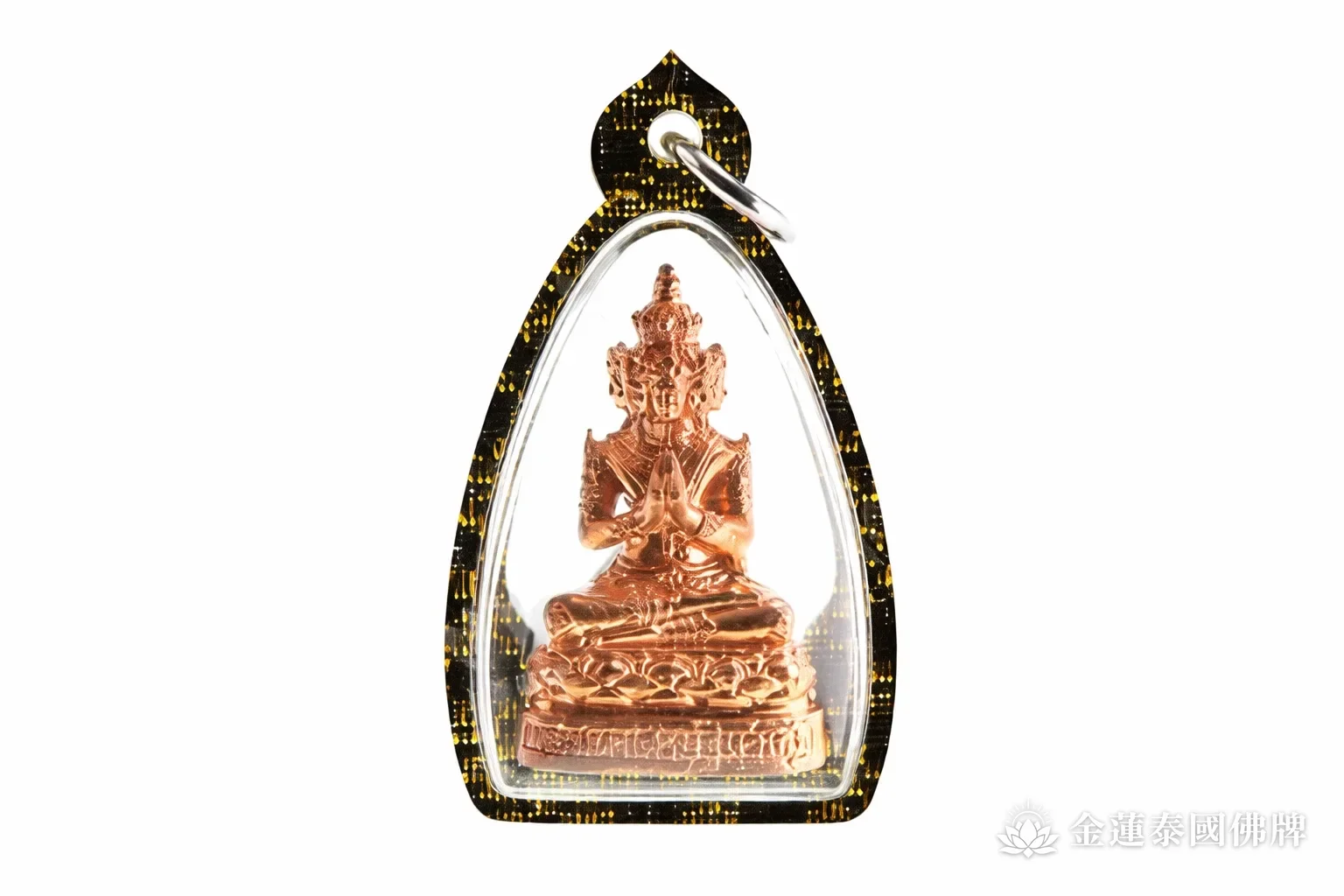 Kruba Ariyachat BE 2553 Ceremony Nine-faced Buddha of Wealth Small Standing Figure (Copper, Bell Bead, Individually Numbered, Waterproof Case)US$68
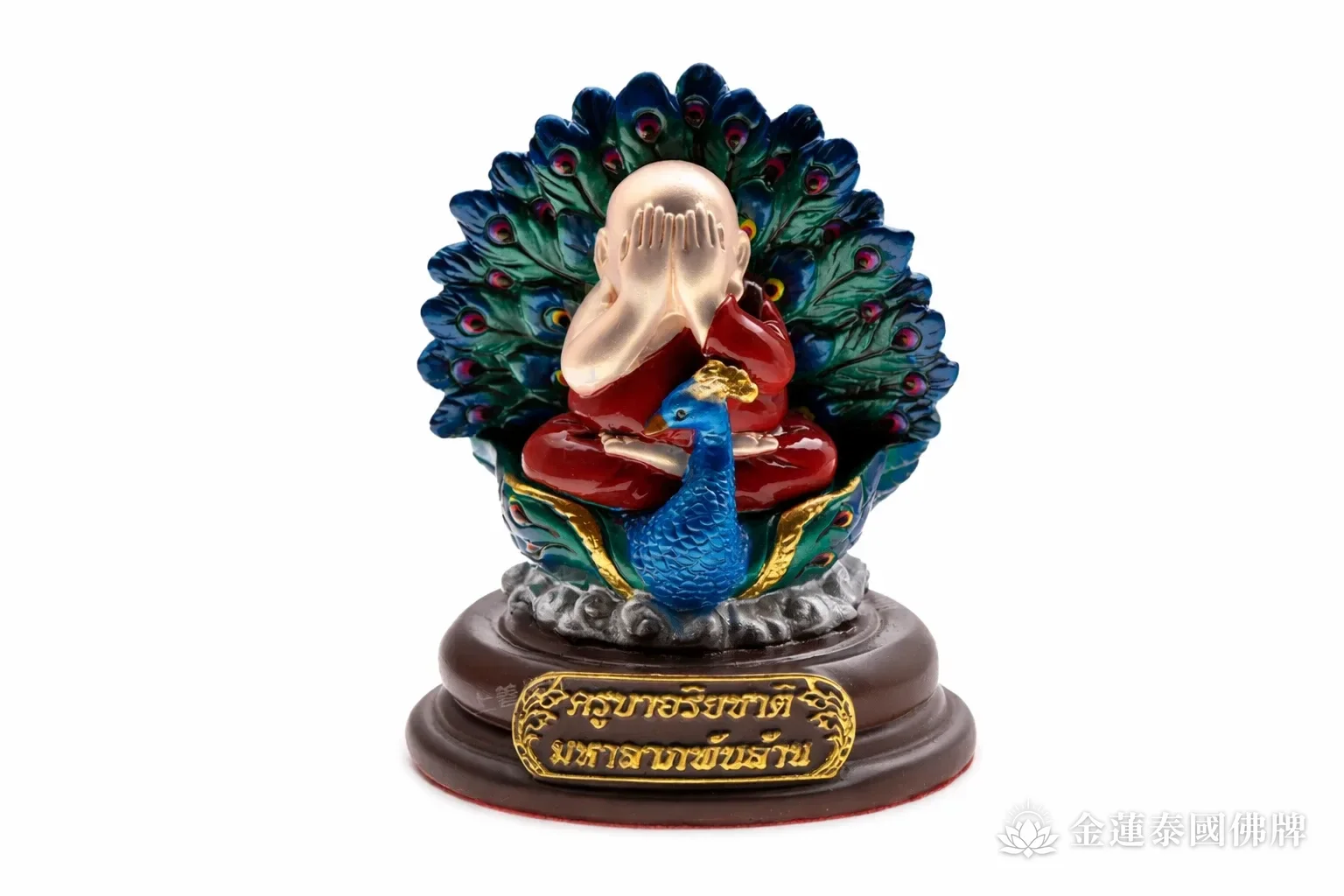 Kruba Ariyachat BE 2558 Peacock Phra Pidta Bucha Statue "Maha Lap Phan Lan" (Blue-green or Pink)US$62