
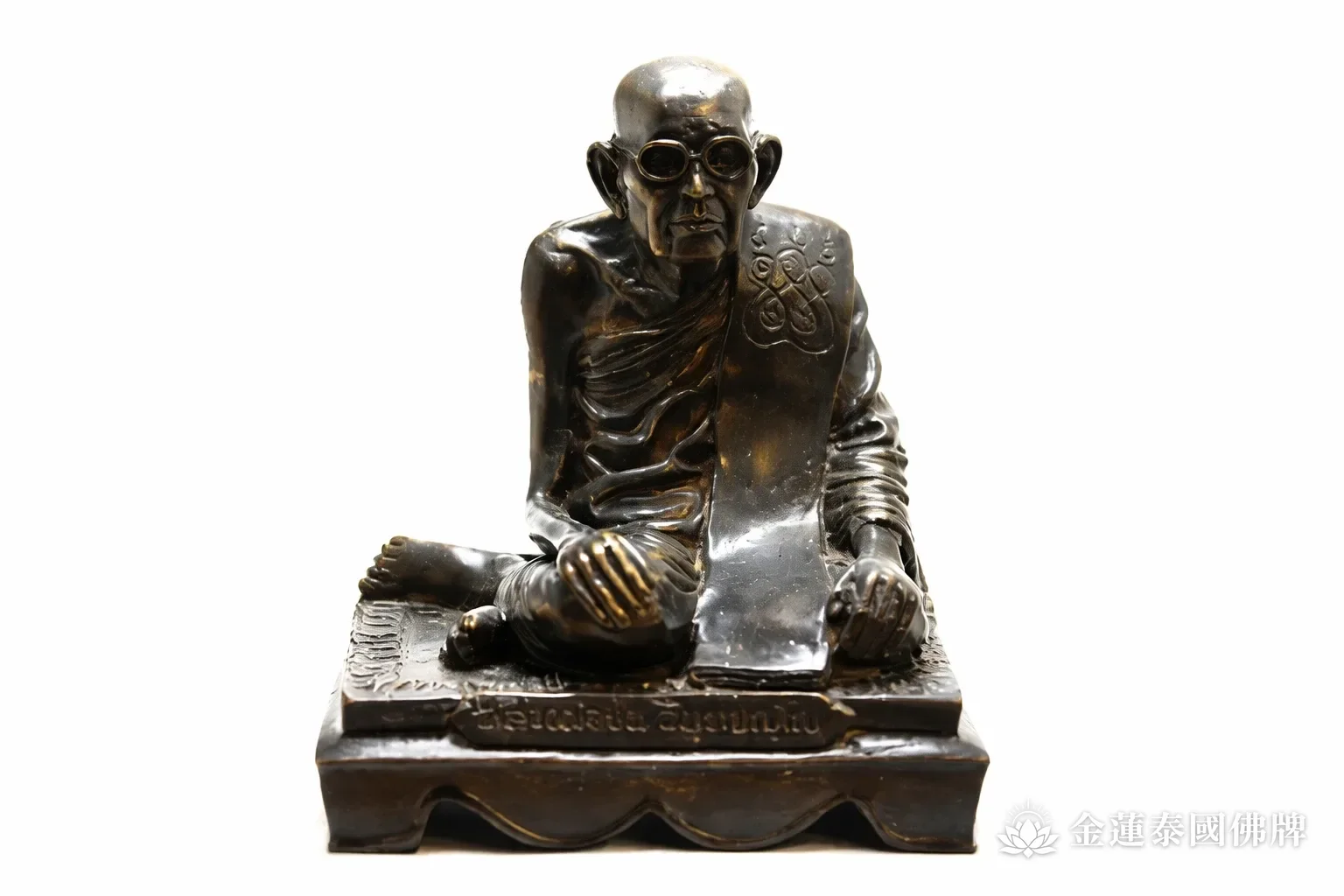
A portrait bucha statue of LP Chuen (Luang Phor Chuen, หลวงพ่อชื่น) of Wat Nai Prab (วัดในปราบ), issued between BE 2554 and 2555. Cast in copper, about 15 cm tall, with nothing sealed in the base, for a home altar.
Amulet details
| Monk | LP Chuen (Luang Phor Chuen, หลวงพ่อชื่น) |
|---|---|
| Temple | Wat Nai Prab (วัดในปราบ, Wat Charoen Pracha Tham), Khian Sa district, Surat Thani |
| Name | Portrait bucha statue |
| Year | BE 2554–2555 (2011–2012) |
| Image | The monk in round glasses, right knee raised and left leg folded, seated on a square base, robe over the left shoulder with a yantra on the shoulder; a name plate with his title on the front of the base, the temple name on the back |
| Material | Copper, nothing sealed in the base |
| Size | About 15 cm tall |
| Benefits | Wealth luck, protection from misfortune and danger, keeping away troublemakers and every source of harm |
| Price | US$114 |
Want to know the monk who blessed this piece? Read the LP Chuen profile ›
This statue
Unlike most seated monk statues, this one isn’t in full meditation posture: one knee is raised and the other leg folded, the left hand resting on the knee, as if sitting and chatting with someone. He wears round glasses, and the lines on his forehead, his thin fingers and his toes are all finely cast. The copper is dark brown, with a golden sheen on raised parts such as the bridge of the nose, the knees and the folds of the robe. From the side, he leans slightly forward, the robe falling in layers down his back onto the base; the base has two tiers, the lower edge wavy, with an inscribed plate on front and back.
About LP Chuen
According to the seller’s information, he began issuing his own amulets in BE 2548, including portrait coins, lockets and takrut, which the faithful mostly wear for protection and popularity; for monk amulets to wear, see the Monk Amulets section. He was the founding abbot of Wat Nai Prab in Surat Thani, ordained only at 55, famous for his plough-blade amulets, and passed away in 2015; this statue was issued in his lifetime. Thailand’s Komchadluek also says his first batch of amulets was in 2548. His life is in the LP Chuen profile. Please note: he and LP Chuan of Wat Khao Kaew in Ang Thong, also in our shop, are two different monks whose names happen to be written the same way in Chinese.
For placing and everyday worship of bucha statues, see How to worship amulets; other monk and Buddha statues are in the Bucha Statues section.
Frequently asked questions
What does “nothing sealed in the base” mean?
Some bucha statues have sacred powder, yantra cloth or other sacred materials sealed in the base; this one doesn’t, it’s a plain copper casting, and the seller says so plainly.
Where can I put this statue?
On an altar or a clean, fairly high cabinet, facing the door or the living room; don’t put it at the foot of a bed or beside a toilet. For other placement taboos, see Amulet taboos and FAQ.
Can it go with other Buddha statues?
Yes. Buddha images generally go highest, with the monk’s statue beside them or a little lower.
More Bucha Statues in our shop
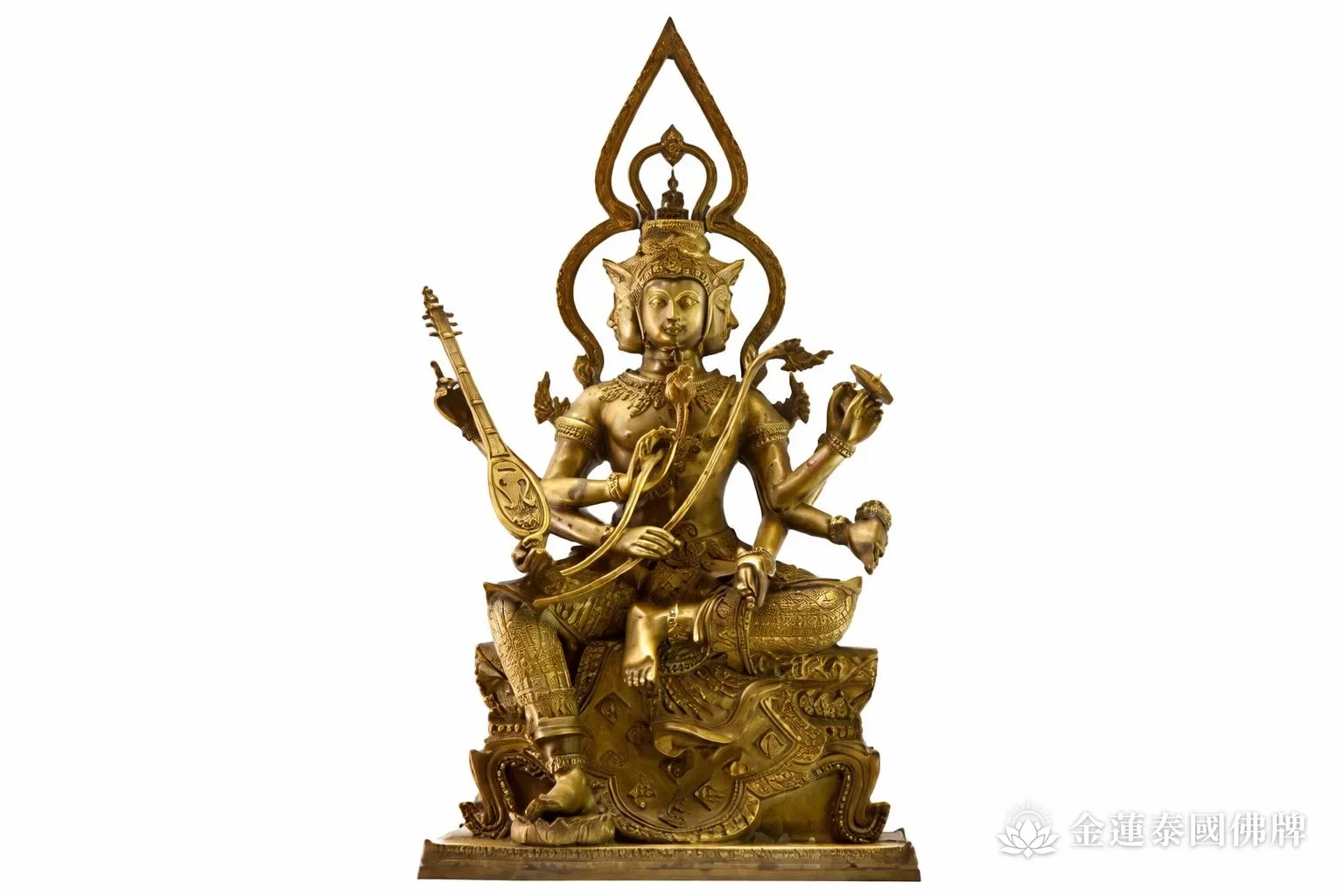 Luang Phor Jon of Wat Bunyarit BE 2554 Four-Faced Brahma Bucha Statue (Bronze, About 43 cm, Limited to 168)US$785
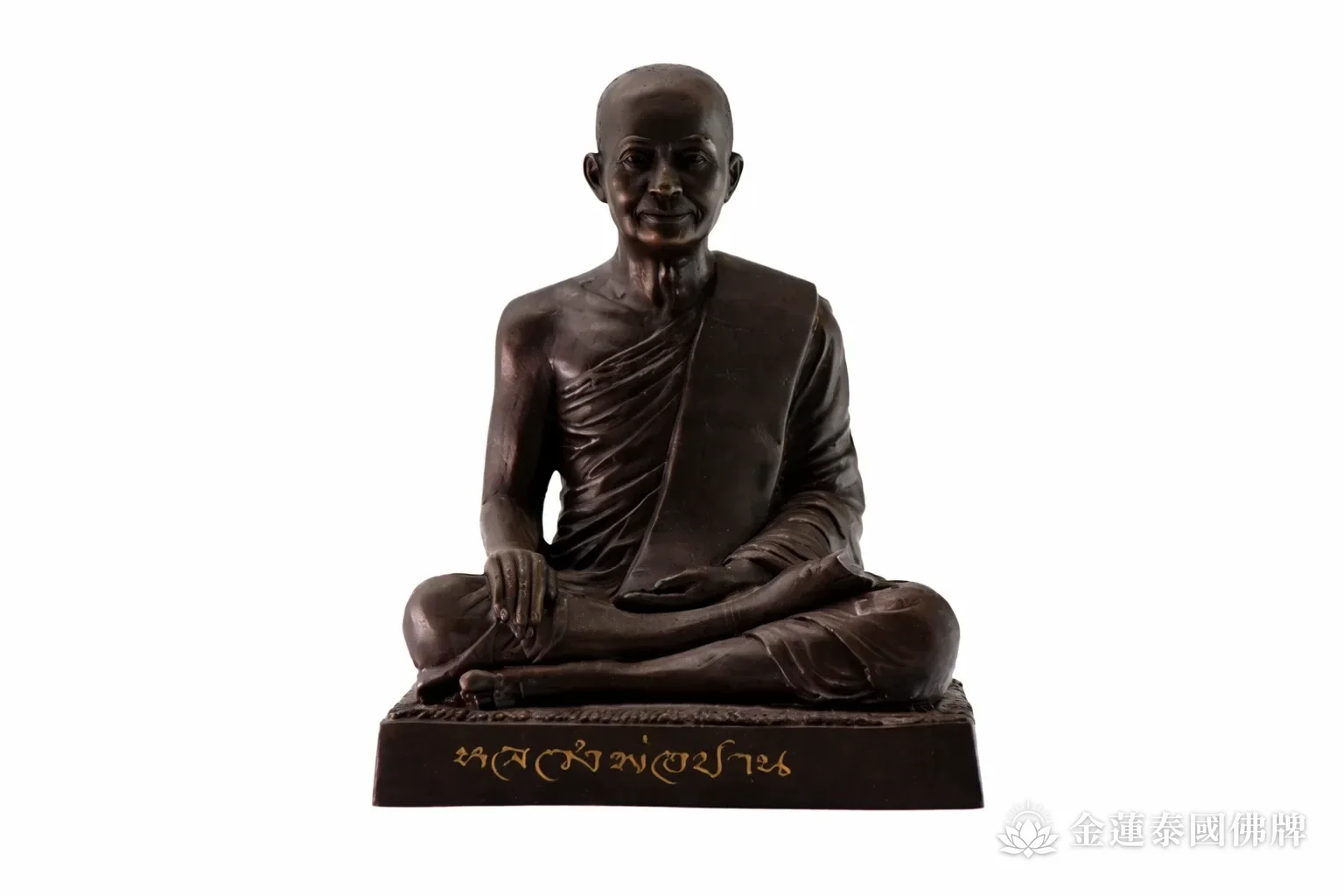 Wat Bang Nom Kho BE 2559 LP Parn Bucha Statue (Bronze, About 18 cm)US$178
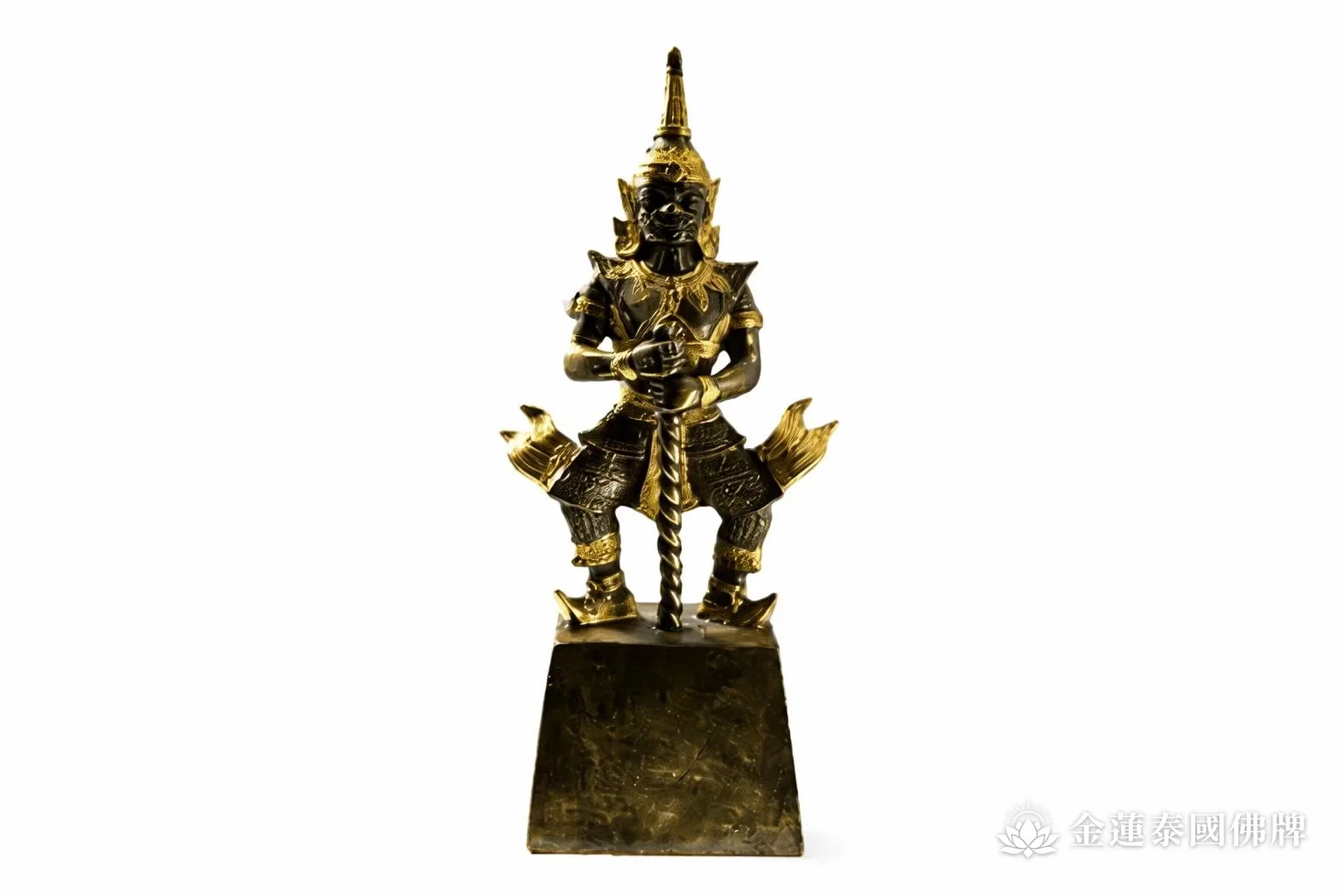 LP Boon of Wat Thung Hiang BE 2566 Ceremony Thao Wessuwan Bucha Statue (Gilded Metal, About 39 cm)US$232