
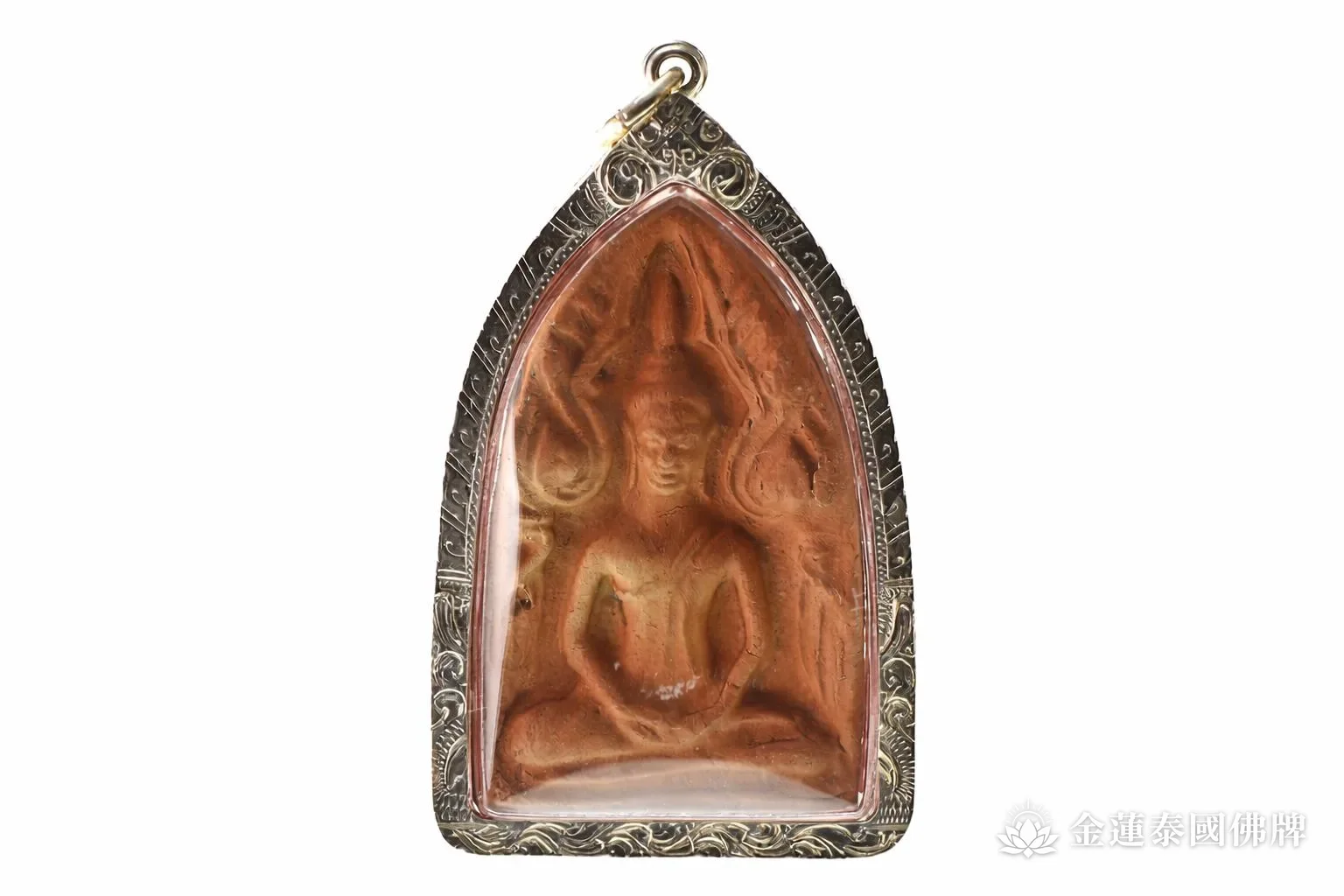
A clay Khun Paen blessed by LP Mui (Luang Phor Mui) of Wat Don Rai, Suphan Buri, and issued in BE 2508 by Wat Nong Rong in the same province: sacred earth mixed with fragments of old Ban Krang stupa Khun Paen, kiln-fired, about 4.3 cm tall, in a sterling silver waterproof case, with authentication card.
Details
| Monk | LP Mui (Luang Phor Mui, หลวงพ่อมุ่ย) |
|---|---|
| Temple | Wat Don Rai, Suphan Buri (this batch issued by Wat Nong Rong) |
| Name | Clay Khun Paen (Phra Khun Phaen Nuea Din) |
| Year | BE 2508 (1965) |
| Material | Scripture powder, temple earth |
| Size | About 4.3 cm tall |
| Case | Sterling silver waterproof case |
| Authentication | With authentication card (for how to check it, see What is an amulet authentication card?) |
| Benefits | Goodwill, charm and help from benefactors, a stable career, blocking misfortune and danger, protection and safety |
| Price | US$152 (with authentication card) |
More amulets from the same monk? See the LP Mui profile (3 amulets) ›
Front and back
An arch-shaped kiln-fired clay amulet, brick red with light brown, its surface showing small grains and cracks. On the front Khun Paen sits cross-legged, hands in his lap, framed above and on both sides by leafy arches, his features worn soft. The back is flat, with an arched line of stamped Thai on the upper half, a raised stamp beside it, and a few black firing marks. In an engraved arch-shaped sterling silver waterproof case.
This batch
According to the seller, this Khun Paen was officially issued by Wat Nong Rong in Suphan Buri, made in the classic “great general” mould; Wat Nong Rong’s abbot, Ajarn Yot, copied the old mould and pressed them by hand, and after kiln-firing invited LP Mui from nearby to bless them. A large amount of broken old Ban Krang stupa Khun Paen (Phra Kru Ban Krang) was ground into the clay, so small grains of old amulet are often visible on the face. After consecration they were first given to worshippers at the ceremony, with the rest sealed in a stupa and only brought out later. Another part of the seller’s text says “pressed and blessed by LP Mui’s own hand”, which differs from Ajarn Yot pressing them as above; we list both accounts. This is the seller’s account, which we list as given.
LP Mui
According to the seller, LP Mui was born on 5 December BE 2431 (1888), and after military service was first ordained at Wat Tha Chang around BE 2452; on 22 March BE 2465 he was ordained again as a monk at Wat Don Buppharam with the monastic name Phuttharakkhito, his later title being Phra Khru Suwan Wuthachan. At Wat Don Rai he led villagers into the hills by ox cart to cut timber, building monks’ quarters, a preaching hall and a red-brick ordination hall. In his training he first practised insight meditation with a teacher at Wat Hua Khao, who then introduced him to LP Suk of Wat Pak Khlong Makham Thao in Chai Nat, whose student he became; he also learned herbal formulas from Ajarn Kun of Wat Ban Thueng and mantras from LP Plang of Wat Wimon Phokharam. This is the seller’s account, which we list as given.
For his life, see the LP Mui profile. Other Khun Paen are in the Khun Paen section. Every item in our shop comes with a permanent authenticity guarantee.
Frequently asked questions
What is Khun Paen for?
In Thailand Khun Paen is mostly taken for goodwill, benefactors and career; the source page also lists blocking misfortune and danger, protection and safety.
What are Ban Krang stupa Khun Paen?
Ban Krang stupa Khun Paen (Phra Kru Ban Krang) are old Khun Paen unearthed from an ancient stupa in Suphan Buri, very famous among Thai collectors. According to the seller, this batch ground fragments of broken old amulets into the sacred earth, as a way of carrying on the old amulets.
How should a clay amulet be cared for?
It’s sealed in a sterling silver waterproof case, so it needs no care day to day. Kiln-fired clay amulets dislike hard drops, so don’t open the case yourself; if the silver case oxidises, wipe it bright with a silver cloth.
What’s the authentication card for?
The card carries a photo and number for this piece, which you can check on the issuing body’s website; see What is an amulet authentication card?
More LP Mui amulets in our shop
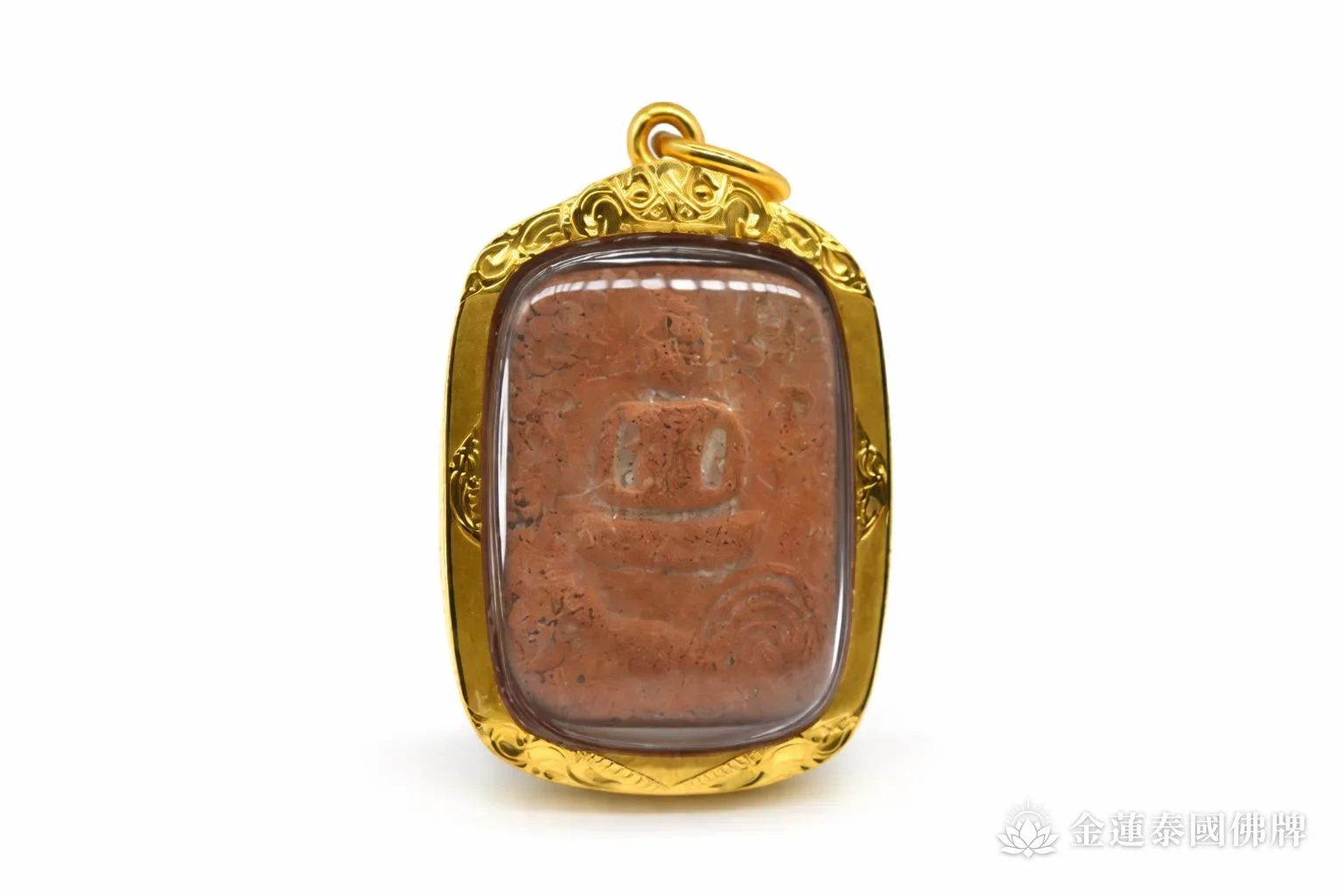 LP Mui BE 2508 Sacred Animal Somdej "Five-tailed Rooster" (Sacred Powder and Temple Clay, 70% Gold Case, With Authentication Card)US$462
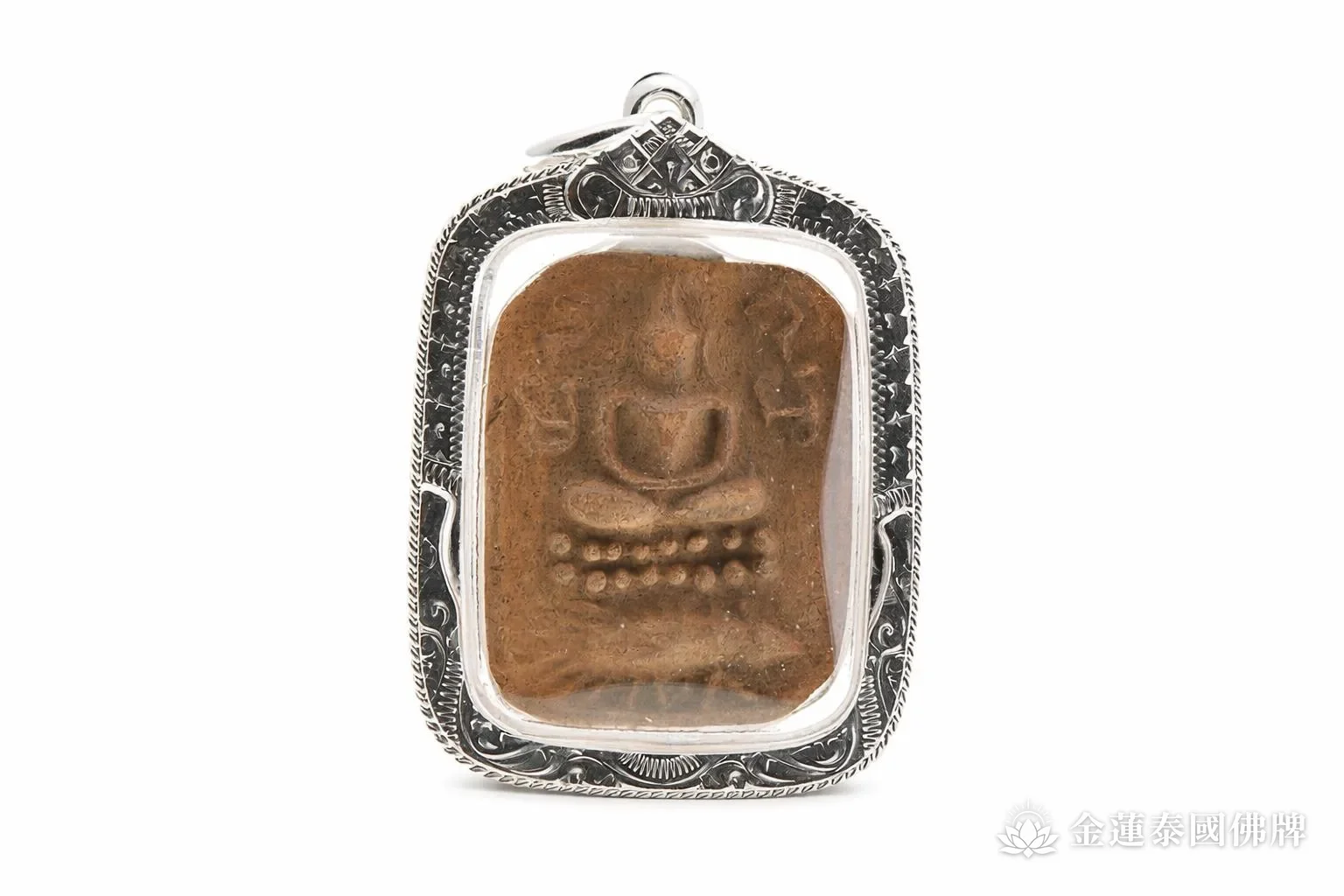 LP Mui BE 2508 Sacred Animal Somdej, Seated Hedgehog Mould Phim Song Men (Kiln-fired Sacred Earth, Sterling Silver Case, With Authentication Card)US$281