After wearing amulets for a while, quite a few friends ask us: if I want to keep an image at home, how should I choose one? Thais call the Buddha images, monk images and deity figures kept on a home altar Phra Bucha (พระบูชา), meaning “images for worship”, as distinct from amulets worn on the body. This piece covers three things: how bucha statues differ from amulets, how to read their sizes, and where on the altar seven of the pieces in our shop each belong. The details of incense, offerings and direction are in dos and don’ts for keeping a shrine.
How bucha statues differ from amulets
The biggest difference is in use. An amulet goes where you go, worn to the office and out of the house; a bucha statue stays at home or in the shop, guarding that place and giving the family something to put their palms together to each day. So some people have both, wearing an amulet and keeping a statue of the same monk or the same Buddha at home.
Another difference is the base. Many bucha statues have sacred materials, yantra sheets, even one of the monk’s amulets sealed into the base. In our shop, LP Phae’s statue has one of his profile monk coins set into the base, and Kruba Noi’s water wealth Buddha has gold yantra sheets inscribed with Lanna scripture sealed in. Some have nothing in the base, like LP Chuen’s, which the seller states is a plain cast bronze image. These bases are sealed when the statue is finished; please don’t prise them open yourself once you take one home.
Bucha Statues in our shop
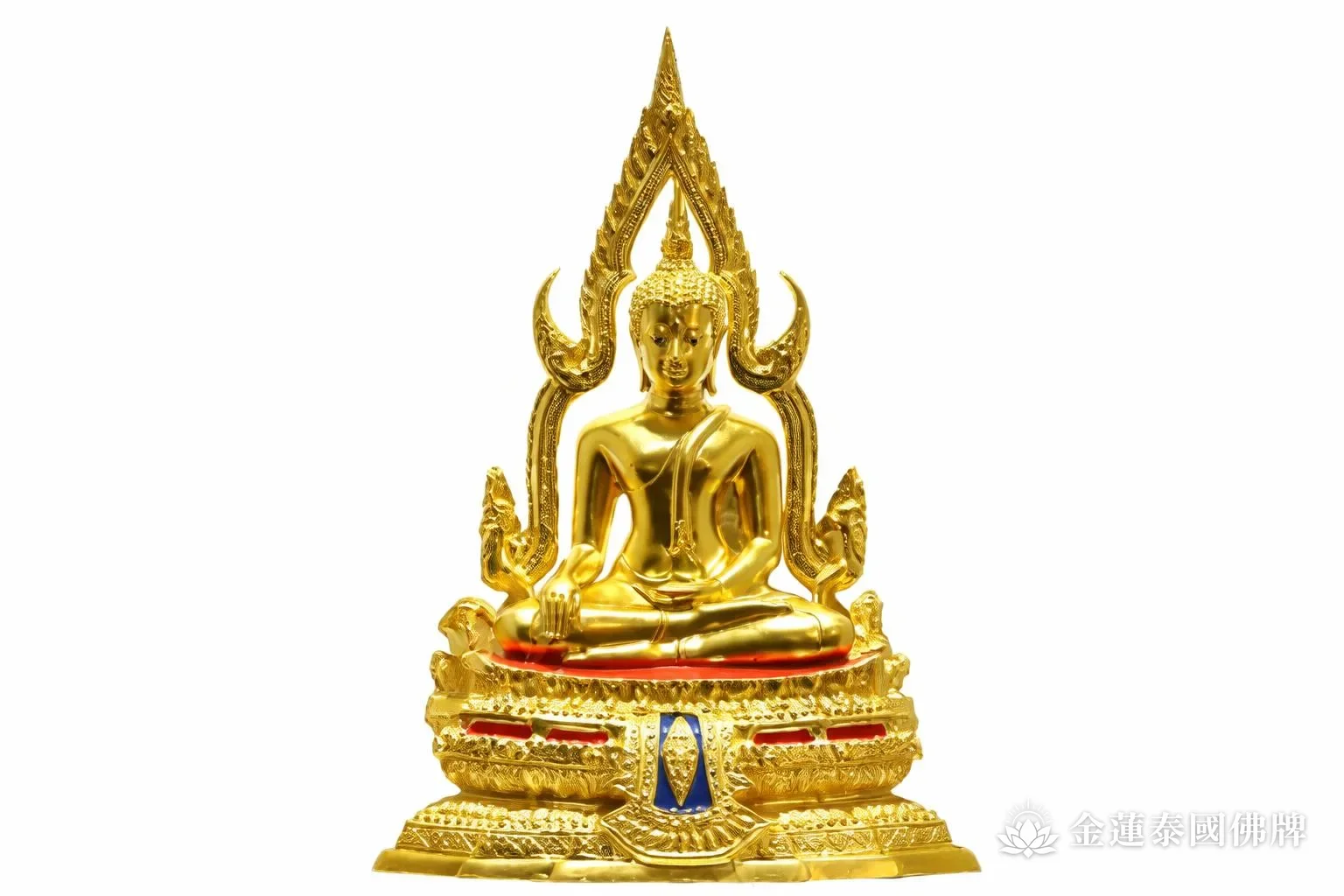 Wat Phra Si Rattana Mahathat BE 2559 Phra Buddha Chinnarat Altar Statue (Bronze, About 30 cm / 17 cm)US$178
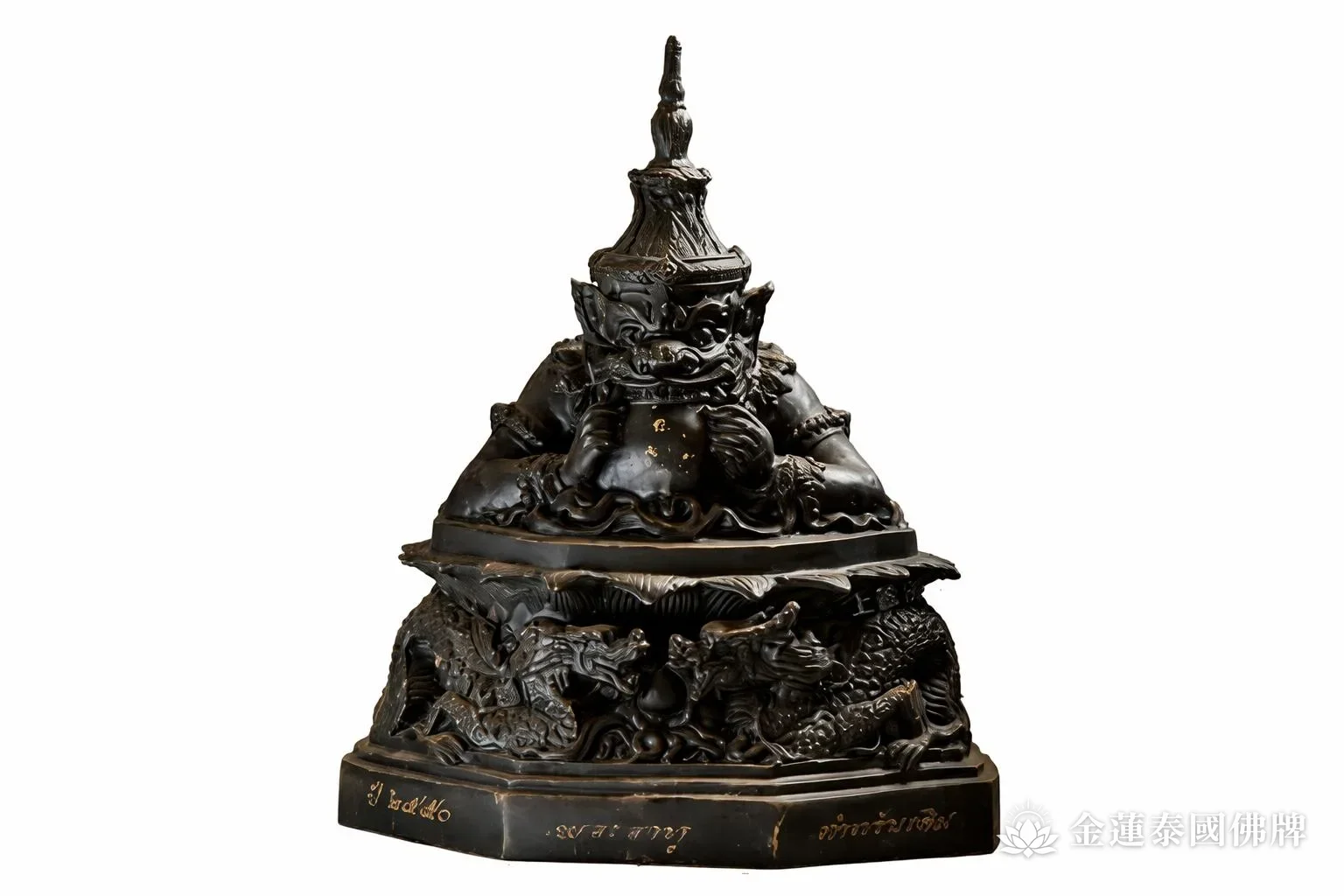 Wat Sisa Thong (Rahu Temple) BE 2555–2562 Rahu Altar Statue (Bronze, Coconut Shell Amulet in Base, Extra-large / Large / Medium / Small)US$75
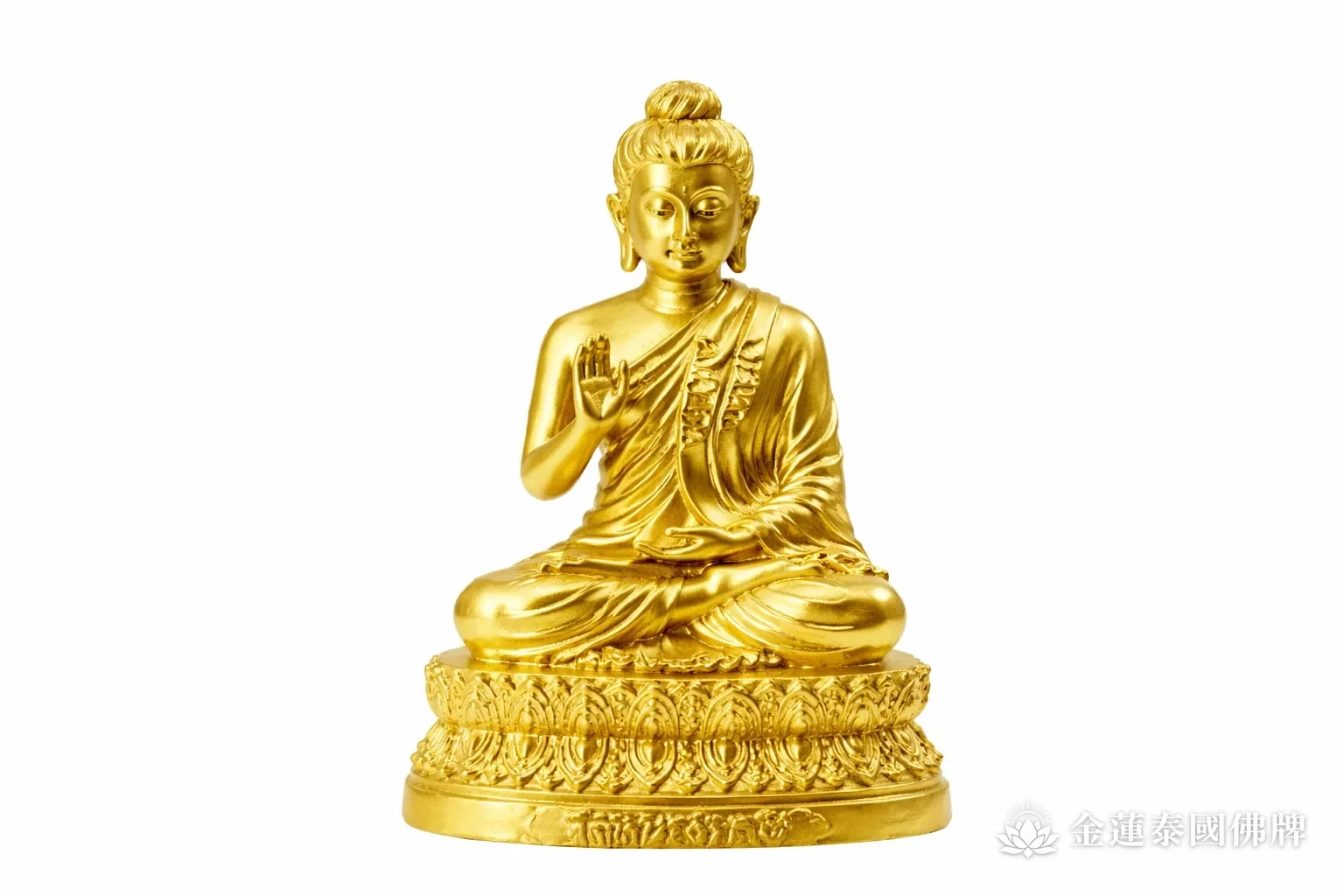 Luang Phor Jon of Wat Bunyarit BE 2559 Buddha Altar Statue (Bronze, About 14 cm)US$94
How to read the size
When Thais speak of a Buddha image’s size, they customarily use “หน้าตัก”, the width between the knees of the seated Buddha, in inches. The great Buddhas of temples often measure dozens of inches; the principal Buddha in the ordination hall of Wat Pradu Chimphli in Bangkok, for instance, is 99 inches across the knees. Thai sellers often give small home images a size like “หน้าตัก 5 นิ้ว” too; in our shop we always give the overall height, measured from head to foot including the base.
To choose a size, first measure how high and deep your altar or shelf is, then compare with the heights of each statue below. If your altar already has a principal Buddha, make sure the new image doesn’t outshine it, for reasons explained in the next section.
Which tier of the altar
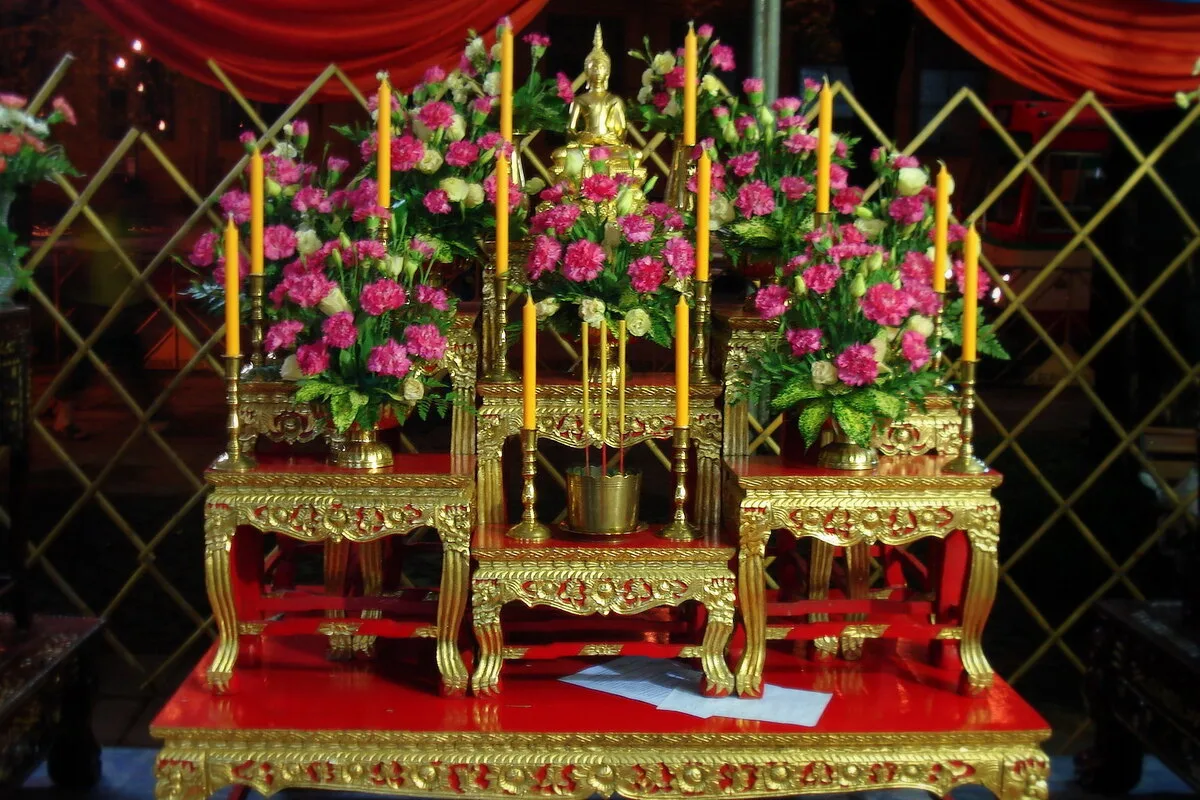
The Thai home altar is called “โต๊ะหมู่บูชา”, a set of several small tables of different heights stacked together, named by the number of tables as “หมู่ 3”, “หมู่ 5”, “หมู่ 7” and so on. The simplest, หมู่ 3, holds one principal Buddha, a pair of vases, a pair of candlesticks and an incense burner.
The Thai lifestyle site Wongnai, explaining how to arrange an altar, gives this order: highest is the principal Buddha, then arahants and the Buddha’s great disciples, such as Phra Sangkajai; below them revered senior monks, such as Luang Pu Thuat and Somdej Toh; and only then Krubas and the various deities, such as Ganesha and Thao Wessuwan. The principal Buddha should be in the most prominent position, generally facing north or east. The same article says the altar shouldn’t have a mirror, air conditioner, toilet or kitchen behind it, and shouldn’t be fixed above a doorway people pass through, since changing water and flowers is awkward and anything falling is more dangerous.
Seven of the bucha statues in our shop
| Bucha statue | Height | Kind | Base |
|---|---|---|---|
| Wat Sothon BE 2559 Luang Pho Sothon | About 12 cm | Buddha image, can serve as principal Buddha | Red copper medallion set in the back |
| Kruba Noi BE 2558 water wealth Buddha | Large about 24 cm / small about 15 cm | The Buddha’s disciple Phra Upakut | Gold yantra sheets with Lanna scripture sealed in |
| Kruba Ariyachat BE 2558 peacock Pidta | About 8.5 cm | Phra Pidta | Red velvet face stamped with the temple seal |
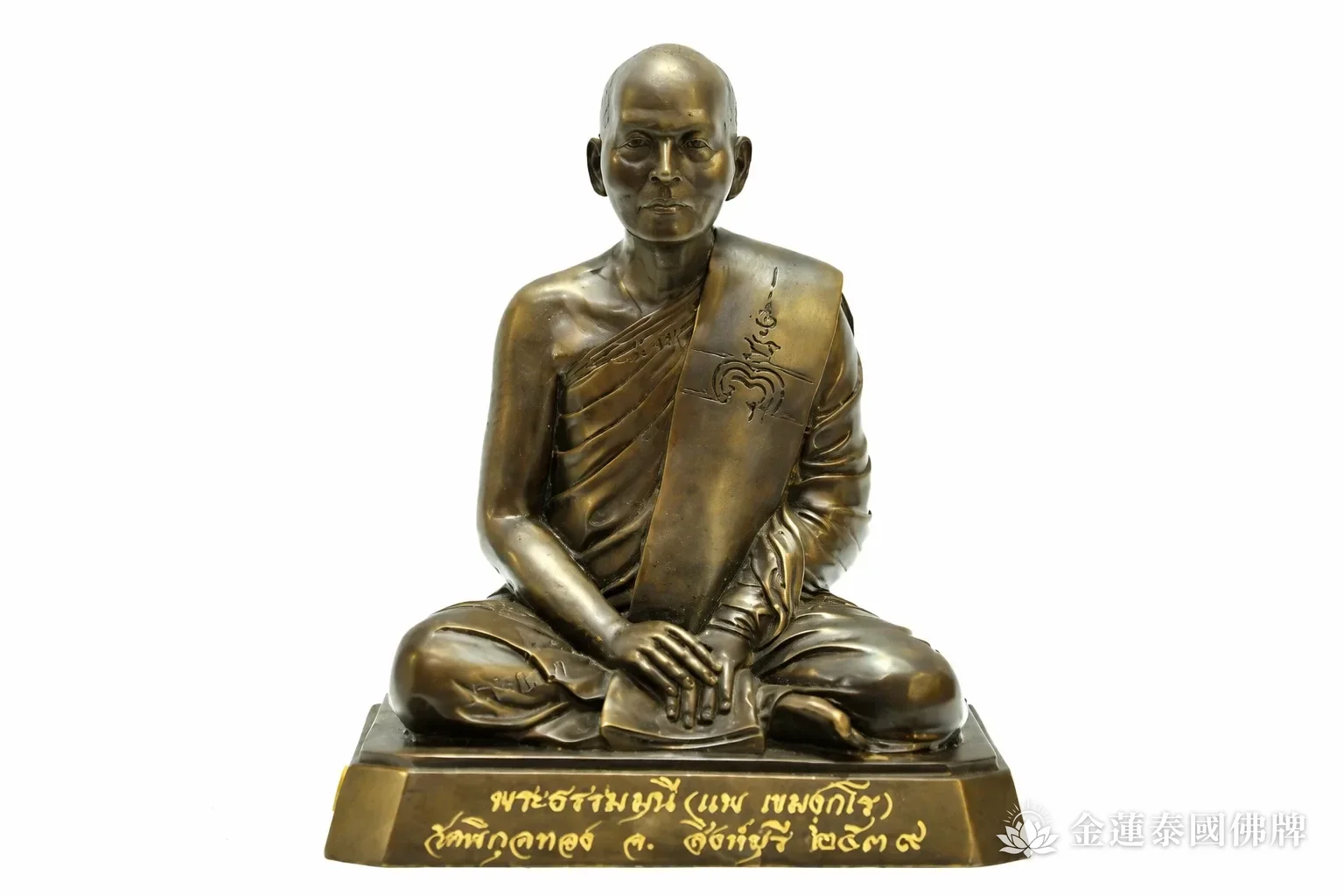
| LP Phae BE 2539 monk image | About 19 cm | Senior monk | One of the monk’s coins set in |
| LP Chuen BE 2554 monk image | About 15 cm | Senior monk | No sacred materials sealed in |
| LP Somporn BE 2558 Lek Lai Luang Pu Thuat | About 9 cm | Senior monk (Luang Pu Thuat) | Carved entirely from Lek Lai stone |
| Wat Nok BE 2555 gold-plated Ganesha | About 16 cm | Deity | Three wealth fish and a takrut sealed in |
Following the order above, Luang Pho Sothon can serve as the principal Buddha at the top; the water wealth Buddha, a disciple of the Buddha, goes beside the principal Buddha a little lower; the three monk images and Luang Pu Thuat a tier lower again; and Ganesha below the monk images. The Pidta counts as a Buddha image and can go beside the principal Buddha. If your home already has a large Buddha as the principal image, all seven can go on the tiers below it.
FAQ
Does a bucha statue need consecrating before it can be worshipped?
All seven above are temple issues. Whether to have a monk bless it again is up to you; once it is placed and kept clean, you can begin.
My altar is full and I only have a bookshelf. Is that all right?
Yes. Choose a clean, high enough shelf and keep clutter away from the front. The small Luang Pu Thuat and peacock Pidta both suit this.
Can bucha statues be kept together with amulets?
Yes. Amulets you aren’t wearing can sit on the altar with the statues, arranged by the order above.