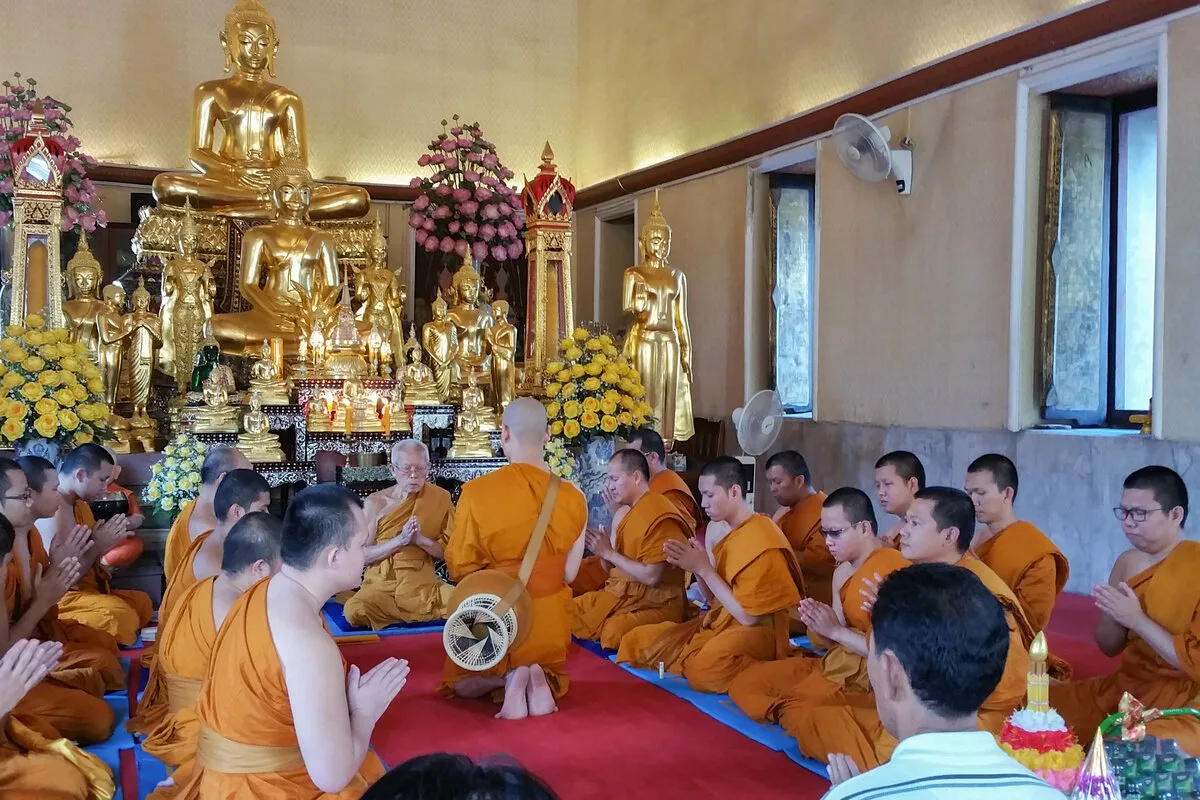
In Thailand, many men become monks once in their lives, some for a few days, some for a whole rainy season. Ordination doesn’t have to mean a lifetime as a monk; more often it is to repay one’s parents and spend a while training the mind, then return to ordinary life. Thais take it very seriously, so much so that government employees get special ordination leave.
Why ordain?
The reason Thais give most often is to repay their parents. Ordination is seen as a great act of merit, and Thais believe the merit passes to the parents who raised them. Before ordination there is a ceremony called “ทำขวัญนาค”, in which the master of ceremonies sings of the hardships parents go through raising a child, reminding the man about to ordain why he is taking this step.
Thailand’s ordination tradition has a strong local character. The Thai magazine Silpa Watthanatham (Art and Culture) notes that the “นาค” ceremony before ordination is not found in the monastic rules the Buddha laid down, nor in ancient India or Sri Lanka; it is a tradition of mainland Southeast Asia, among the Mon, Khmer, Lao and Thai.
Latest arrivals in our shop
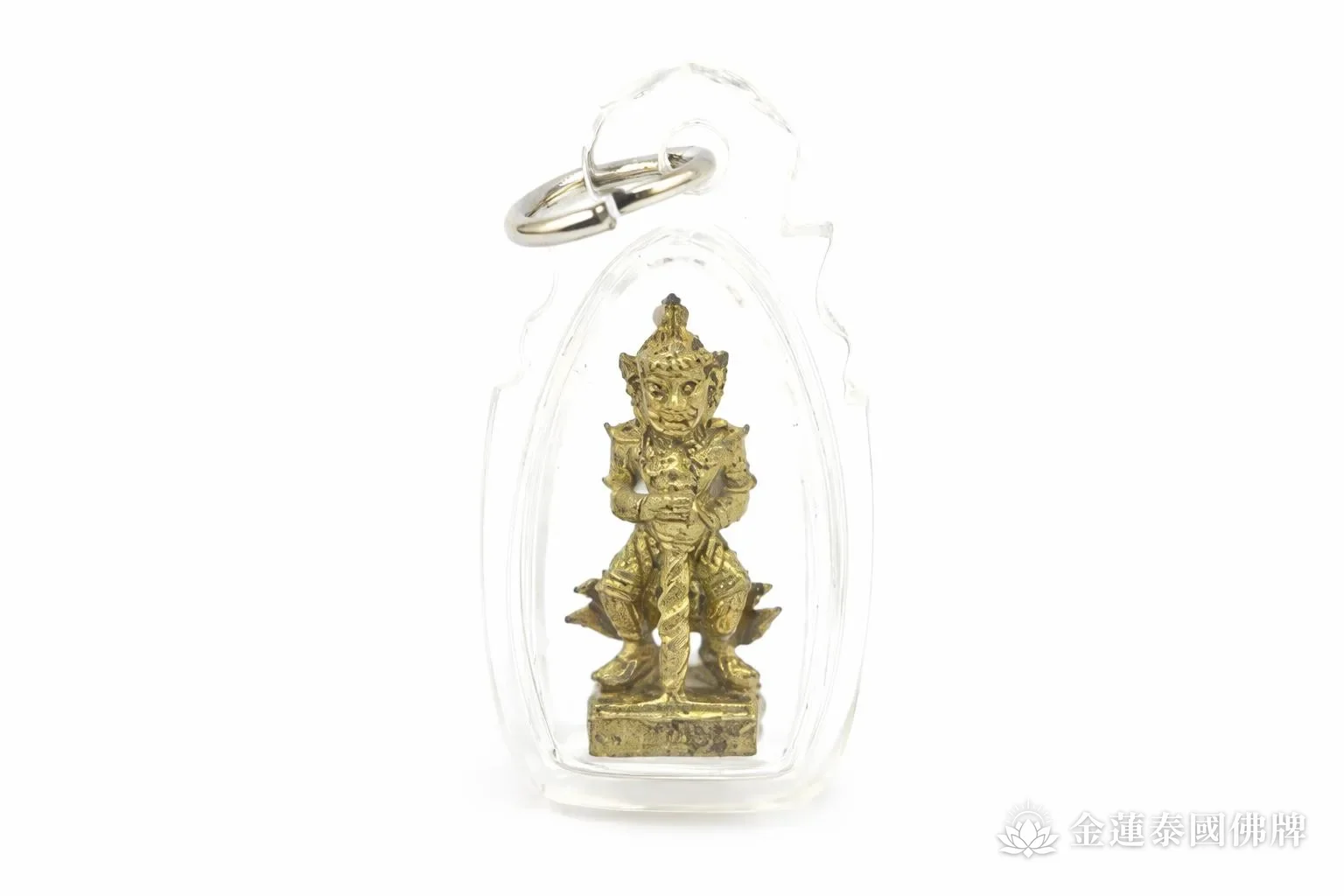 LP Kloy BE 2556 Thao Wessuwan Small Figure (Bronze, About 2.8 cm, Waterproof Case)US$49
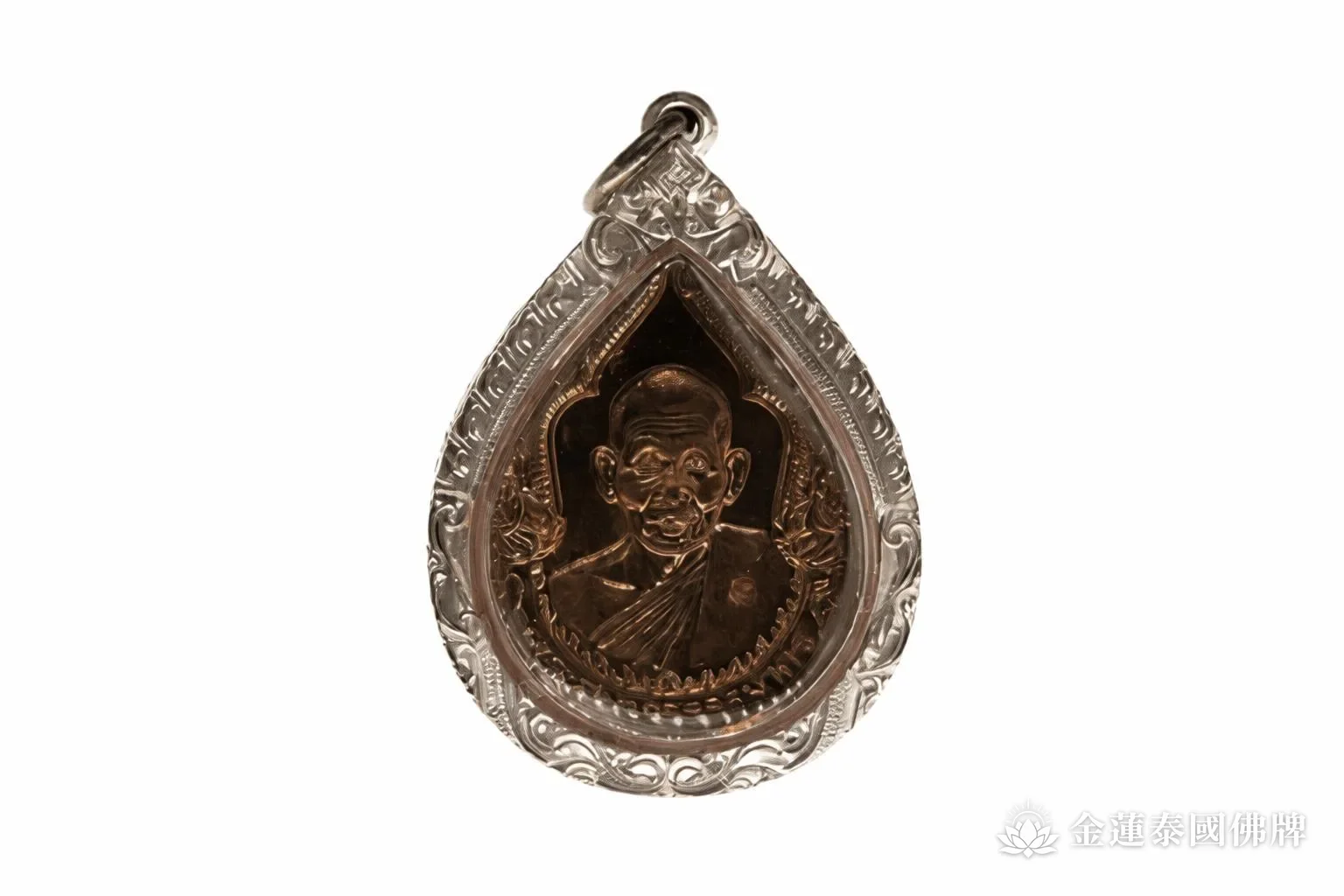 LP Kampan BE 2537 Birthday Commemorative Self-image, Teardrop (Silver, Copper and Gold Cast, Sterling Silver Case, With Authentication Card)US$152
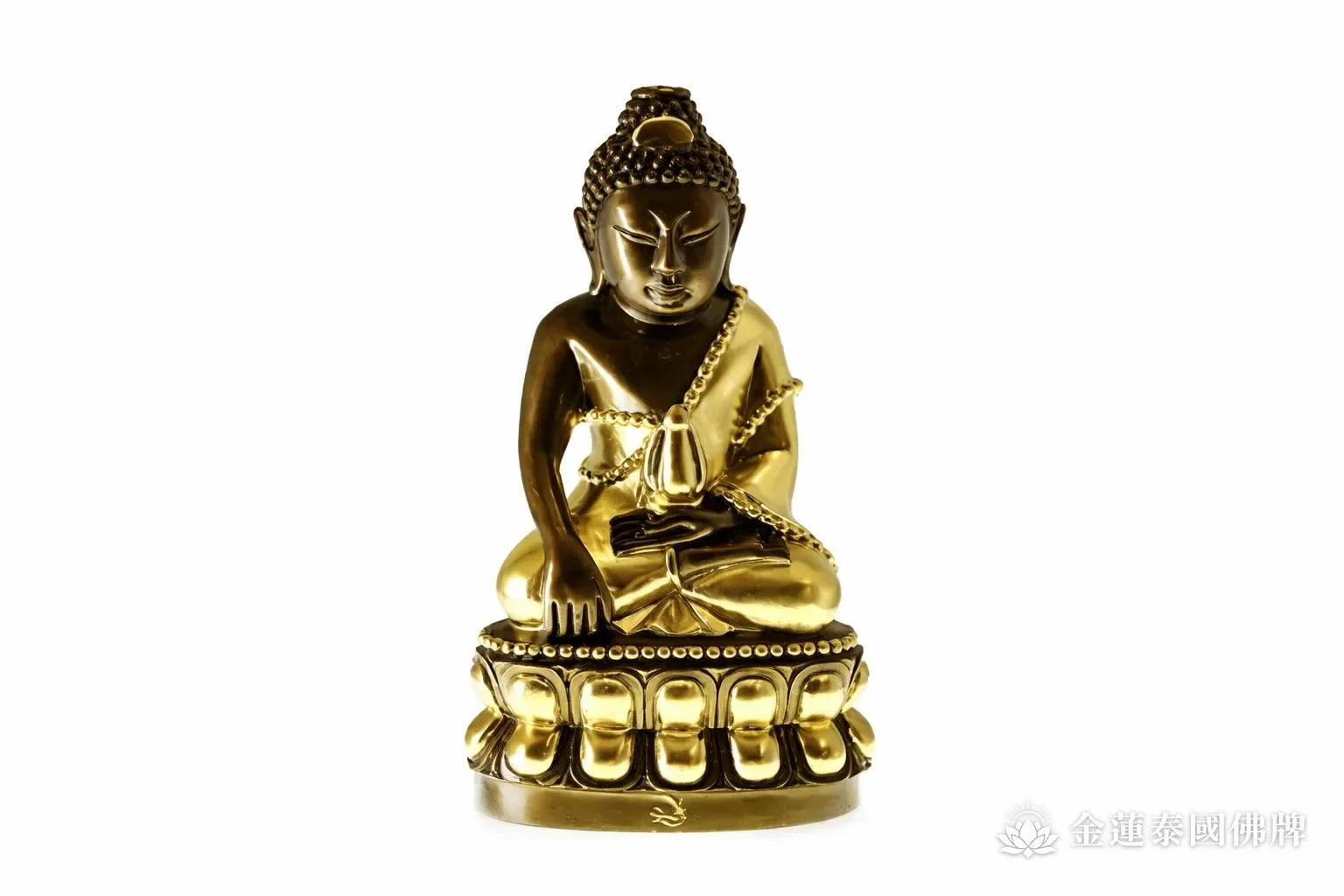 LP Mee (Wat Phon Thong) BE 2562 Medicine Buddha Altar Statue (Bronze, About 22 cm, Limited to 299)US$230
Why a man about to ordain is called “นาค”
In Thailand, a man preparing to ordain, head shaved and dressed in white, is called “นาค” (nak), meaning a naga serpent. A Thai legend tells of a naga that took human form and was ordained under the Buddha, until it reverted to its true form in its sleep and was discovered. The Buddha ruled that animals could not be ordained, so the naga asked that everyone ordained in future be called “นาค” in memory of its wish.
The Mon have a special custom for the “นาค” too: as Silpa Watthanatham has described, the man about to ordain puts on make-up and fine clothes and is dressed up like a woman.
The day of ordination
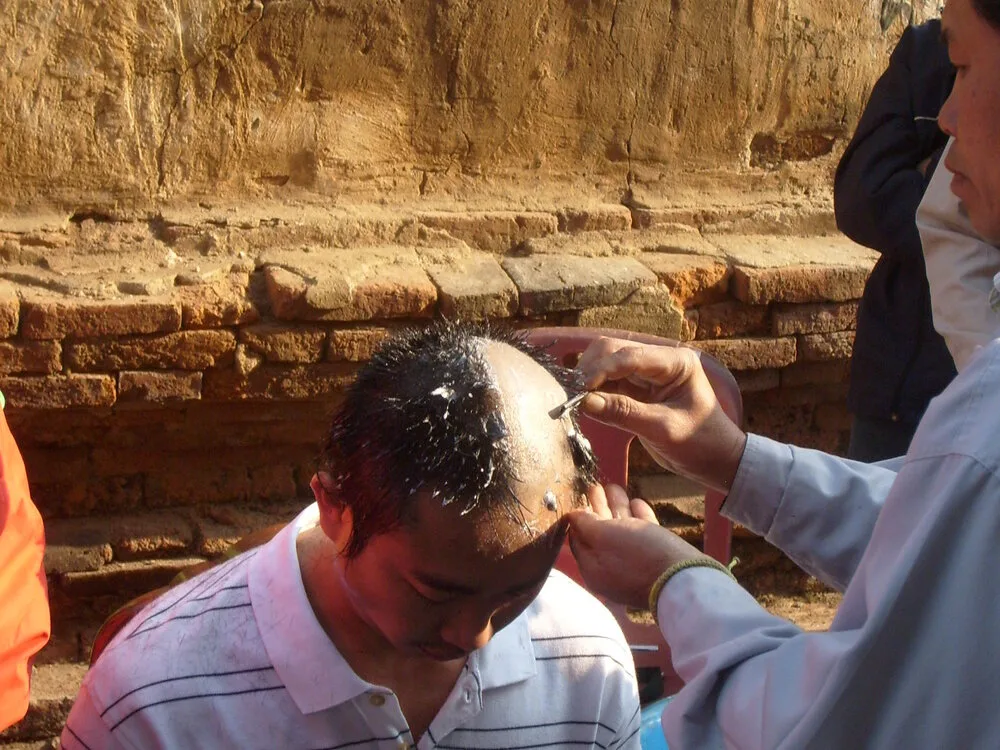
On the day, the man about to ordain shaves his head and eyebrows and dresses in white. Family and friends escort him to the ordination hall and round it three times, and inside, before the preceptor and the assembled monks, he asks to be ordained, changes into robes, takes up the alms bowl and formally becomes a monk. Under the monastic rules, a man must be 20 to take full ordination as a bhikkhu; younger boys can first become novices.
How long people stay varies. Traditionally many ordain for the rains retreat (called Phansa in Thailand, about three months), though today many stay only a week or two. Thai civil servants can take special ordination leave of up to 120 days, provided they have served at least 12 months.
Even the king ordained
Thai royalty keep the tradition too. King Rama IX was ordained for 15 days, from 22 October to 5 November 1956, receiving ordination at the Temple of the Emerald Buddha and living at Wat Bowonniwet in Bangkok during his time as a monk, under the monastic name “Bhumibalo Bhikkhu”.
What it has to do with amulets
As monks, the newly ordained go out on alms rounds at dawn each day, chant, and listen to their teachers’ Dharma talks, and many first come to know a temple’s monks during this time. Thais say that when choosing an amulet you look at the monk’s practice, precisely because a monk’s discipline and attainment are built up day by day in this kind of monastic life. Our profiles of senior monks are all in Thai monks, and for the difference between amulets from a monk’s lifetime and after his death, see this article. For etiquette when visiting Thai temples, see Thai temple etiquette; for the guardian Buddha of each day, see the birthday Buddhas.
FAQ
Can a man leave the monkhood whenever he likes?
Yes. Short-term ordination in Thailand is expected to end with disrobing, which has its own formal ceremony and carries no stigma.
Can foreigners ordain temporarily in Thailand?
Yes, but usually you need to contact a temple first, learn the basic chants and rules, and have the temple arrange a preceptor.
Can women be ordained?
Thailand’s Theravada tradition currently has no bhikkhuni; women can become “แม่ชี” (mae chi), who wear white, keep eight precepts and practise at a temple.