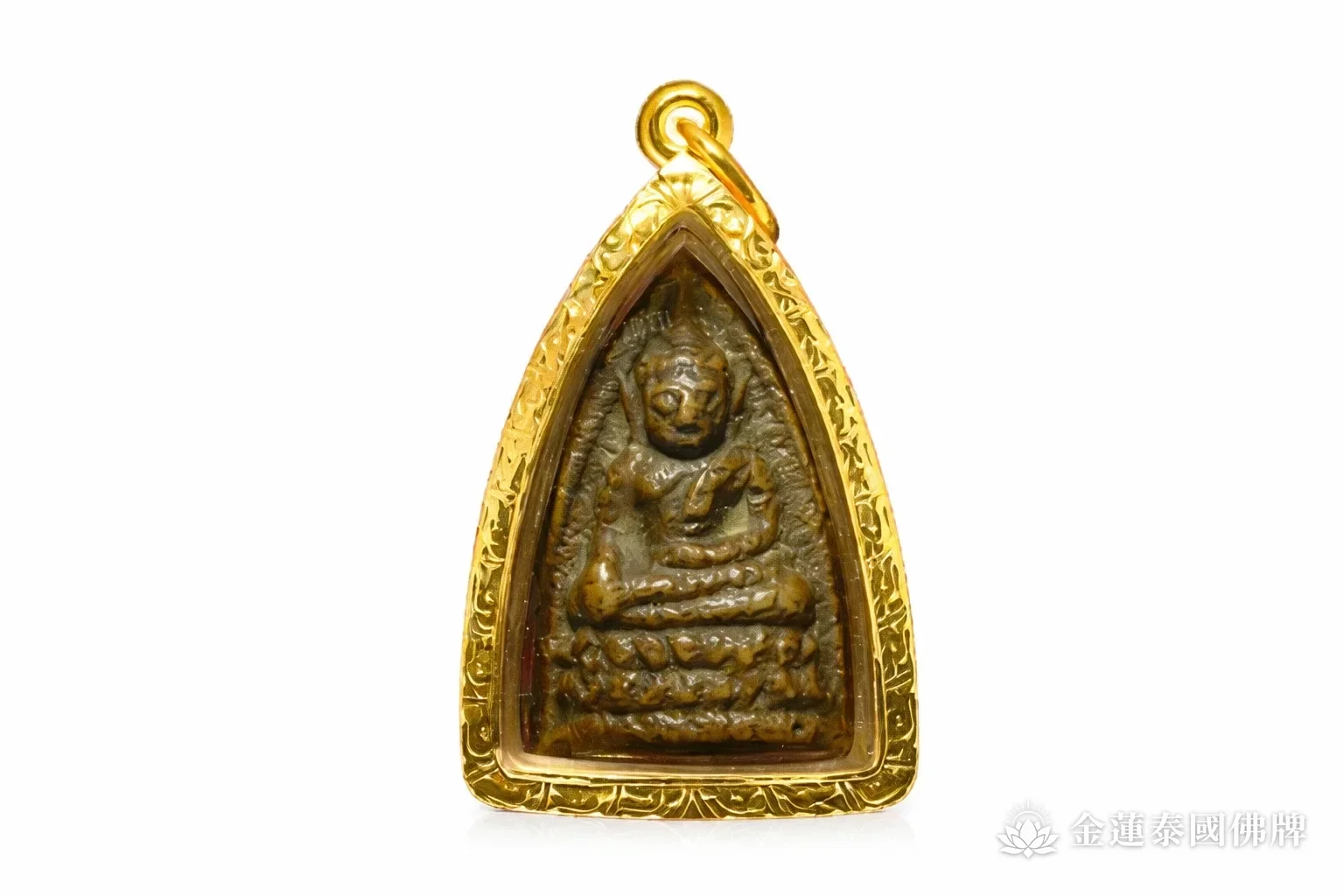
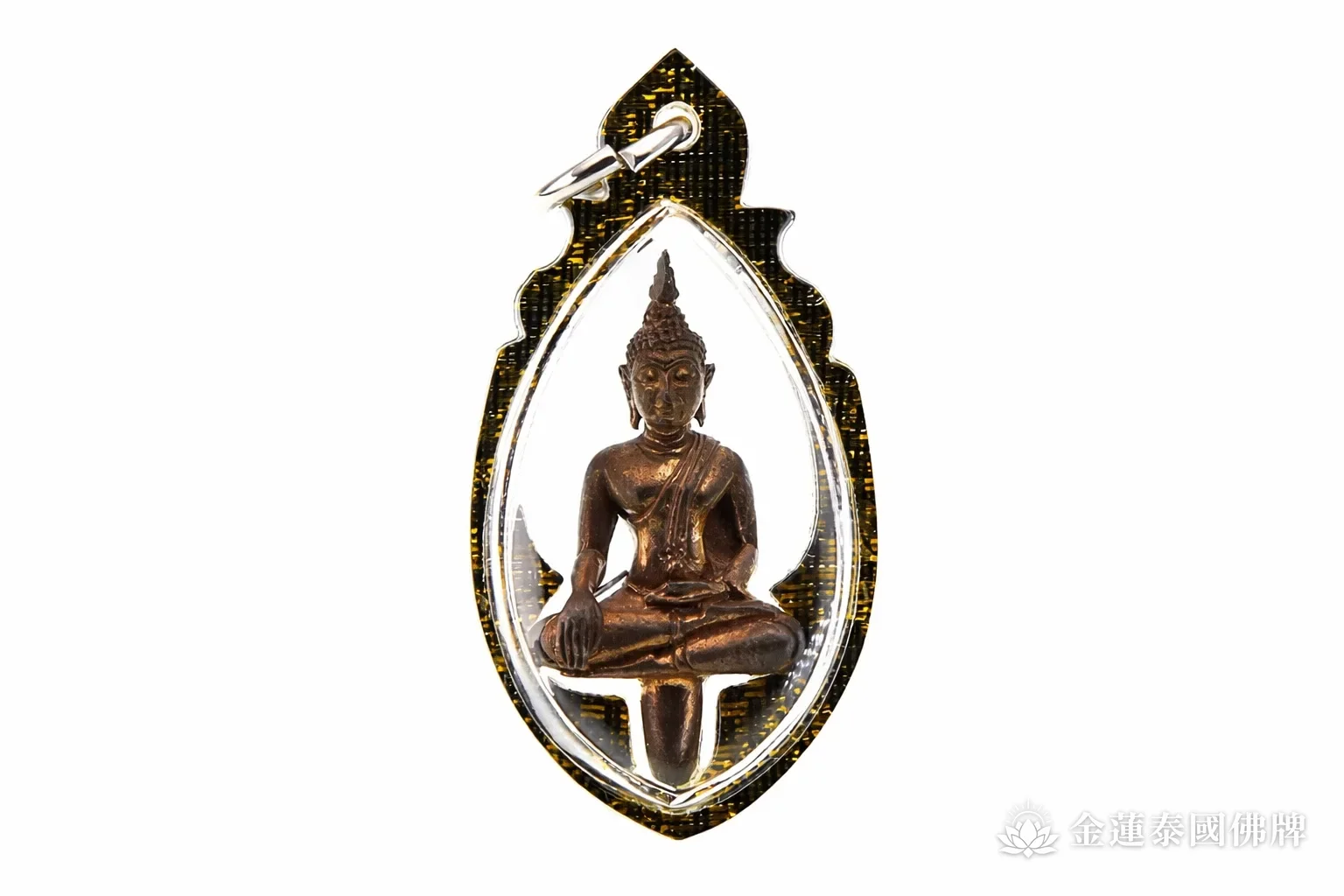
A Phra Chai (Victory Buddha) from the BE 2500 ceremony at Wat Laem Phraya, a triangular temple-clay amulet about 4 cm tall. Wat Laem Phraya is near Bangkok, and much of the sacred material for this ceremony was donated by Bangkok’s Wat Suthat, mixed into the clay and pressed in moulds, then blessed jointly by several senior monks. Nearly seventy years on, the clay clearly shows its age. In a 70% gold waterproof case, with a certificate card.
Amulet details
| Temple | Wat Laem Phraya (near Bangkok); sacred materials donated by Wat Suthat (วัดสุทัศน์) |
|---|---|
| Blessing | Blessed jointly by several senior monks |
| Name | Phra Chai (Victory Buddha) |
| Year | BE 2500 (1957; for how to convert, see Converting Buddhist Era years) |
| Image | The Buddha seated cross-legged on a multi-tiered lotus base, with a Bodhi-leaf halo behind; plain back |
| Material | Temple clay, sacred powder |
| Size | About 4 cm tall |
| Case | 70% gold waterproof case |
| Certificate | Certificate card included (how to check it: see What is an amulet certificate card?) |
| Benefits | Warding off evil, protection from legal trouble, protection from danger, attracting wealth, popularity |
| Price | US$385 (including 70% gold waterproof case and certificate card) |
This Phra Chai
The whole amulet is a triangle, pointed at the top and wide at the base, with the Buddha seated in the middle, a pointed topknot on his head and legs crossed, on a lotus base of three uneven tiers. Behind him is a ring of raised leaf patterns, like a halo of Bodhi leaves. The clay is dark brown with a grey-green cast, lighter on the raised parts, and the surface has tiny pits, typical of old clay amulets as they dry.
The back has no inscription, just a naturally uneven clay surface showing marks from the pressing and a few small dents. That’s normal for the backs of old clay amulets; the clay and its texture tell you more than any writing would. Temple clay feels very different in the hand from sacred powder or metal amulets; there’s a full comparison in Amulet materials.
Which temple is Wat Suthat?
Wat Suthat is Wat Suthat Thepwararam in Bangkok’s old town, a first-class royal temple begun in the reign of Rama I, with Bangkok’s famous Giant Swing (Sao Chingcha) in front of it. Its principal image, Phra Si Sakyamuni, is an ancient bronze Buddha brought from Sukhothai. In Thailand it’s common for a great temple like this to give sacred materials to other temples for their ceremonies, so the clay in this amulet carries the history of both temples. The temple’s history and the story of the Giant Swing are in Wat Suthat.
What is Phra Chai?
“Chai” means victory in Thai, so Phra Chai is the Victory Buddha. The victory Thais mean is the moment the Buddha overcame Mara under the Bodhi tree and reached enlightenment, so Phra Chai is often linked with defeating evil and avoiding danger. In the past, Thai kings going to war would carry a Phra Chai on the back of their elephant; today, people in business, facing a court case or changing jobs also take one, hoping to come through.
What we can and can’t confirm
Thais call BE 2500 “half the Buddhist era” (25 Phutthasattawat). That year saw many large ceremonies across the country, and older collectors value its amulets highly; the background is in Amulets of BE 2500. However, we couldn’t find detailed records in Thai sources of which monks took part in this ceremony or how many pieces were made, so this page only gives what collectors say, without filling in details. This piece comes with a certificate card, and our shop also offers a lifetime authenticity guarantee.
A note on wearing it
Old clay amulets don’t like knocks or long soaking; even in a waterproof case, keep it away from hard objects. Wear it above the waist; wearing taboos are covered in Amulet taboos and FAQ. More Buddha amulets are in the Buddha Amulets section.
Frequently asked questions
Is Phra Chai the same as the “Subduing Mara” Buddha?
Very close. Both are about the moment the Buddha overcame Mara and reached enlightenment; only the Chinese translations differ. Some temples call the version with the right hand touching the ground the Subduing Mara Buddha, while Thais generally call them all Phra Chai.
Why are BE 2500 amulets so valued?
Thais see BE 2500 as the great date marking halfway through the Buddha’s teaching, and that year’s ceremonies were on a grand scale with many senior monks, so collectors value them highly. For Thai views on whether old amulets still work today, see Lifetime and memorial issues.
Why is there no writing on the back?
Many early clay amulets have plain backs and are identified by the mould and the clay, not necessarily by a temple name or year. That’s normal.
More Buddha Amulets in our shop
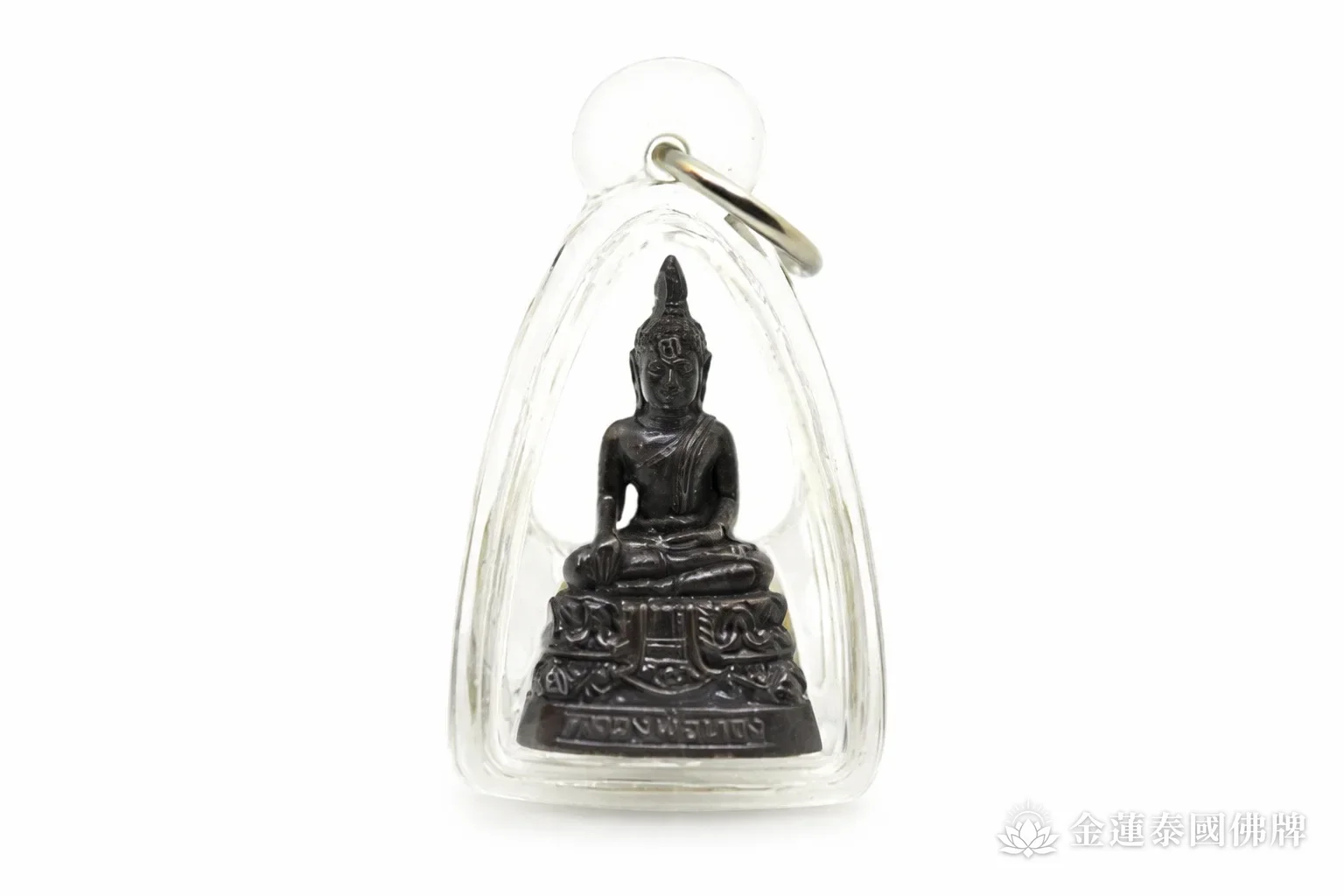 LP Liew BE 2539 Luang Pho Sothon Small Standing Figure (Copper, Waterproof Case, With Authentication Card)US$101
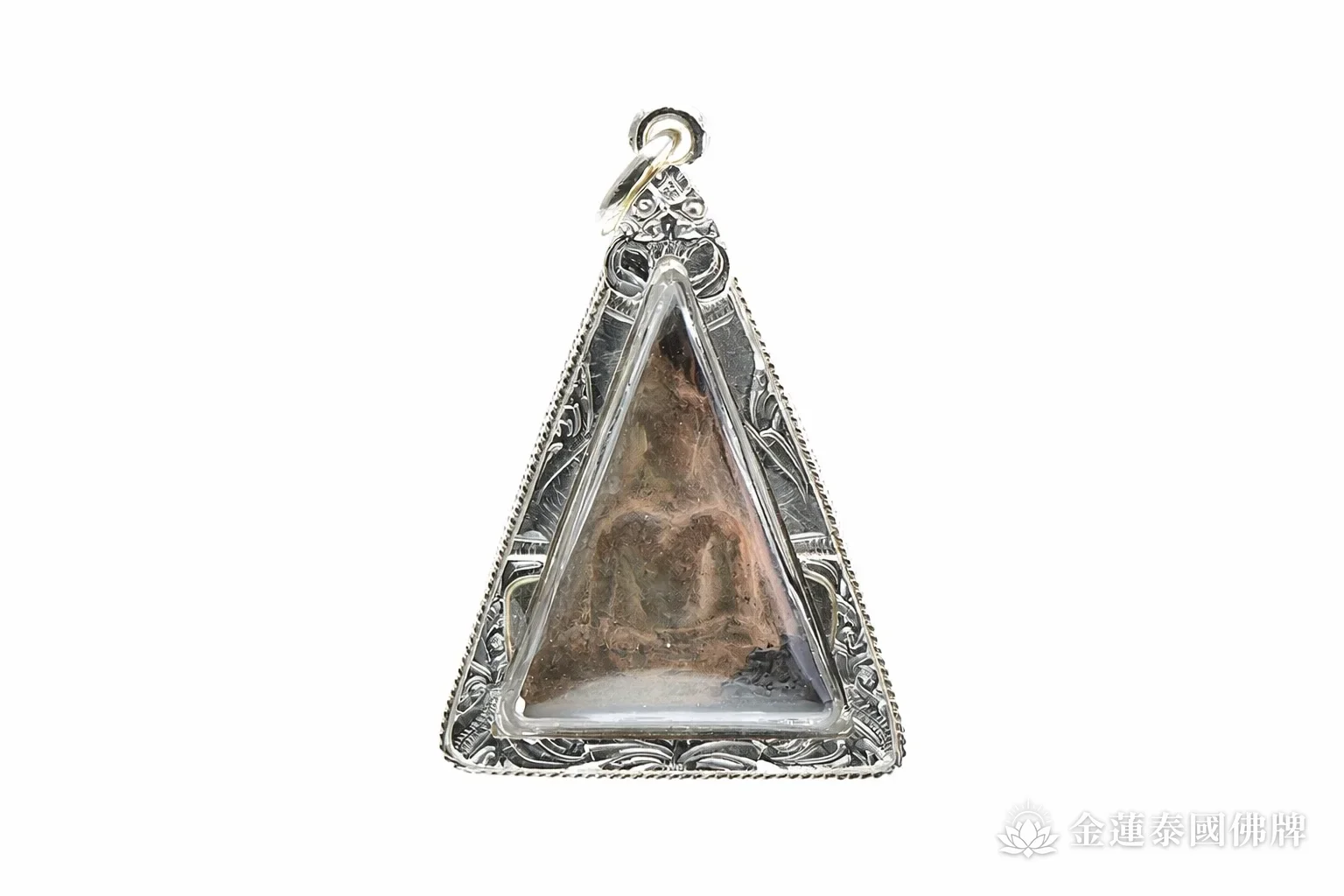 Luang Pu Toh BE 2472–2476 Phra Nang Phaya, Bulging Chest Mould (Sterling Silver Case, With Authentication Card)US$217
 LP Khun BE 2540 Flagpole Buddha Phra Yod Thong (Nawaloha, Waterproof Case, With Authentication Card)US$126