
After we listed Kruba Amna’s Chuchok, a friend asked: who is this white-bearded old man with a walking stick and a cloth bag on his back, and why do Thais pray to him for wealth? We looked into where he comes from, and in the Buddhist story he is a villain. Here is how it goes.
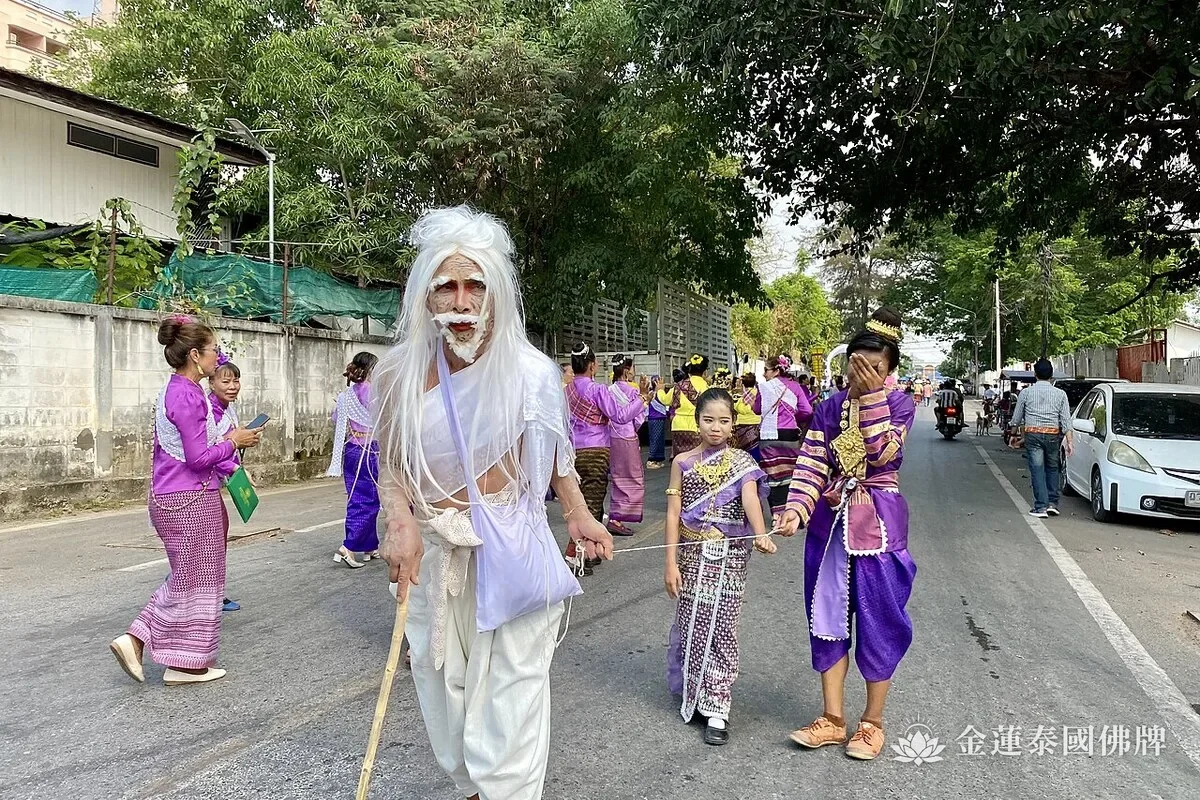
From the story of Prince Vessantara
Chuchok (ชูชก in Thai, Jujaka in Pali) comes from the Vessantara Jataka, a story of the Buddha’s past lives. It is the Jataka Thais know best, telling how the Buddha, in his past life as Prince Vessantara, gave away everything he had.
Because the prince gave the kingdom’s rain-bringing white elephant to a neighbouring state, the people drove him out of the city, and he went to live as an ascetic in the mountains with his wife and their son and daughter. This is where Chuchok enters the story: a poor old Brahmin married to a young, beautiful and hard-working wife, Amittada. The other men of the village often held her up to scold their own wives, so the wives surrounded her at the well and beat her. After that she refused to fetch water again and nagged Chuchok every day to go and find her a servant.
So Chuchok went up into the mountains, tricked the hunter guarding the forest and an ascetic, and while the prince’s wife was away, asked the prince for his two children. The prince agreed. The children hid in a lotus pond; the prince called them back and asked whether they would help their father fulfil his wish to become a Buddha, and the two children nodded. Chuchok tied them with vines and dragged them off, beating and scolding them all the way.
Chuchok in our shop
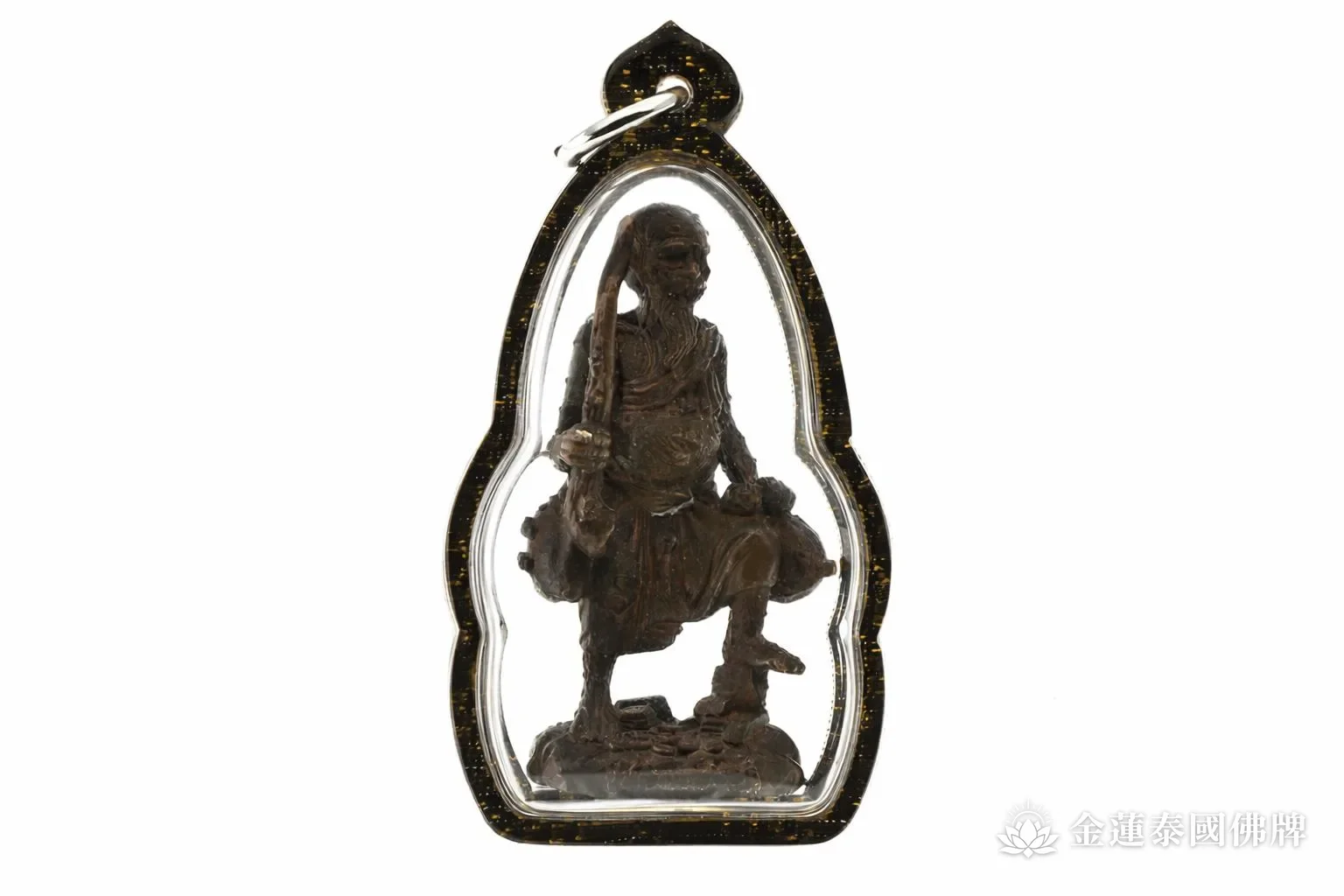 LP Kalong BE 2552 Chuchok "Khum Sap Khiao Kaeo 52" (Nine-metal Bronze, Waterproof Case / Old Khmer Bronze, Sterling Silver Case)US$152
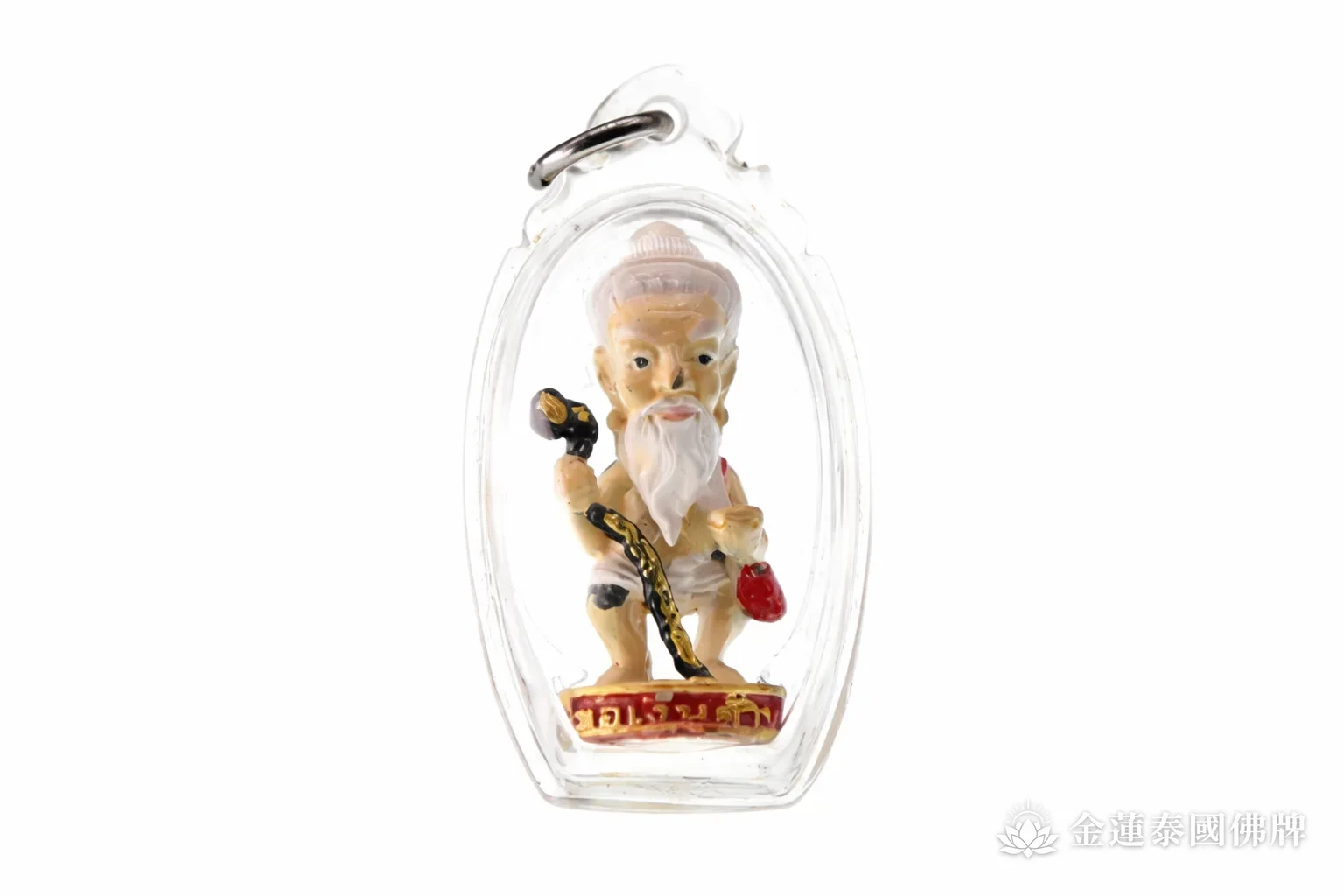 Kruba Amna BE 2561 Ceremony Chuchok (White, Red Copper or Black-and-Gold, Waterproof Case)US$62
A fortune, then eating himself to death
Later the gods led Chuchok astray, and he took the children into the capital of the prince’s father. The old king recognised his grandchildren and ransomed them for a fortune, and Chuchok suddenly became rich. But he didn’t live to enjoy it: at his first meal after becoming rich he ate so much that he died at the table.
When the Buddha finished the story, he also told who each person was reborn as: the prince was the Buddha himself, the two children were Rahula and the nun Uppalavanna, and Chuchok was Devadatta, who would always oppose the Buddha.
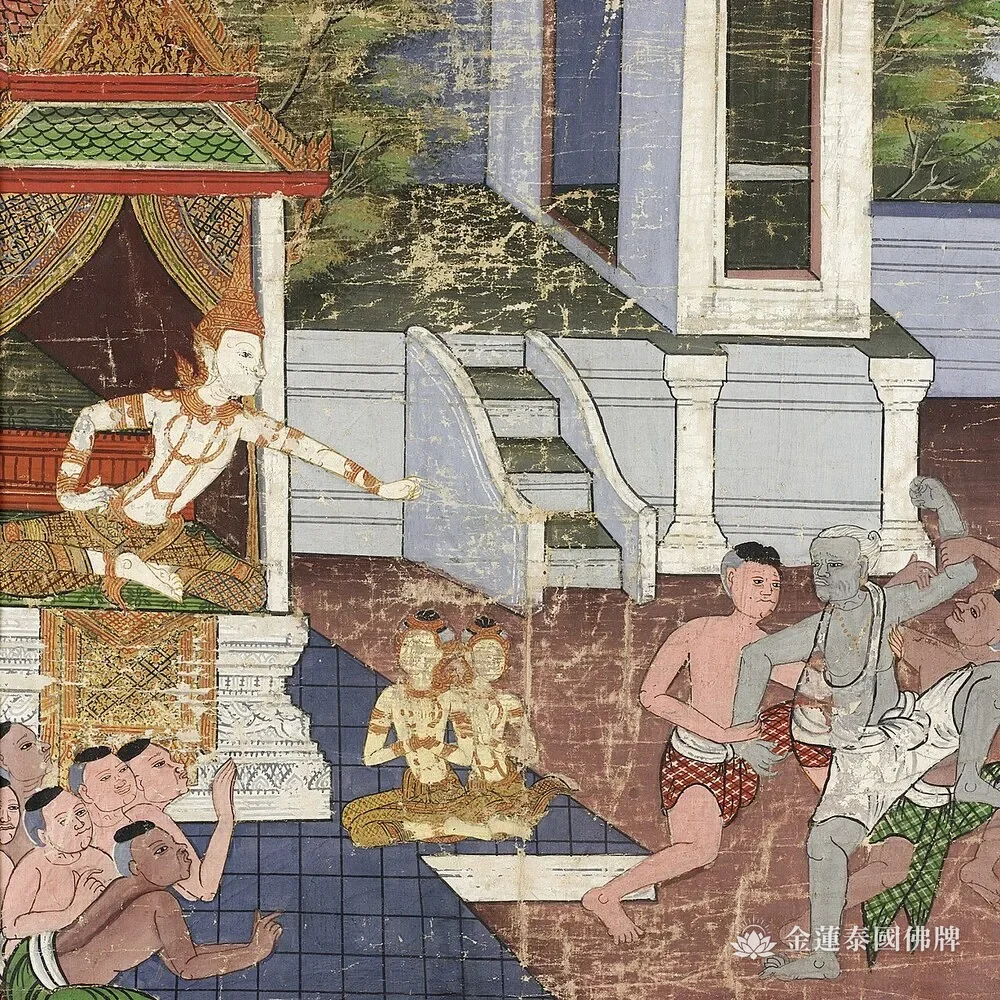
How a villain became a wealth charm
Saran Thongpan, creative editor of the Thai magazine Sarakadee (สารคดี), has written a piece about exactly this. He says Chuchok used to stand for greed, gluttony and never being satisfied; yet over the last decade or so, Thai temples have often had life-size Chuchok statues, some clearly with incense burning in front of them.
Most of these statues look the same: white-haired and white-bearded, very thin but with a bulging belly, bare-chested, a white cloth wrapped round his lower body, a money bag over his shoulder. Those who make the sacred items leave out his eating himself to death and his rebirth as Devadatta, and take only the other side: he was a beggar who got whatever he asked for, saved up bit by bit until he was rich, and married a beautiful wife besides. So Chuchok became a charm for people in business and sales. Small ones hang at the neck, larger ones sit on a shop’s altar, the largest stand two or three storeys high, and some people have even composed daily chants for him.
The article’s tone is a little mocking, saying this is looking on the bright side to the very limit. We sell Chuchok too, and when customers ask, we tell them the story as it was originally told.
The Vessantara festival each year
The Vessantara story in Thailand is more than scripture. Temples in central Thailand hold Thet Mahachat (เทศน์มหาชาติ), at which monks recite the whole story from beginning to end; in the northeast it is called Bun Phawet, with processions and performances. The photo above is of the procession in Chum Phae district, Khon Kaen, the man playing Chuchok leading the two children at the front. At these festivals, the scene of the old, ugly Chuchok with his young wife has always been the audience’s favourite. For other Thai Buddhist holy days, see Thailand’s Buddhist holy days.
Chuchok in our shop
We currently have one, the small standing Chuchok from Kruba Amna’s BE 2561 ceremony, about 4 cm tall, in white-painted, red copper and black-and-gold versions, all sealed in waterproof cases, to wear or keep by the till. LP Sakorn of Rayong also made Chuchok, one of his signature items. Other designs will go in the Chuchok section.
FAQ
Is Chuchok a spirit amulet?
No. He comes from a story of the Buddha’s past lives and belongs with mainstream amulets; see mainstream vs spirit amulets.
Where should a Chuchok statue go?
Thais mostly put him on a shop’s altar or near the till. At home, treat him like other deity figures: somewhere high and clean; see dos and don’ts for keeping a shrine.
Chuchok and Jatukam are both for wealth. How do they differ?
Their origins are completely different. Chuchok comes from a Buddhist story; Jatukam is a guardian deity of Nakhon Si Thammarat in the south who became hugely popular across Thailand around 2007; see where Jatukam comes from.