Besides Buddhas, deities and senior monks, many Thai amulets take the form of animals or mythical creatures, and the shop files them under sacred animals. Some of these creatures come from Indian myth, carried to Thailand with Brahmanism and Buddhism; others are one particular monk’s signature practice. This piece covers where the Garuda, the Kotchasi, the wealth turtle and the owl in our shop each come from.
The Garuda and Thailand’s national emblem
The Garuda, Khrut (ครุฑ) in Thai, is the mythical bird of Indian legend and the mount of the god Narai (Vishnu). Silpa Watthanatham (Art and Culture) magazine notes that the Garuda often appears in old Thai paintings, on temple gables and on royal barges, and that one very common form is “the Garuda seizing the naga” (ครุฑยุดนาค).
The Garuda has been linked with the Thai monarchy since the Ayutthaya period. The state seal bearing the Garuda, called “ครุฑพ่าห์” (Khrut Pha), was used on state letters and treaties with foreign countries; it is today’s Thai national emblem, seen on government buildings throughout the country.
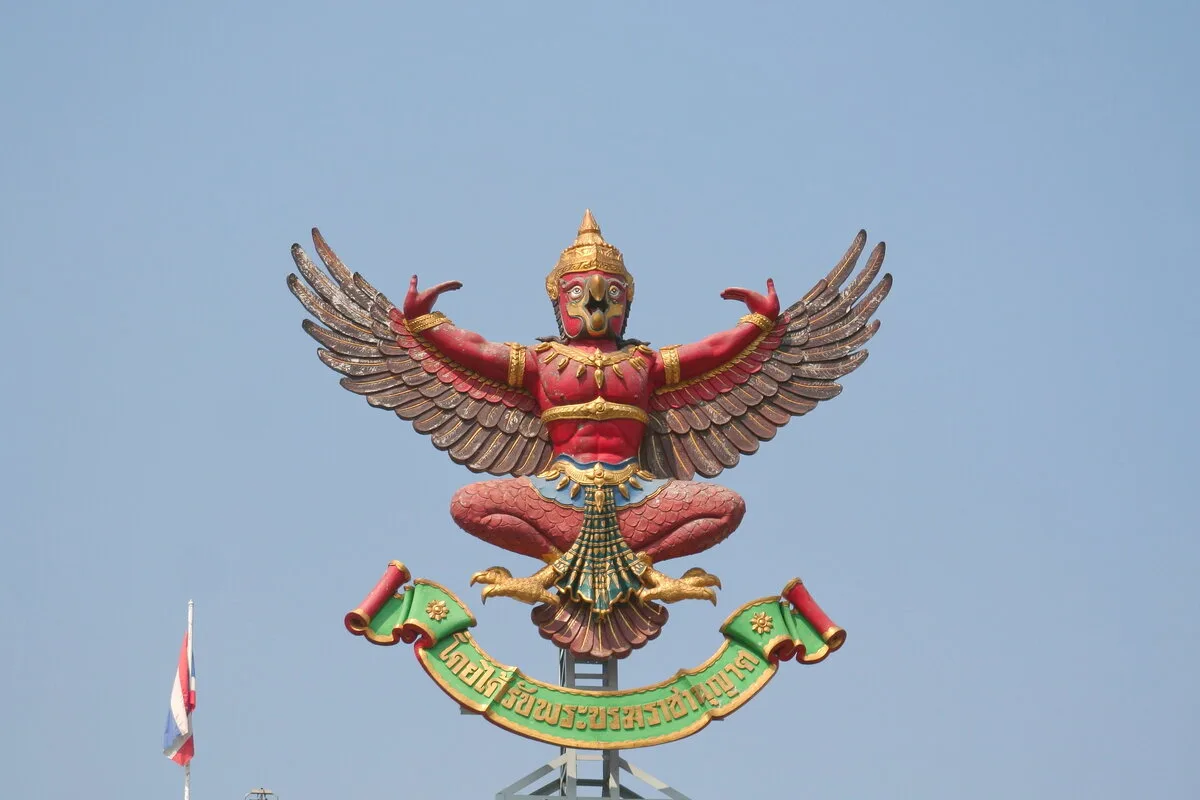
Visitors to Bangkok may have seen a big red Garuda at the doors of some companies and banks, with a ribbon below reading “โดยได้รับพระบรมราชานุญาต” (by royal permission). This is the “ครุฑตราตั้ง”, an honour granted by the crown that only companies with royal approval may display; the photo above shows one. The one outside Bangkok Bank’s Silom head office is the work of the noted Thai Garuda sculptor Sanya Wong-aram.
We have LP Ophasi’s BE 2498 Garuda holding a sema coin, the Garuda raising a sema, a temple boundary stone, in both hands, issued in the year the monk passed away.
Sacred Animal Amulets in our shop
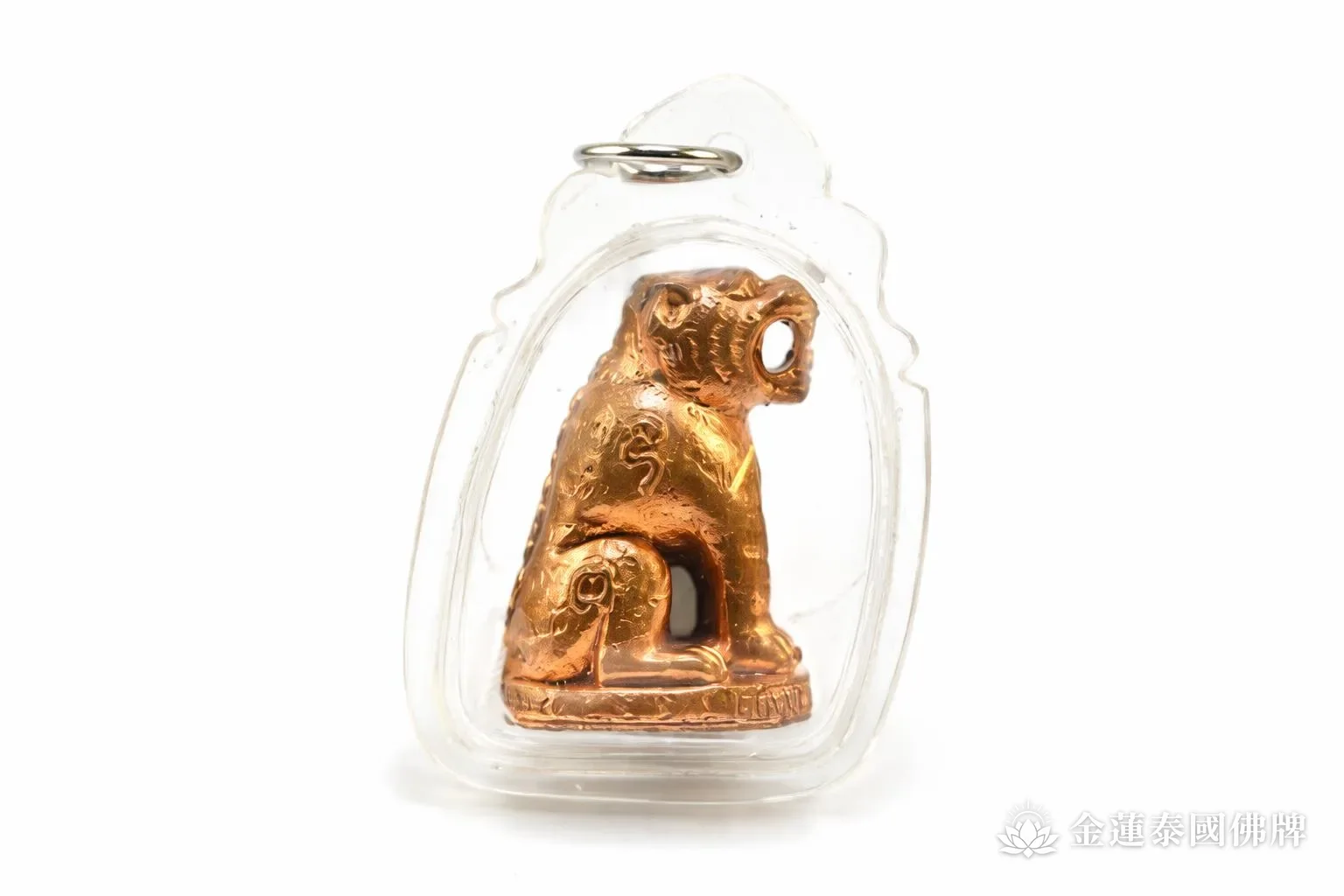 Luang Pu Boon (Wat Thung Hiang) BE 2554 Tiger King (Bronze, About 4 cm, Waterproof Case)US$62
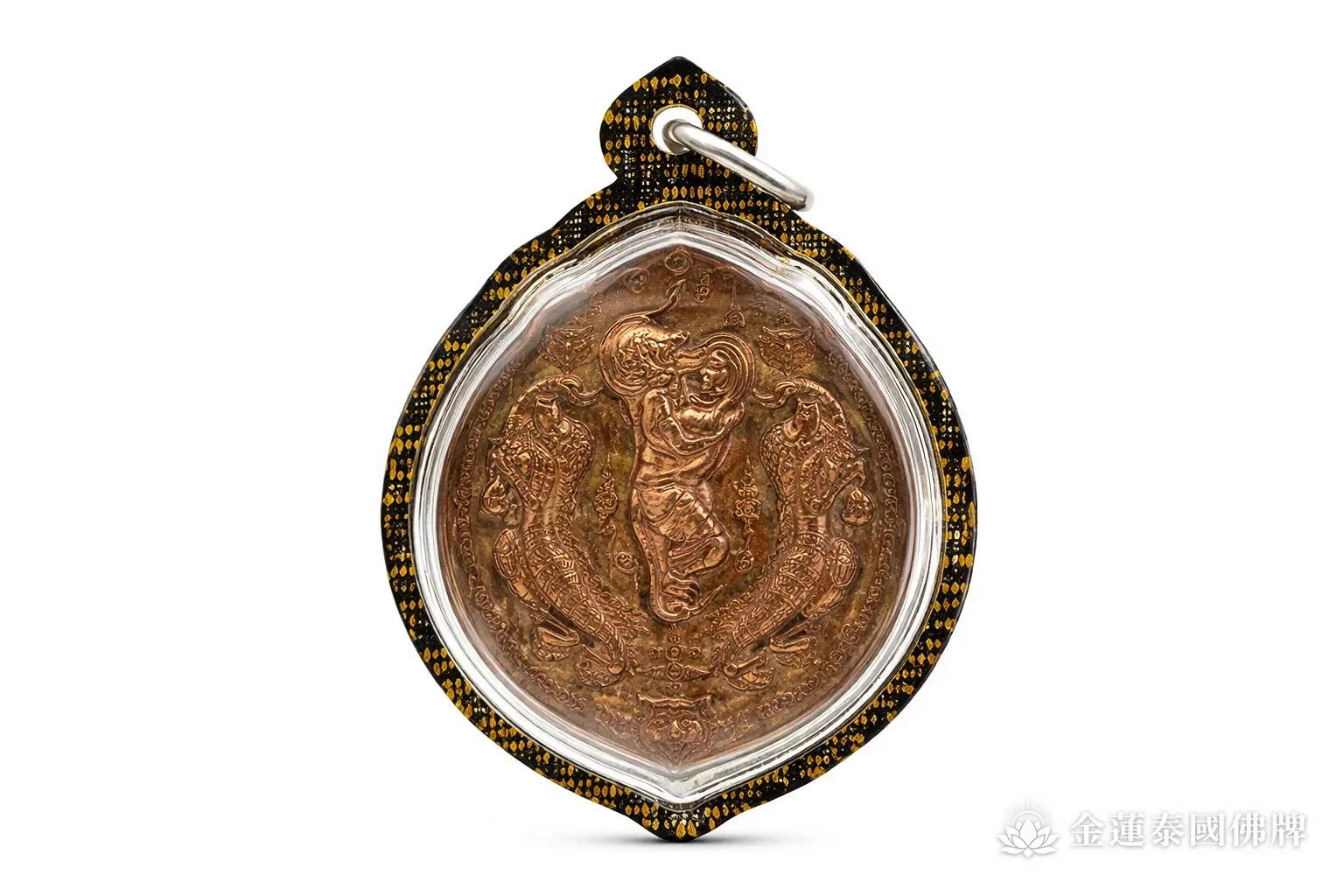 Kruba Ponsit BE 2561 "Maha Baramee" Man-eating Tiger and Headless Tiger (Red Copper / Brass / Alpaca, Waterproof Case)US$114
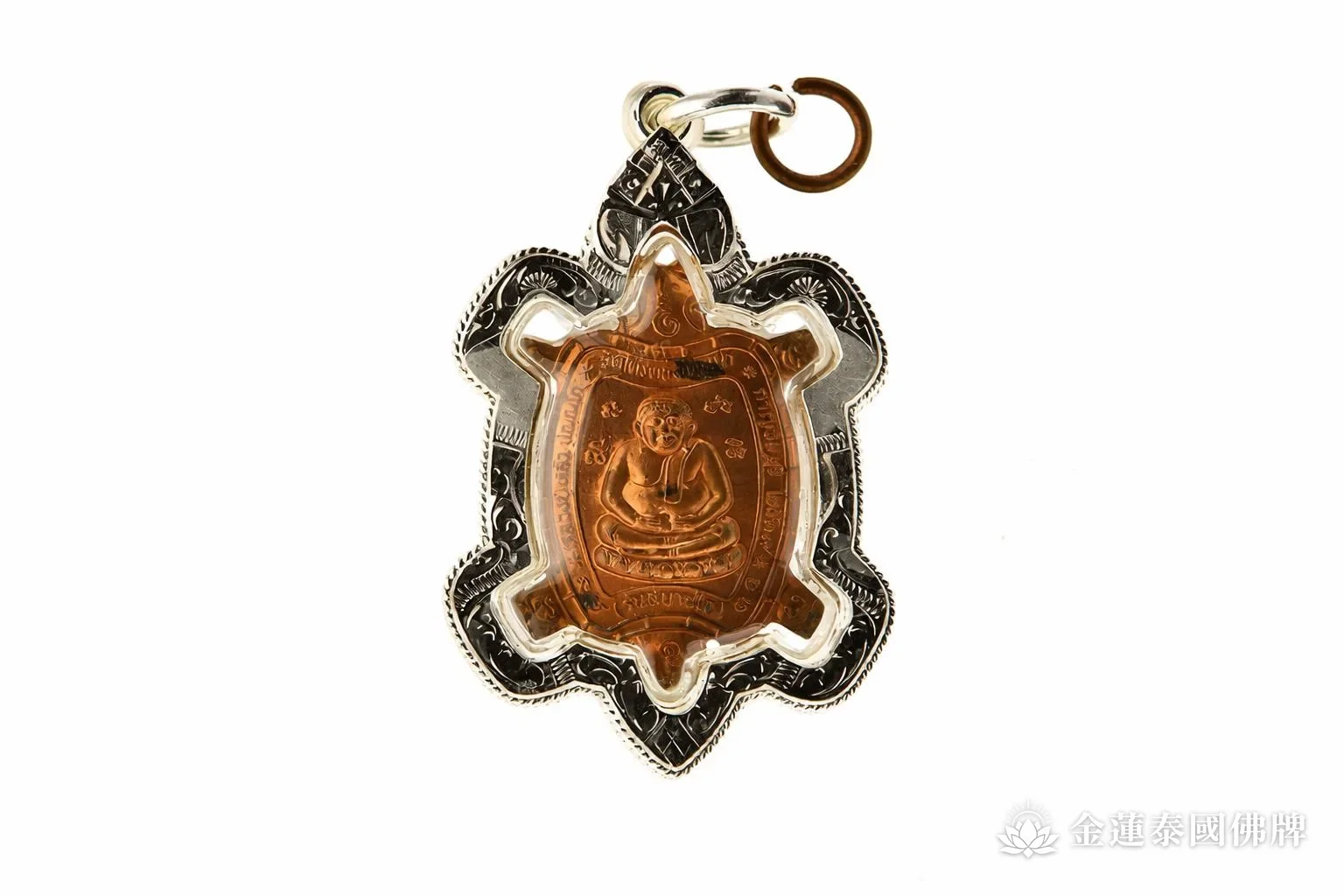 LP Liew BE 2539 Wealth Turtle "Sabai Jai" (Red Copper, Small Mould, Turtle-shaped Sterling Silver Case, With Authentication Card)US$165
The Kotchasi from the Himmapan forest
Thai art has a whole host of mythical animals, said to live in the Himmapan forest (ป่าหิมพานต์) on the Himalayas around Mount Meru, often seen in temple murals and sculpture. The Kotchasi (คชสีห์) is one of them, its Thai name simply “elephant” (คช) plus “lion” (สีห์): a lion’s body with an elephant’s trunk.
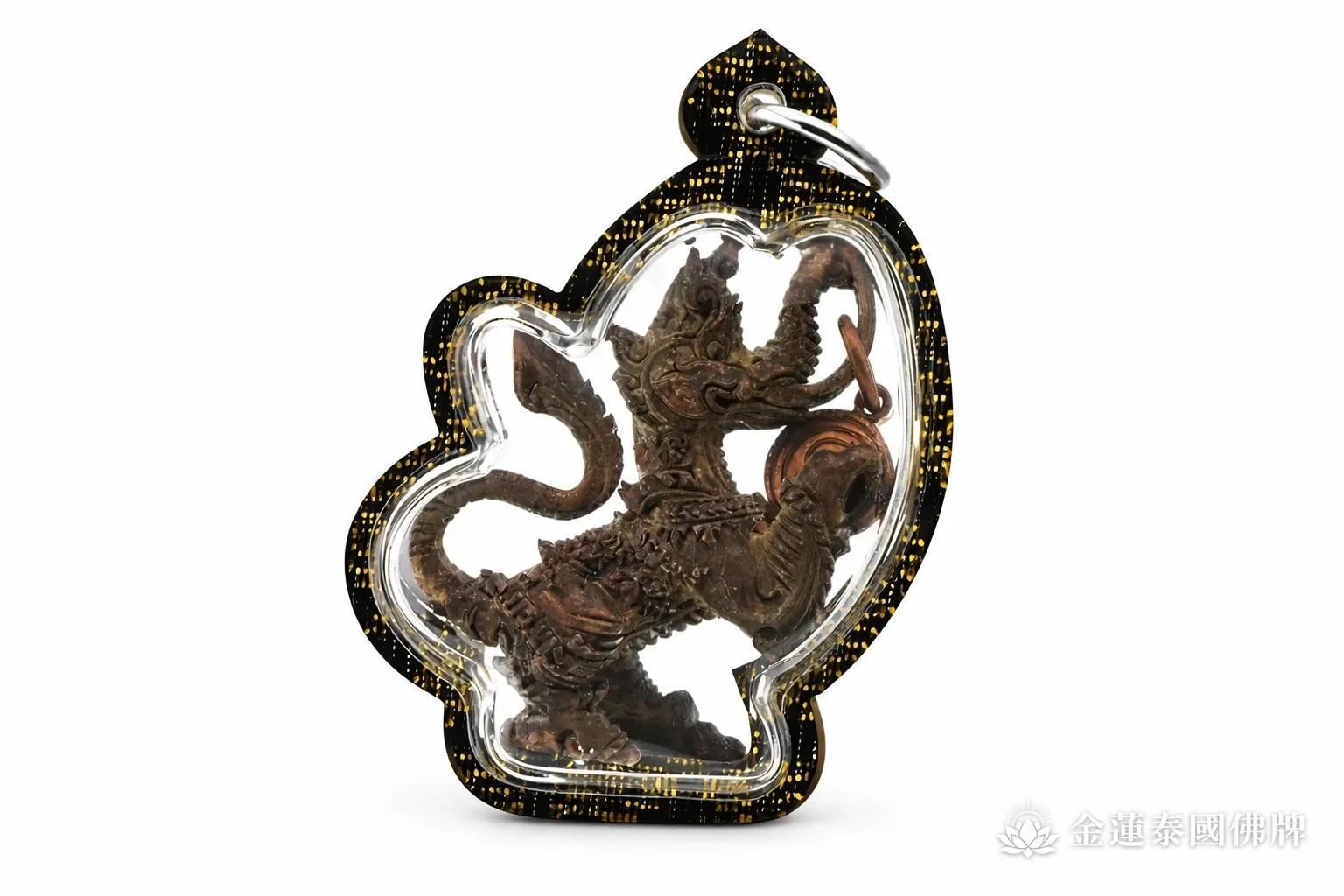
Thailand’s Khaosod has reported that in old times the Kotchasi was the symbol of the military, used on the seal of the minister in charge of military affairs (สมุหกลาโหม). Today a Kotchasi stands at each of the two gates of Thailand’s Ministry of Defence: the one at the south entrance is called “พญาคชสีห์สยามปฐพีพิทักษ์”, guardian of the Thai land, and the one at the north exit “พญาคชสีห์ราชเสนีพิทักษ์”, guardian of the king’s soldiers. They measure 120 cm from the ground to the back, matching the ministry’s 120 years.
Our LP Kalong BE 2549 roaring Kotchasi was cast from melted-down sounding objects excavated at old Khmer sites, war gongs, bronze drums and ancient bells, with a small gong curled in the trunk for the sense of “roaring”.
LP Liew’s wealth turtles
When it comes to Thai turtle amulets, many people think first of the wealth turtles of LP Liew of Wat Rai Taeng Thong in Nakhon Pathom, called Phaya Tao Ruean (พญาเต่าเรือน) in Thai. The practice is famous in Thailand, and even his branch temple, Wat Si Yaek Charoen Phon, is known for LP Liew’s wealth turtles.
Why did LP Liew make turtles? According to Khaosod, he gave three reasons: he wanted to make sacred items different from anyone else’s; the turtle lives long and keeps to its place; and the Buddha was once a turtle in a past life. We have LP Liew’s BE 2536 wealth turtle “Ruay Ruay Ruay”, from his 88th birthday batch, with Phra Sangkajai on the front and the whole piece shaped like a turtle.
Why the owl draws wealth
The owl is called Nok Theut Thue (นกถึดทือ) in Thai. In Thai amulets it is mostly made as a wealth figure. LP Chu of Wat Thap Chumphon in Nakhon Sawan has made many batches of owls, and our LP Chu BE 2569 eleventh-batch owl stands on a die cut with the Thai numerals 6, 1 and 4.
What other sacred creatures are there
The tiger is another very common sacred creature in Thailand, appearing not only on amulets but often in sacred tattoos; see Thai sak yant. Our LP Sawai BE 2541 Phra Pidta has a tiger on the back. The monkey god Hanuman and Si Hu Ha Ta each have their own sections rather than sitting under sacred animals.
FAQ
Are Khrut and Garuda the same?
Yes. Khrut is the Thai name, and Garuda the Sanskrit one; it is also called the golden-winged bird.
Why do some Thai companies have a Garuda at the door?
That is the royal “ครุฑตราตั้ง”, showing the company has royal approval, an honour unrelated to amulets.
Can sacred animal amulets be worn with Buddha amulets?
Yes. The Buddha amulet usually goes in the middle or highest position and the animal beside it; see how many amulets to wear at once.