The shop’s Buddha amulets section holds the Buddha images other than Somdej, Phra Pidta and Phra Kring. The two most common there, and the two people ask about most, are Phra Phuttha Chinnarat and Phra Sangkajai: one is the most copied Buddha image in Thailand, the other a plump arahant associated with wealth. This piece explains where each comes from and why Thais like to wear them.
Why Phra Phuttha Chinnarat is everywhere
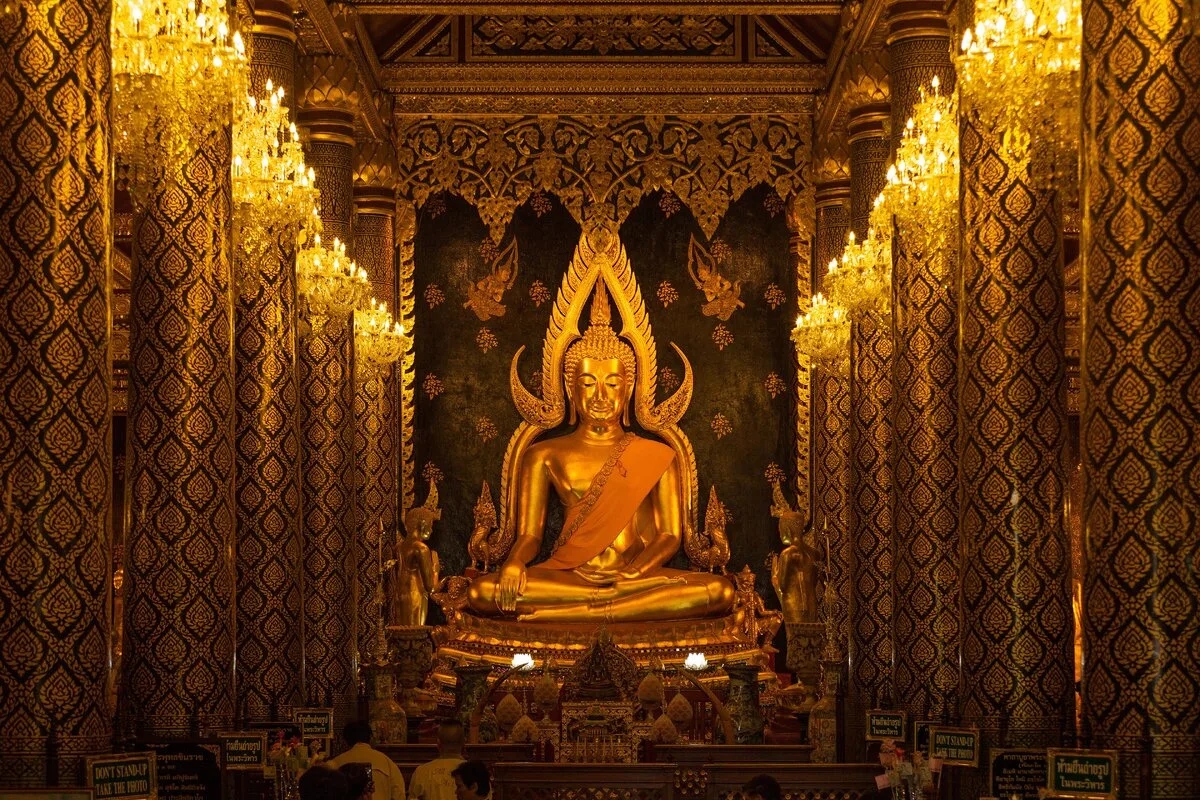
Phra Phuttha Chinnarat (พระพุทธชินราช) is enshrined at Wat Phra Si Rattana Mahathat in Phitsanulok, northern Thailand. The photo above shows the original: a seated golden Buddha with a flame-like halo behind him and the pillars on either side covered in gilt lacquer designs.
Silpa Watthanatham (Art and Culture) magazine points out that Phra Phuttha Chinnarat is the most copied Buddha image in Thailand, and many of the principal Buddhas in temple halls across the country, and even in Thai temples abroad, are modelled on it. So even people who have never been to Phitsanulok have often seen its likeness.
Ancient northern Thai chronicles preserve a legend about its casting: an ancient king ordered the image cast, but it failed several times, until the god Indra came down in disguise to help, and that time the molten gold flowed over the whole body and a trident-shaped mark appeared on the Buddha’s forehead. It is a legend, but it shows how deeply Thais revere this image. Another recorded story is that King Rama V once wanted to bring Phra Phuttha Chinnarat to Bangkok but changed his mind, so the original stayed in Phitsanulok.
In Chinese it is called the “success Buddha”, after the sense of “victory” in Chinnarat, so many people pray to or wear one when they want things to go smoothly. We have LP Mee’s BE 2538 small Phra Buddha Chinnarat figure.
Buddha Amulets in our shop
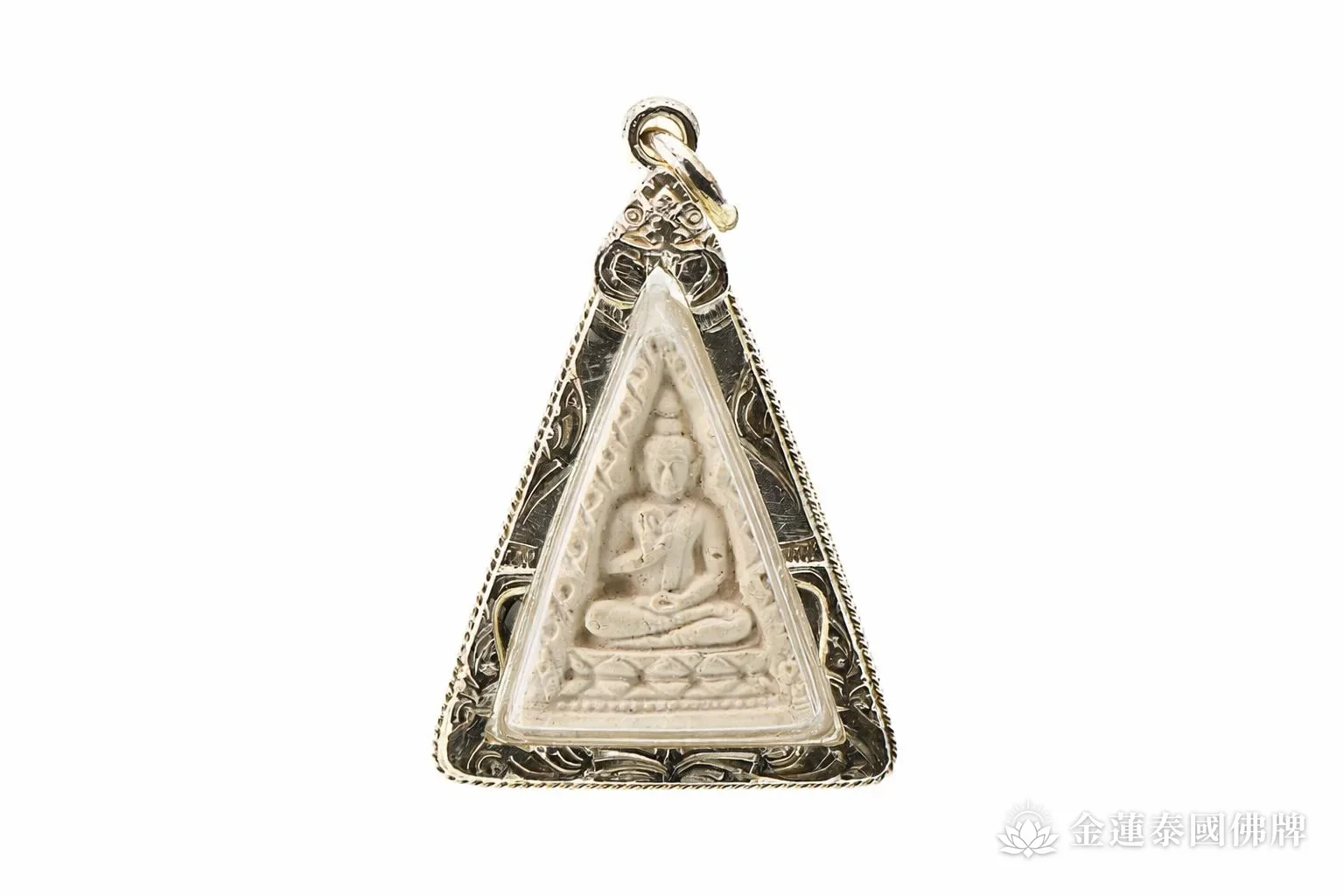 Wat Paknam BE 2514 / 2518 Fourth-batch Phra Dhammakhan, Triangular Mould (Sacred Powder, Sterling Silver Case, With Authentication Card)US$178
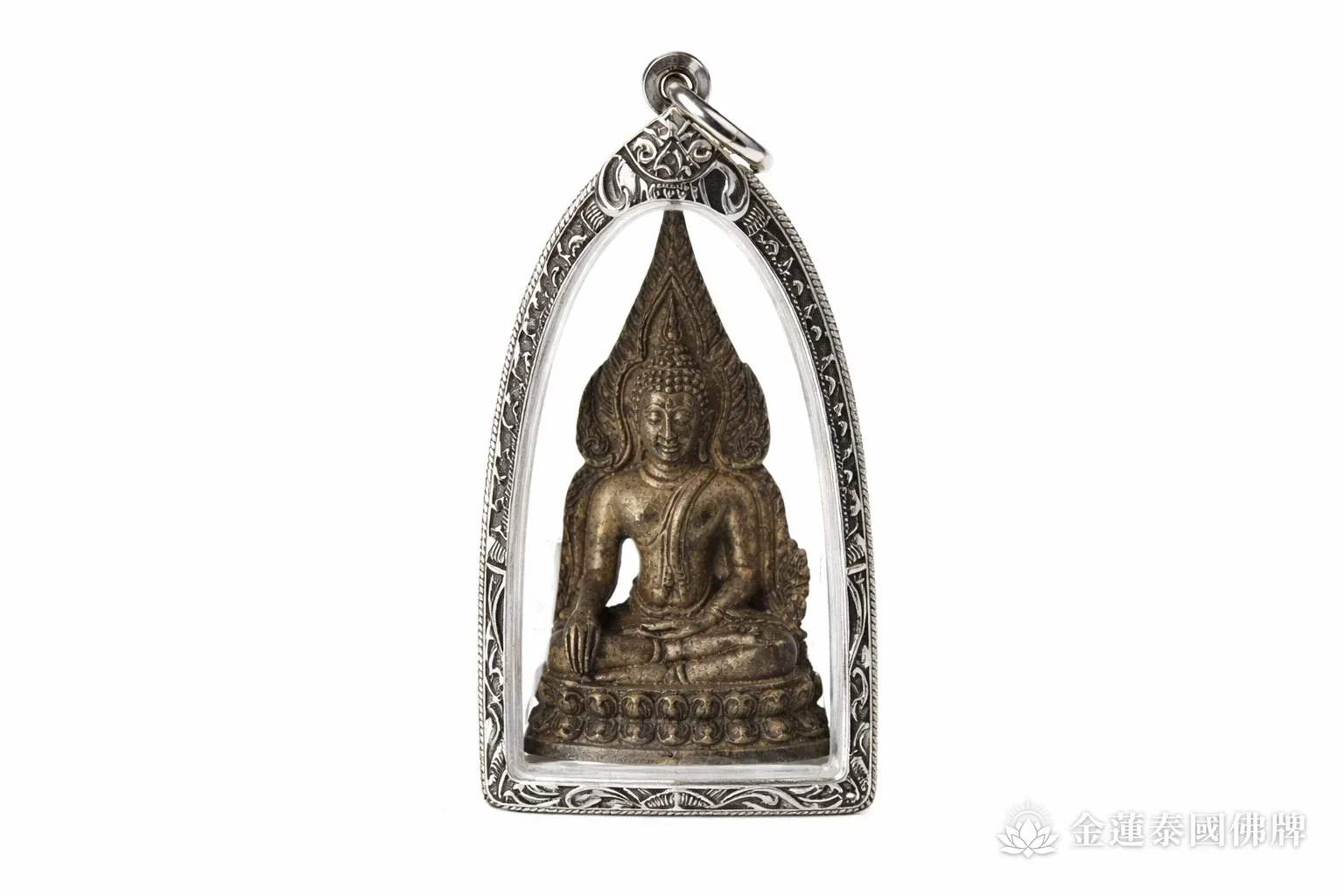 LP Bua BE 2560 Phra Buddha Chinnarat "Roon Maharaj" (Nine-metal Bronze, Limited to 199, Sterling Silver Case)US$294
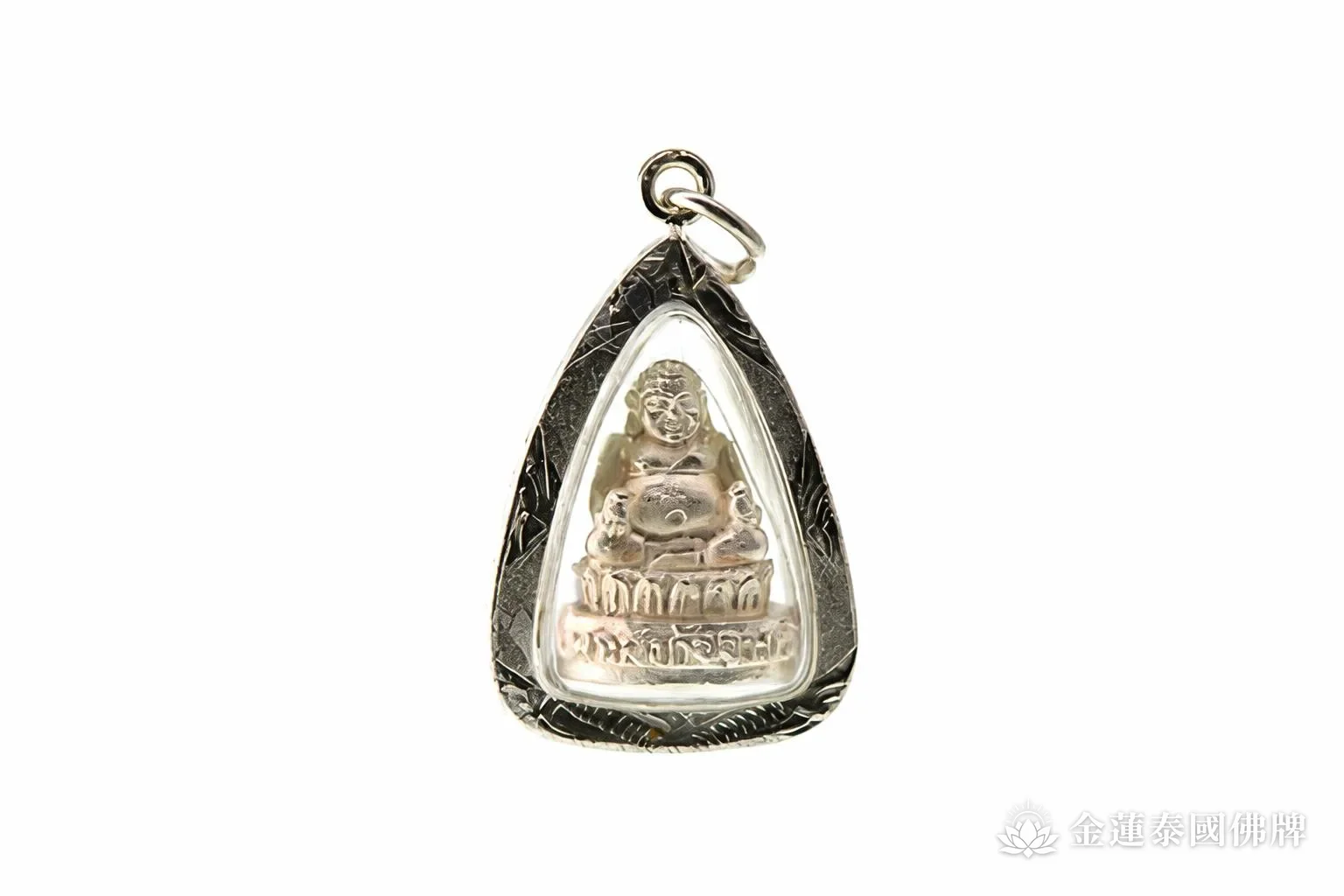 Kruba Noi BE 2552 Wealth Buddha Sangkajai (Silver-plated, Sterling Silver Waterproof Case)US$62
Why Phra Sangkajai is so plump
Phra Sangkajai (พระสังกัจจายน์) is Maha Kaccayana, one of the Buddha’s ten great disciples, renowned for explaining the Buddha’s brief sayings in detail.
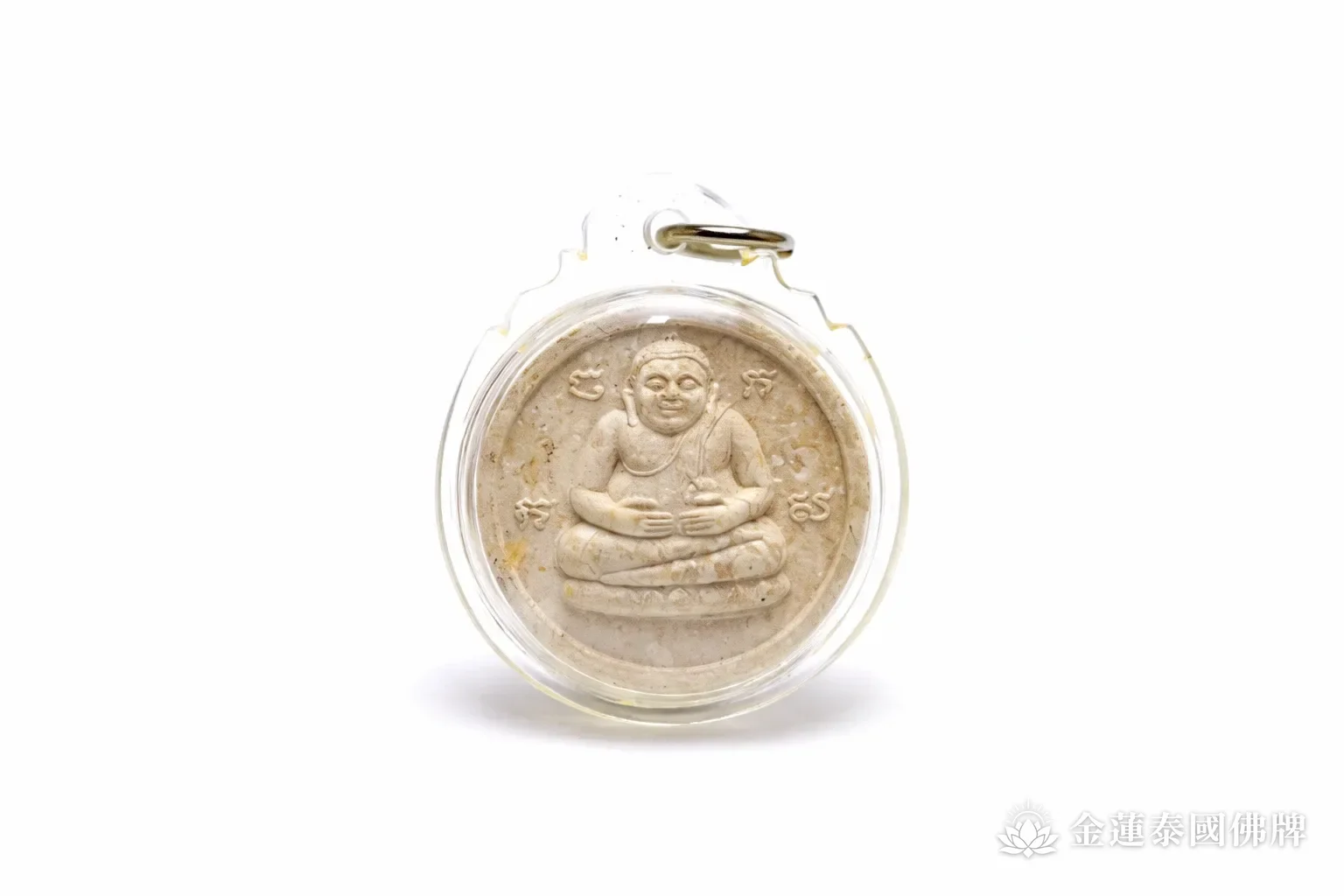
A story told in Thailand says that Phra Sangkajai, originally named Kanchana, was so handsome, his skin like gold, that devas and people often mistook him for the Buddha. Feeling this wasn’t right, he turned himself into a plump, plain figure, and no one mistook him again. It is a legend, but Thai Sangkajai images all have this round shape, hands on the belly, looking very blessed, so Thais take him up for wealth, plenty to eat and goodwill.
Many people confuse Phra Sangkajai with the “Budai” (Laughing Buddha) familiar to Chinese people. Silpa Watthanatham has written specifically about the difference: Phra Sangkajai is a Theravada arahant with his robe over one shoulder; Budai is a figure of Chinese Mahayana Buddhism, often shown bare-chested and bare-bellied with a cloth sack on his back. We have two Phra Sangkajai: LP Sakorn’s BE 2549 and LP Sawai’s BE 2541 birthday-batch Phra Sangkajai.
What else is in the Buddha amulets section
Besides these two, the section also has Buddha amulets from temple ceremonies, such as Wat Laem Phraya’s BE 2500 Phra Chai, LP Huan’s BE 2545 Lek Lai Buddha, and the small standing Guanyin from Wat Kaeo Jam Fa’s 2558 ceremony. Buddha amulets are mainstream amulets with few taboos, and many people’s first amulet is a Buddha amulet; for how to choose, see this beginner’s guide. The chant of the Buddha’s virtues often recited while wearing one is collected in Chants and Mantras.
FAQ
How do Phra Phuttha Chinnarat and the Somdej differ?
Phra Phuttha Chinnarat is a three-dimensional or relief Buddha image modelled on the one in Phitsanulok; the Somdej is a rectangular powder amulet with a very simple Buddha form, originating with the Somdej master of Wat Rakhang in Bangkok. Both are Buddha amulets, worn for somewhat different things.
Is Phra Sangkajai suitable for a shop?
Yes. Phra Sangkajai is for wealth and plenty to eat, and people both keep him in shops and wear him.
Where can I pay respects to the original Phra Phuttha Chinnarat?
At Wat Phra Si Rattana Mahathat in central Phitsanulok, which Thais usually call Wat Yai (the great temple). For the etiquette of visiting, see Thai temple etiquette.