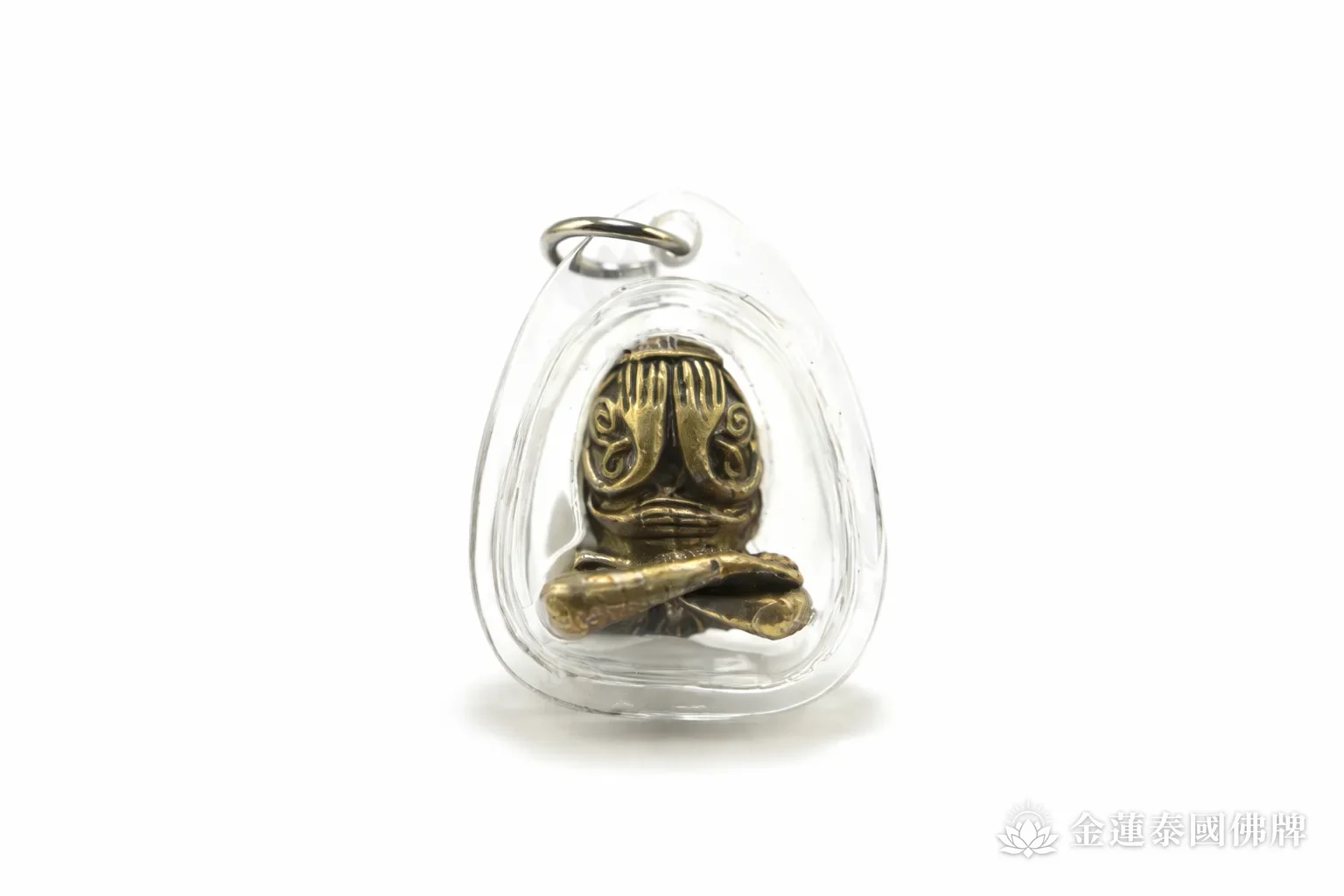
An ordinary Phra Pidta covers his face with one pair of hands; this one uses several: the eyes, ears, mouth and nose and the lower body are all covered. This is the “eight-handed Pidta”. It comes from LP Mee (Luang Phor Mee) of Wat Manwichai, made under him in BE 2536 (1993), now more than thirty years old.
Cast in copper in the round, the front shows both hands over the face and the arms crossed, with yantra engraved on the palms and body, and the back carries yantra designs and sacred script. About 3.8 cm tall and discreet, already sealed in a waterproof case.
Amulet details
| Blessed by | LP Mee (Luang Phor Mee, หลวงพ่อมี เขมธัมโม) |
|---|---|
| Temple | Wat Manwichai |
| Year | BE 2536 (1993) |
| Image | Eight-handed Phra Pidta |
| Size | About 3.8 cm tall |
| Material | Copper |
| Case | Waterproof case |
| Benefits | Warding off evil, protection from misfortune, blocking troublemakers, avoiding legal trouble, safety |
| Price | US$101 (including waterproof case) |
More amulets from the same monk? See the LP Mee profile (3 amulets) ›
Why so many hands?
The design comes from the Buddhist idea of guarding the six senses: not looking, not listening, not speaking, not letting outside temptations lead you away. Thai folk understanding is more direct: the more hands and the more tightly covered, the better the wearer is “hidden” from misfortune, disputes and troublemakers. So the eight-handed Pidta has always been one of the most sought-after Pidta images.
People who often get into arguments or contract disputes, who come home late or travel for work, and drivers take this kind of Pidta most; it suits men and women alike.
LP Mee
LP Mee was the late abbot of Wat Manwichai in Ayutthaya, known for meditation and small cast bronze statues; LP Pan of Wat Ban Paen also studied sacred chants under him. His life is in the LP Mee profile.
We also have the same monk’s BE 2538 small success Buddha statue; that one is for a smooth career and this one leans towards protection and avoiding danger, and they can be worn together. If you like herbal Pidta, see the LP Chuan BE 2556 herbal Phra Pidta; other Pidta are in the Phra Pidta section.
Wearing it
As a principal Buddhist amulet, it goes in the middle when worn with others; it can also be kept on a home altar, see Altar and worship guide. If you don’t have a suitable chain yet, see Amulet necklaces. Wearing and taboos are covered most fully in Amulet taboos and FAQ.
The eight-handed Pidta covers the eyes, ears, mouth and nose with several hands; in Thai it’s called Pid Thawan, meaning closing all the body’s doors. How it differs from the two-handed Pidta, and who the original Pidta figure is, are covered in Why does Phra Pidta cover his face?
Frequently asked questions
How does the eight-handed Pidta differ from an ordinary one?
An ordinary Pidta covers his face with two hands; the eight-handed Pidta covers his whole body with many hands, traditionally thought to give fuller protection.
Will the copper oxidise and change colour?
It darkens over time, which is normal and doesn’t affect the amulet.
Can women wear it?
Yes, for men and women alike.