
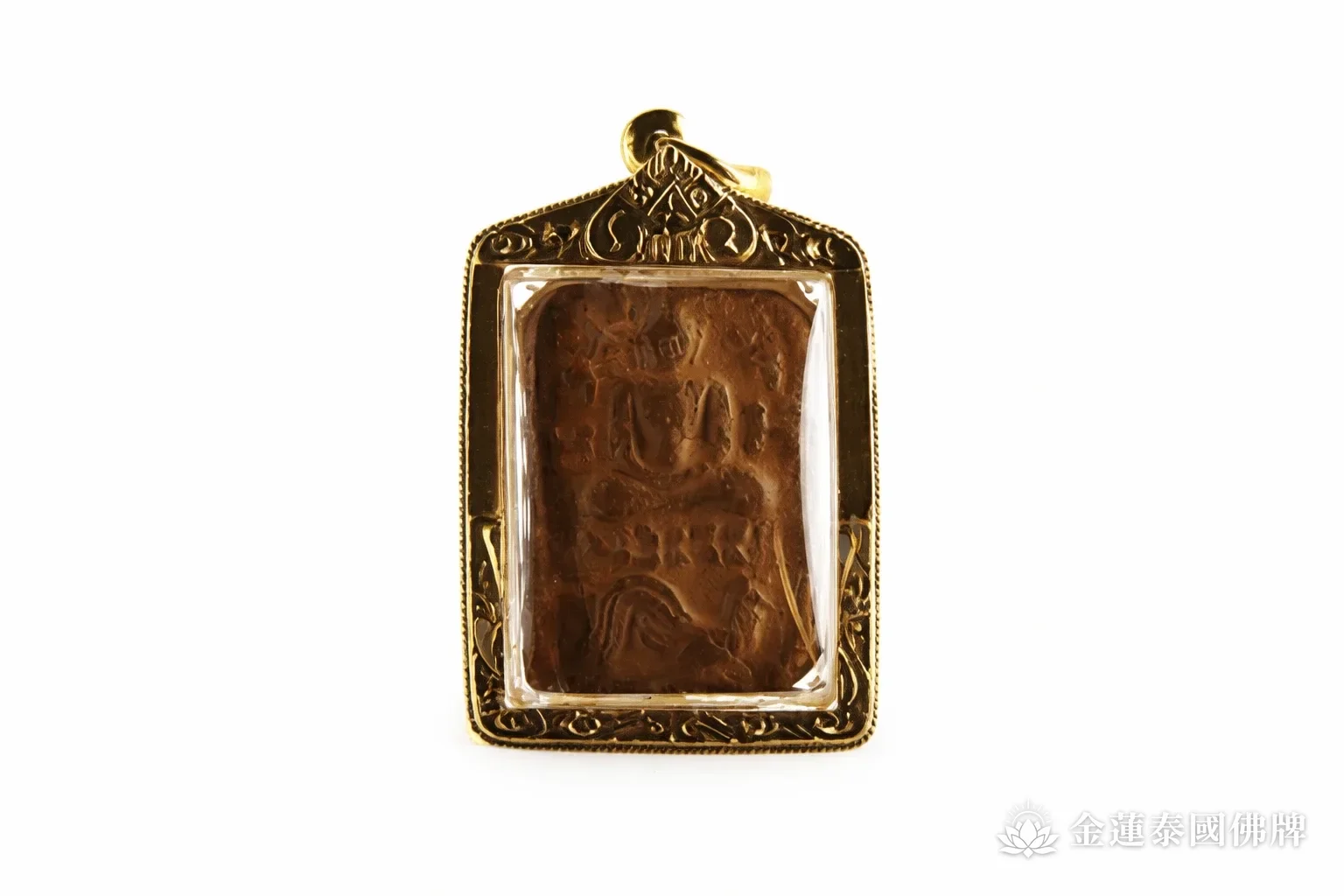
A sacred animal Somdej made around BE 2460 to 2475 by LP Parn (Luang Phor Parn, หลวงพ่อปาน) of Wat Bang Nom Kho, Ayutthaya, with a rooster beneath the Buddha, which Thais call “Phra Luang Phor Parn Phim Kai”. Sacred powder, temple clay and scripture powder, about 3 cm tall, in an 80% gold waterproof case, with authentication card. We have two pieces at the same price to choose from.
Details
| Monk | LP Parn (Luang Phor Parn Sonanto, หลวงพ่อปาน โสนนฺโท) |
|---|---|
| Temple | Wat Bang Nom Kho (วัดบางนมโค), Sena district, Ayutthaya |
| Name | Sacred animal Somdej “rooster” (Phim Kai), third batch |
| Year | About BE 2460–2475 (1917–1932), issued in the monk’s lifetime; the source page’s field says about 2460–2480 |
| Material | Sacred powder, temple clay, scripture powder |
| Size | About 3 cm tall |
| Case | 80% gold waterproof case |
| Authentication | With authentication card (for how to check it, see What is an amulet authentication card?) |
| Benefits | Helping wealth and career, changing luck, blocking troublemakers, warding off evil, smooth fortunes, attracting popularity |
| Versions and price | Piece A / piece B, US$2,039 each (with gold case and authentication card) |
Want to know the monk who blessed this piece? Read the LP Parn profile ›
What the two pieces look like
Both are small rectangular brown powder amulets with a Buddha seated on a base, scripture letters either side of his head, and the outline of a rooster pressed beneath the seat. Over a century the powder surface has worn very soft, with fine grains and unevenness visible. Piece A is darker, reddish brown, with the Buddha and the rooster beneath clearer, in a rectangular gold case; piece B is a little lighter, brown with greyish-white spots, in a cut-cornered octagonal gold case. Both have flat backs showing the powder’s texture.
LP Parn’s sacred animal Somdej
According to the seller, LP Parn made his sacred animal amulets in three batches: the first from about 2450, with moulds carved in wood by villagers and a rough look; the second around 2460, with moulds made by a carver and clear lines; the third between 2460 and 2475, divided into early and late by whether there’s one line or two of scripture beside the Buddha’s head, with a small hole at the top filled with the monk’s scripture powder; this third batch is the one most seen on the market today. There are six sacred animals in all, Hanuman, Garuda, rooster, porcupine, bird and fish, said to have been made one a day for six days in a row, the rooster on the third day. The seller also says the monk’s powder included an Itthije scripture powder he learned from LP Niam, of the line of the Somdej master Somdej Toh. We haven’t been able to check these details in Thai newspapers, and list them as the seller writes them.
Thai Wikipedia records that LP Parn learned to make clay amulets from a white-robed practitioner, and that the most important things he left were fired clay amulets and protective yant cloths. For the monk’s life, see the LP Parn profile; we also have the BE 2559 bucha statue Wat Bang Nom Kho later made of him. For the story of the Somdej, see the Phra Somdej section. Every item in our shop comes with a permanent authenticity guarantee.
Frequently asked questions
Is this from LP Parn’s lifetime?
Yes. The monk passed away in BE 2481, and this batch was made between 2460 and 2475, over ninety years ago.
Is this LP Parn the same as LP Parn of Wat Bang Hia?
No. This is Luang Phor Parn of Wat Bang Nom Kho, Ayutthaya; Wat Bang Hia in Samut Prakan also had an LP Parn, known for tiger fangs and tiger kings, a different monk.
How do I choose between pieces A and B?
Same batch, same sacred animal, same price; they differ in powder colour, condition and gold case shape. Choose whichever you like from the photos.
What’s the authentication card for?
The card carries a photo and number you can check on the issuing body’s website; see What is an amulet authentication card?
More Phra Somdej in our shop
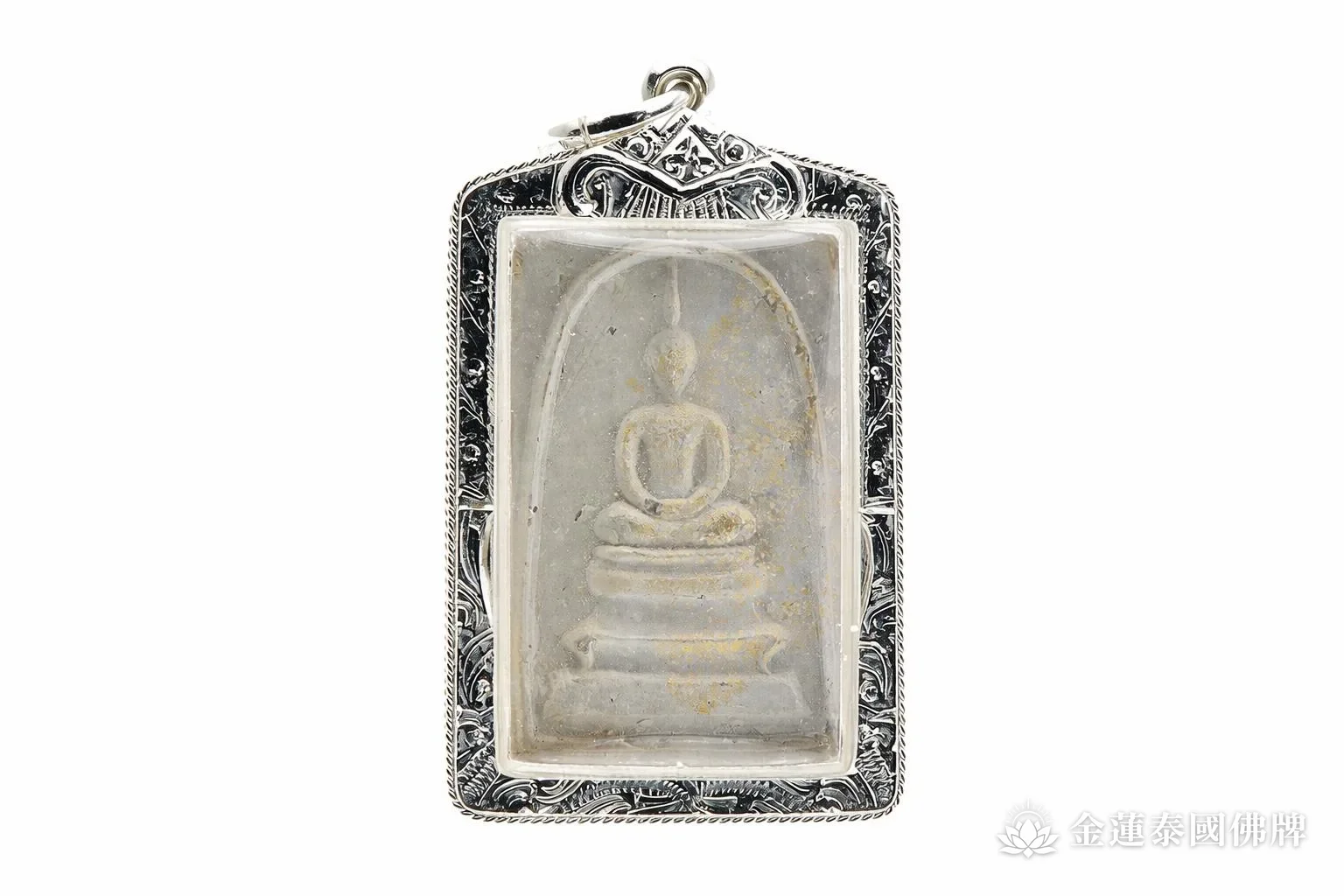 LP Phae BE 2509 "Buddhist Lent" Somdej Roon Traimas, Small Chedi Mould (108 Flower Powders, Gilded in the Mould, Sterling Silver Case, With Authentication Card)US$191
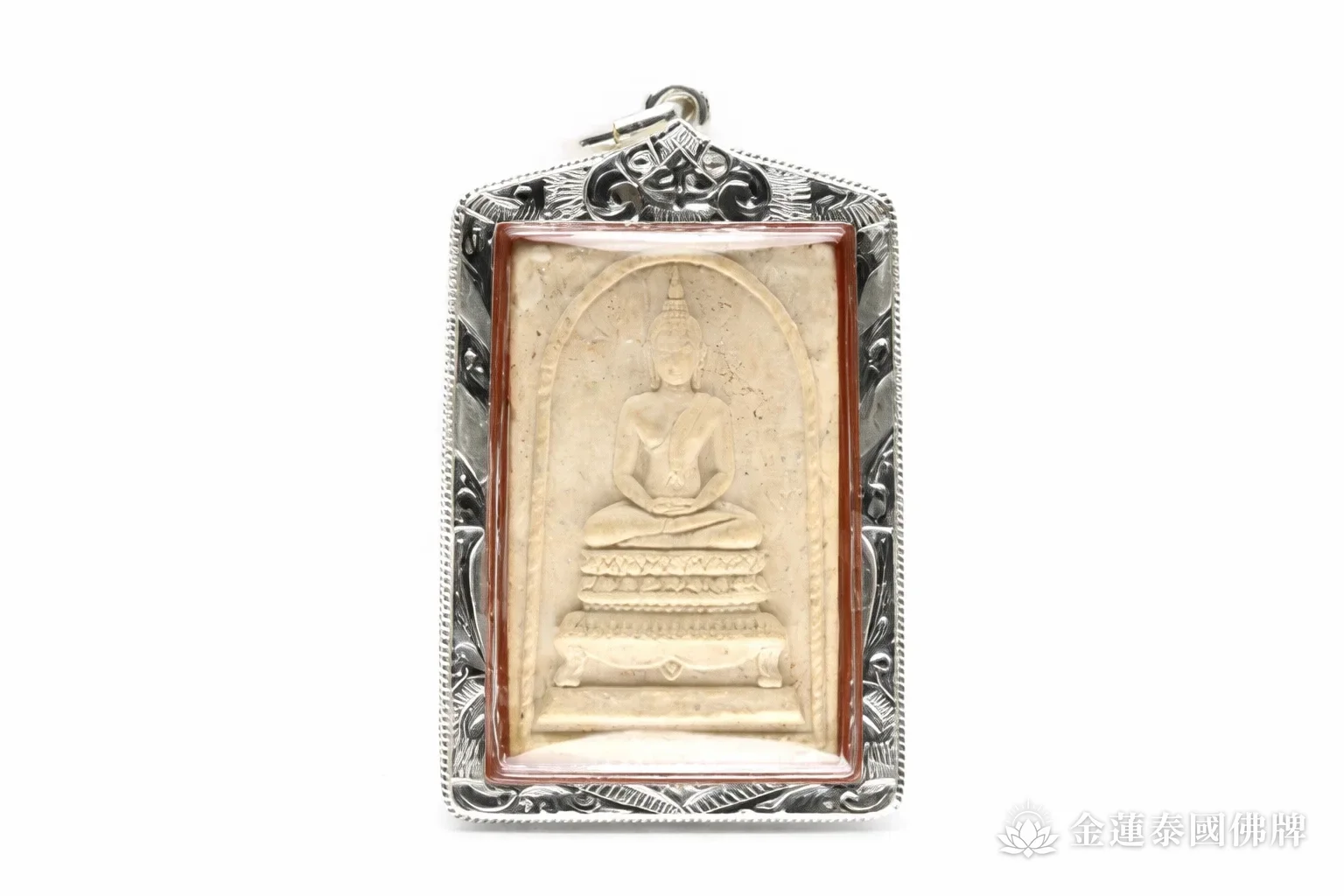 Luang Pu Toh BE 2516 Somdej "Lhang Tra Chang" with Elephant Seal Back (Temple Soil and Sacred Powder, Sterling Silver Case, With Authentication Card)US$475
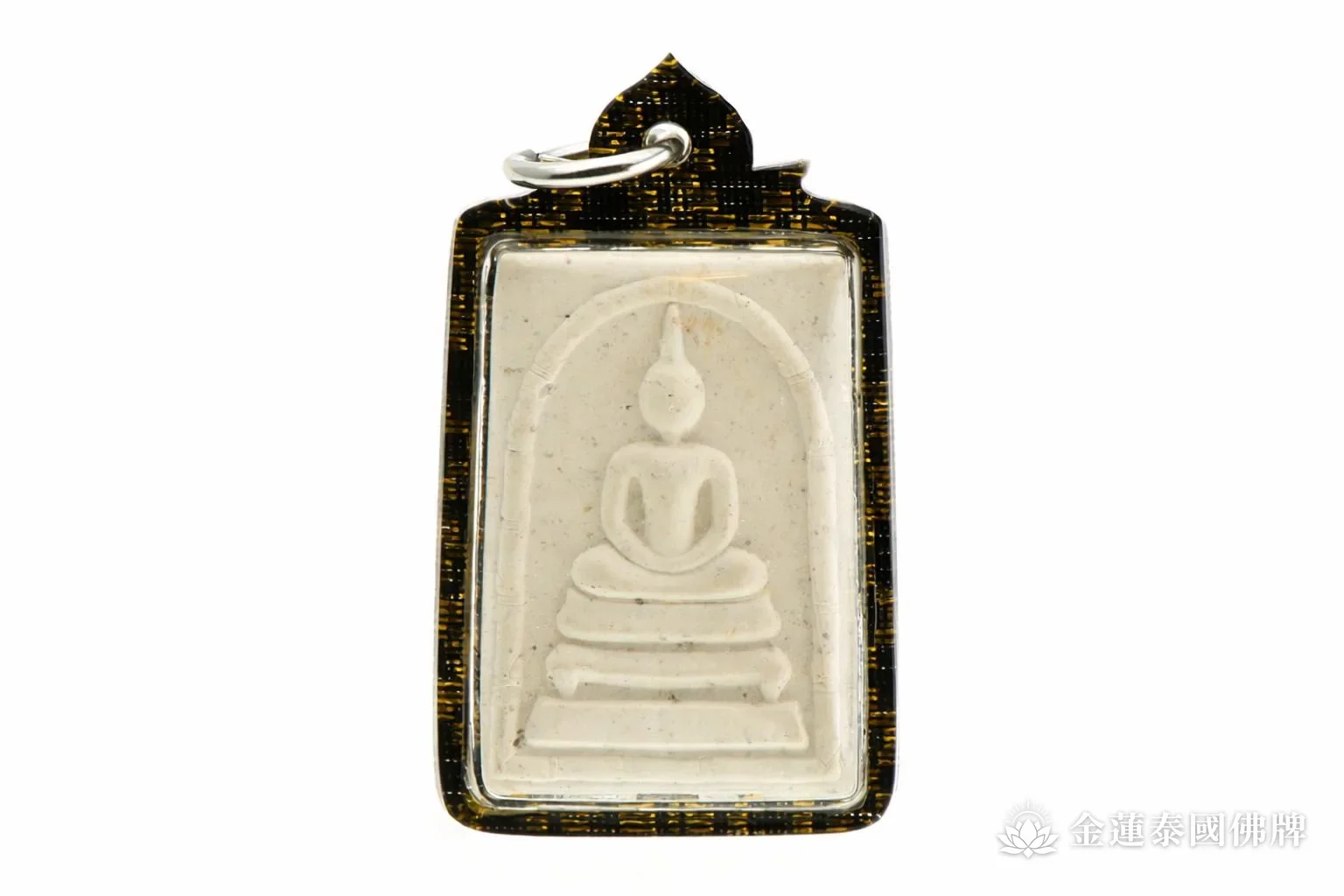 LP Phool BE 2544 First-batch Bamboo-leaf Somdej Weluwan "Poon Suk" (Betel-residue Sacred Powder, Portrait Back, Waterproof Case, With Authentication Card)US$88