
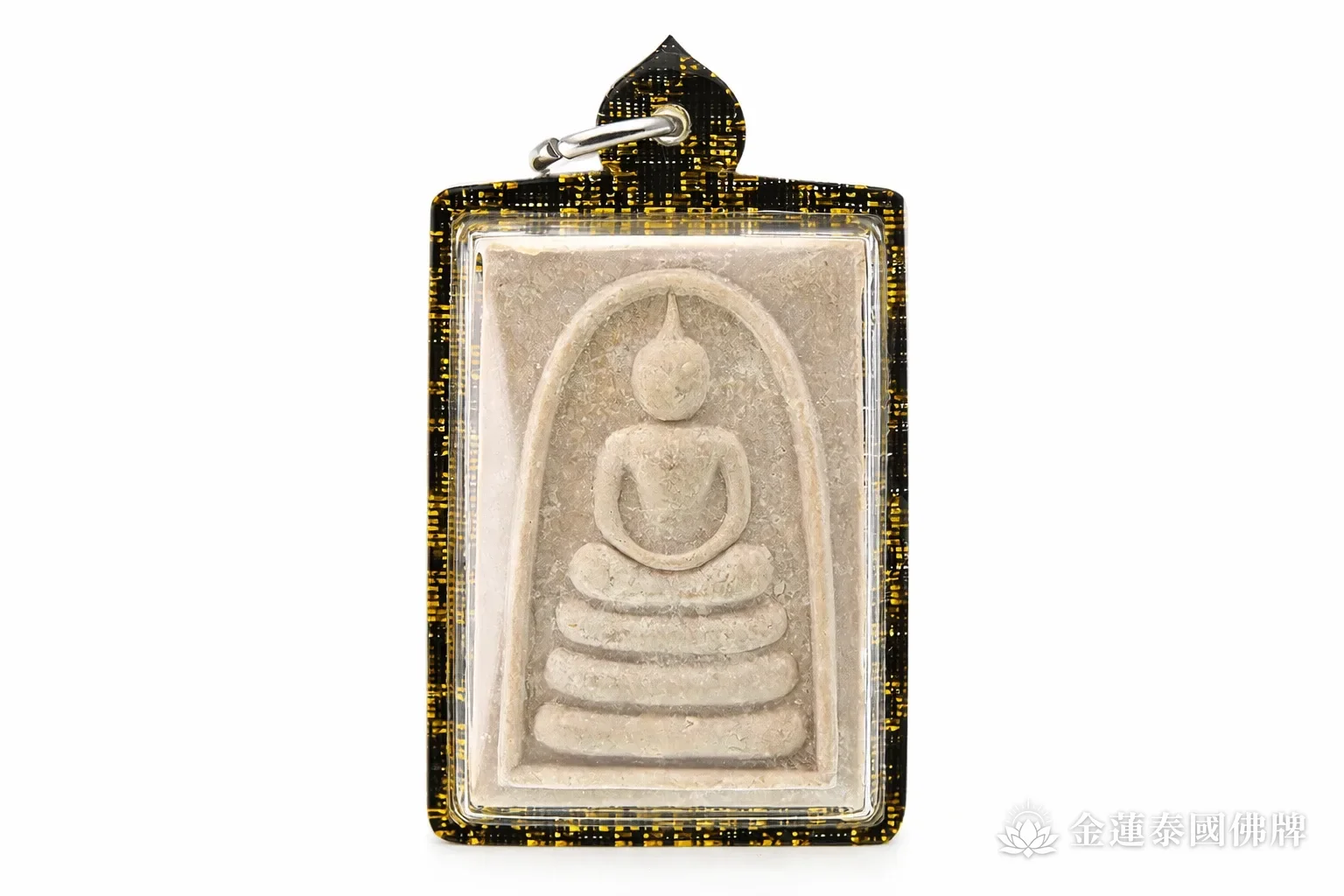
A Phra Somdej issued in BE 2534 by LP Phae (Luang Pho Phae, LP Pae, หลวงพ่อแพ) of Wat Phikulthong (วัดพิกุลทอง) in Sing Buri. The back is inscribed “แพ ๕ พัน”, so collectors call it “Pae 5 Phan”. A powder amulet about 4 cm tall, in white, black and gold-lacquered, plus a white version in a sterling silver case: four versions in all, each with a certificate card.
Amulet details
| Blessed by | LP Phae (Luang Pho Phae Khemangkaro, LP Pae, หลวงพ่อแพ เขมังกโร), monastic title Phra Thammamuni |
|---|---|
| Temple | Wat Phikulthong (วัดพิกุลทอง), Tha Chang district, Sing Buri, Thailand |
| Name | Phra Somdej “แพ ๕ พัน” (Phra Somdej Pae 5 Phan) |
| Year | BE 2534 (1991), issued during the monk’s lifetime |
| Image | Front: a seated Buddha in an arched niche on a three-tier base. Back: the monk’s profile, a yant, a red temple stamp and “แพ ๕ พัน” |
| Material | Temple clay, sacred powder, 108 flower powders, gold, silver and copper takrut |
| Size | About 4 cm tall |
| Versions and prices | White, waterproof case US$101; black, waterproof case US$101; gold-lacquered, waterproof case US$101; white, sterling silver waterproof case US$139 (all with certificate card) |
| Certificate | All four come with a certificate card (how to check it: see What is an amulet certificate card?) |
| Benefits | Thriving business, a steady flow of money, turning bad luck to good, a sense of danger ahead, getting on well with people |
More amulets from the same monk? See the LP Phae profile (3 amulets) ›
Telling the four apart
The white one is off-white, with fine cracks around the Buddha and the edges of the base left by the powder shrinking as it dried. The monk’s profile on the back is clear, with a red temple stamp in the top right corner. The black one is made with palm-leaf manuscript ash, black shading to grey all over with a few white powder marks; the red stamp on the back has soaked into the powder and turned dark red. The gold-lacquered one has gold lacquer brushed over the whole front, which actually makes the Buddha’s outline stand out more; the back is unlacquered, showing the original powder and red stamp. The last is the white in a sterling silver case, the case hand-engraved, with the monk’s profile and “แพ ๕ พัน” standing out within the silver frame on the back.
After thirty-odd years, the surface texture and stamp colour differ on every powder amulet; the photos show the actual pieces, so what you choose is what you get. Powder amulets don’t like damp or knocks, and all four are already cased; for the differences between cases, see How to choose an amulet case.
LP Phae and his Phra Somdej
LP Phae was born in Sing Buri in 1906, lived his whole life at Wat Phikulthong, founding schools and restoring the temple, and was called “the god of the Noi River basin” by locals; he passed away in 1999. He’s best known for his brass Phra Somdej of BE 2494, and the temple went on to issue many batches of powder Phra Somdej; “แพ ๕ พัน” is one of them, an entry-level, easily found batch among Thai collectors. His full life is in the LP Phae profile, and we also have his BE 2539 monk image bucha statue.
Phra Somdej is one of the most common Thai amulet images; for its origins, see the Phra Somdej section. The differences between powder, temple clay and other materials are in Thai amulet materials.
Frequently asked questions
What does “แพ ๕ พัน” mean?
แพ is the monk’s name, ๕ is the Thai numeral 5, and พัน means “thousand”. It’s the inscription on the back, which Thai collectors use to name this batch; the temple also issued other batches such as “แพ ๔ พัน”.
Which is better, white or black?
Both are from the same batch and blessed by the same monk; the difference is the material. Thais tend to associate flower powder with popularity, and palm-leaf ash with wisdom and protection from danger; just choose the colour you like.
Why does the red stamp on the back vary in depth?
The temple applied the stamp at the time, and powder absorbs ink. After thirty-odd years some stamps have faded and others soaked in and darkened, a common look on old powder amulets.
More LP Phae amulets in our shop
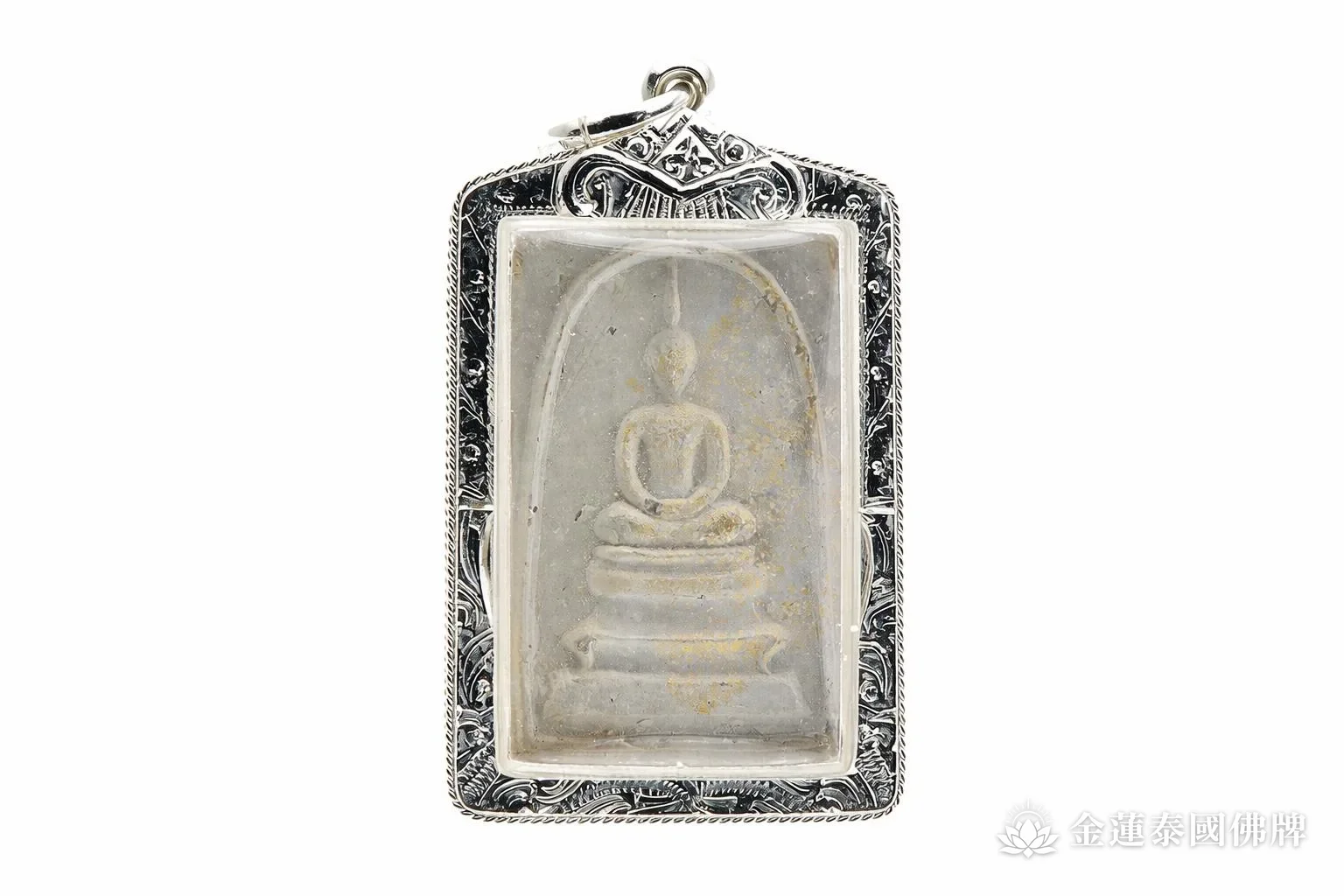 LP Phae BE 2509 "Buddhist Lent" Somdej Roon Traimas, Small Chedi Mould (108 Flower Powders, Gilded in the Mould, Sterling Silver Case, With Authentication Card)US$191
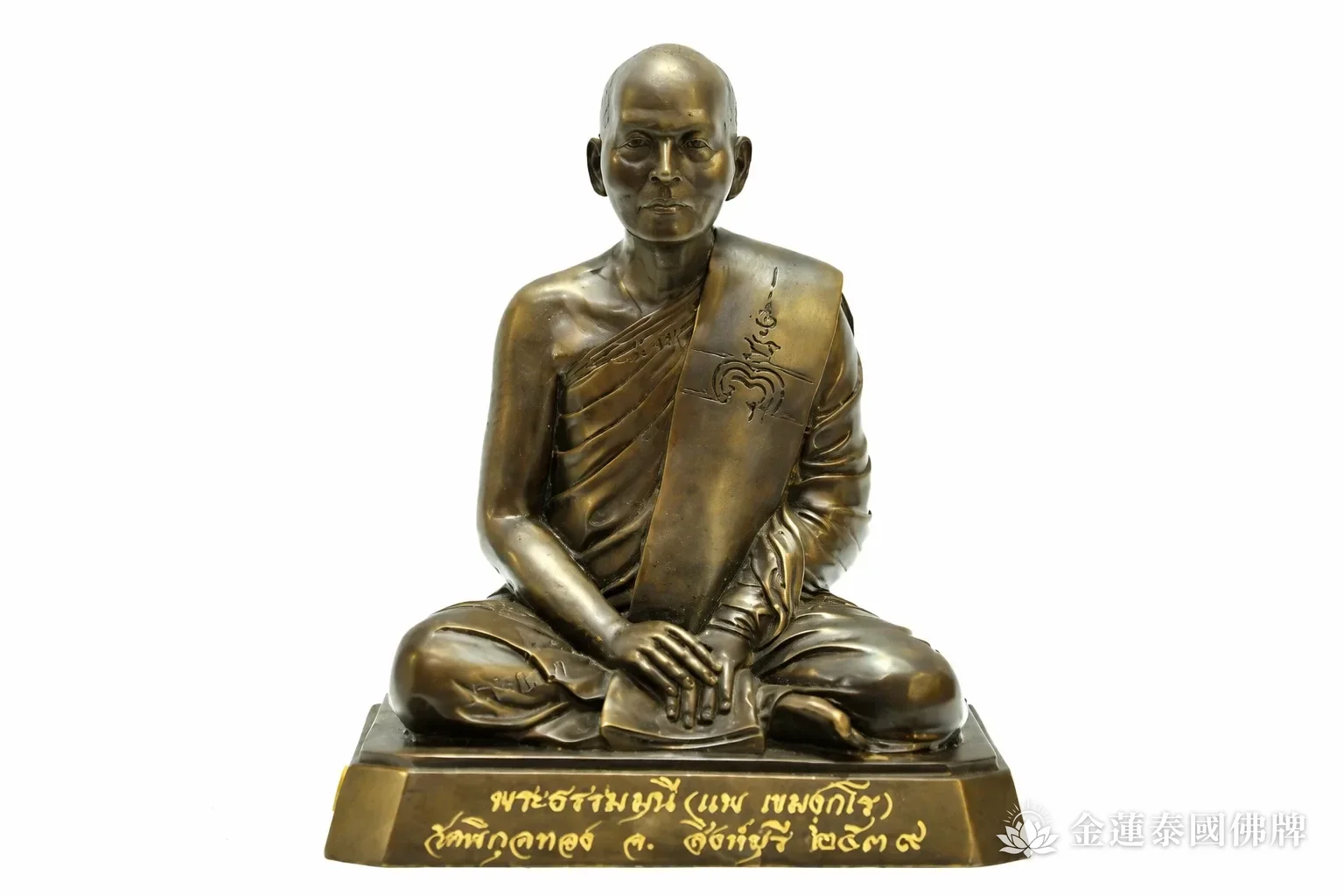 LP Phae BE 2539 Monk Image Bucha Statue (Bronze, About 19 cm)US$243