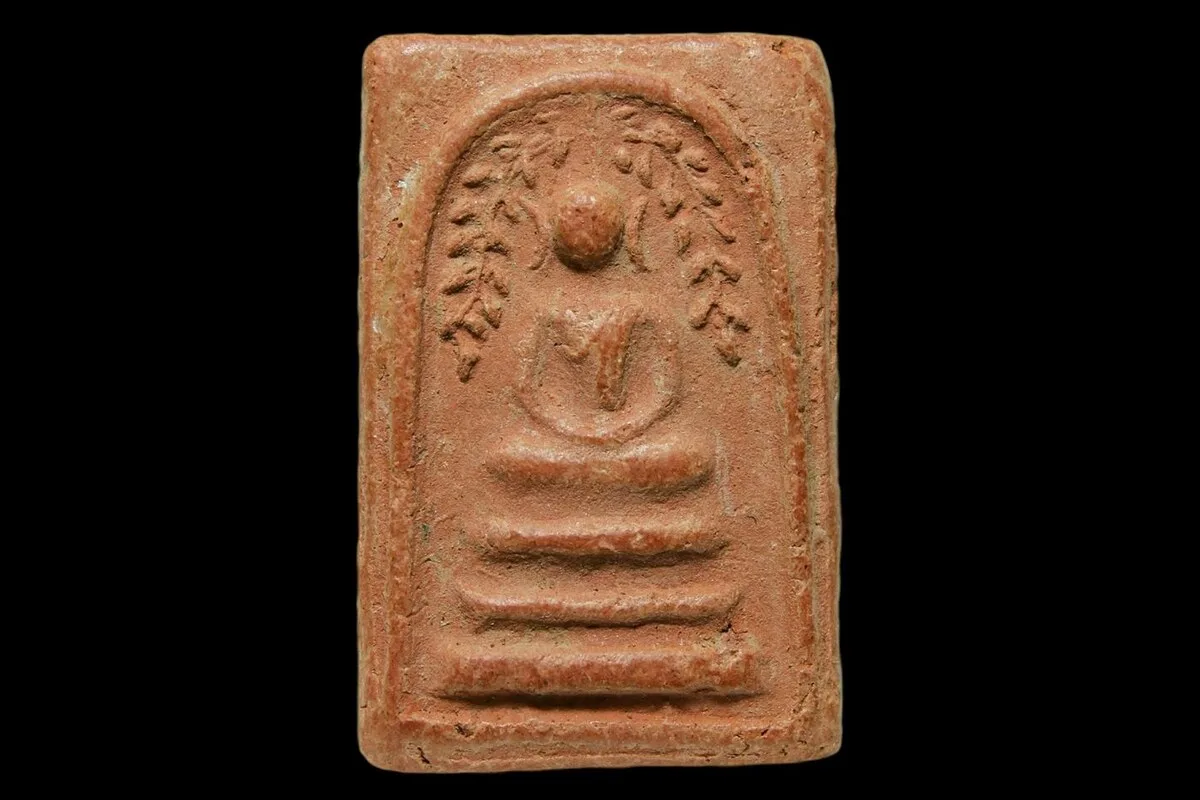
You often hear “this Somdej is the large mould” or “that one is the stupa mould”. The “mould” here (พิมพ์, Phim in Thai) is the mould used to press the amulet. From the same temple and the same materials, different moulds give a different Buddha figure, throne and arched niche. The first thing collectors do with a Somdej is identify the mould. This piece starts from the most famous Somdej, those of Wat Rakhang, and explains what marks each of the five standard moulds.
Where the five standard moulds come from
Collectors recognise five standard moulds for the Somdej made by Somdej Toh of Wat Rakhang: the large mould, the stupa mould, the lotus-bud topknot mould, the Than Saem (ฐานแซม) mould and the bodhi-leaf mould. Thairath’s Somdej column cites the veteran expert Triyampawai’s view that these five moulds were carved by royal craftsmen drawing on ancient Buddha art of Sukhothai, Chiang Saen and U Thong, which is why they are finer than folk moulds.
Phra Somdej in our shop
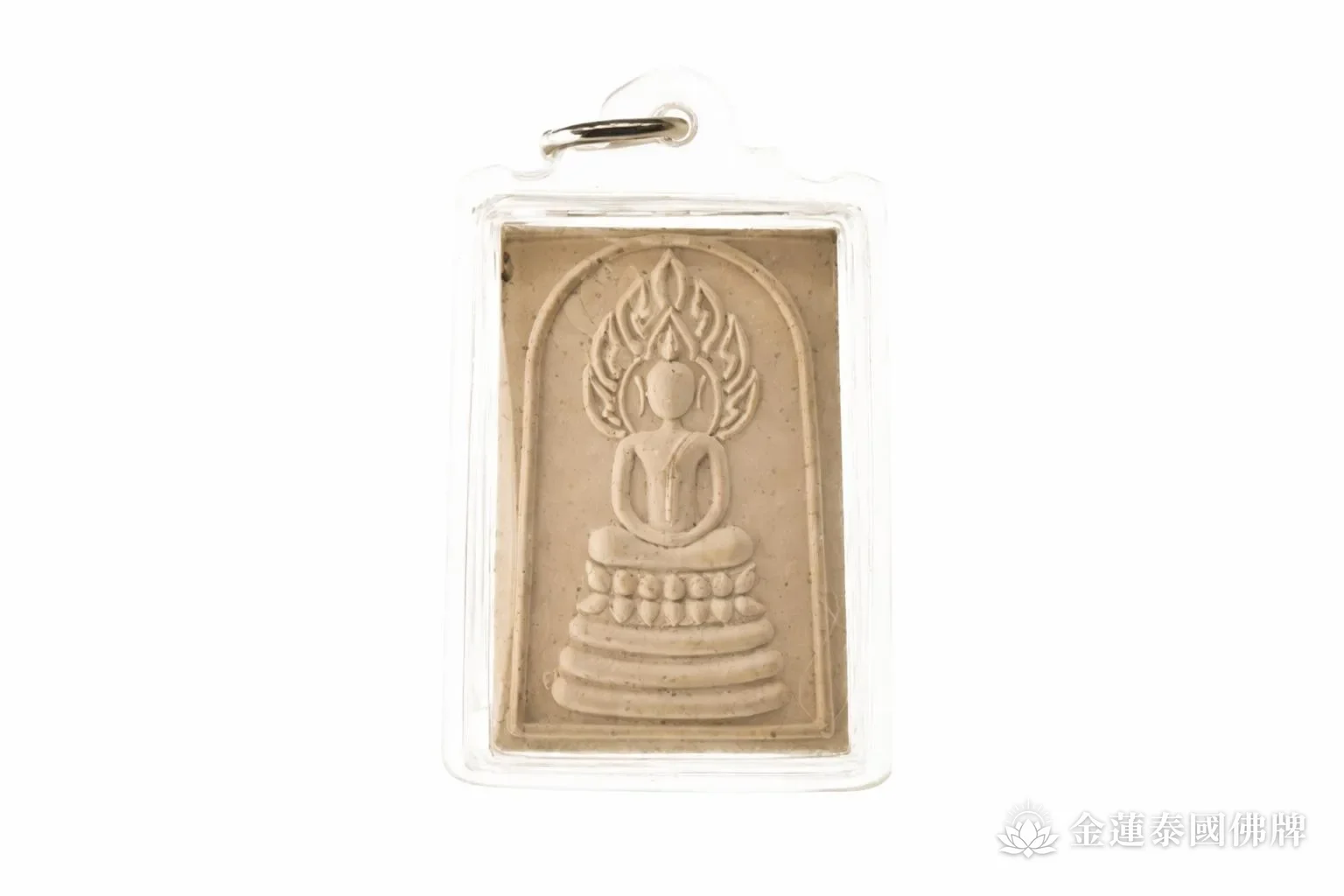 LP Hong BE 2537 First Official Somdej "Phrommakun", Seven-naga Image (Temple Clay, Waterproof Case)US$75
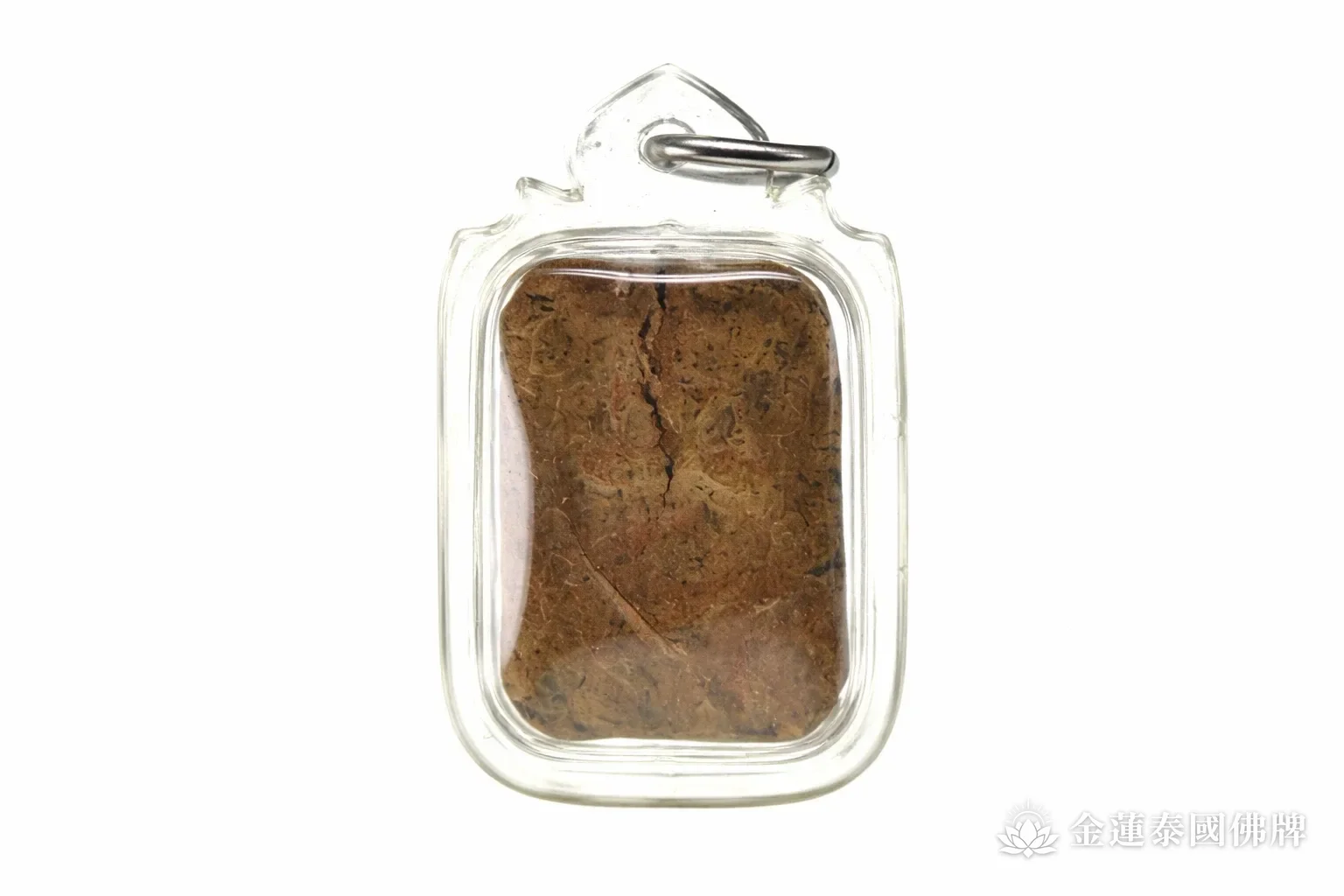 Ruesi Lingdam BE 2496–2527 Sacred Animal Somdej (Sacred Powder, Waterproof Case, With Authentication Card)US$268
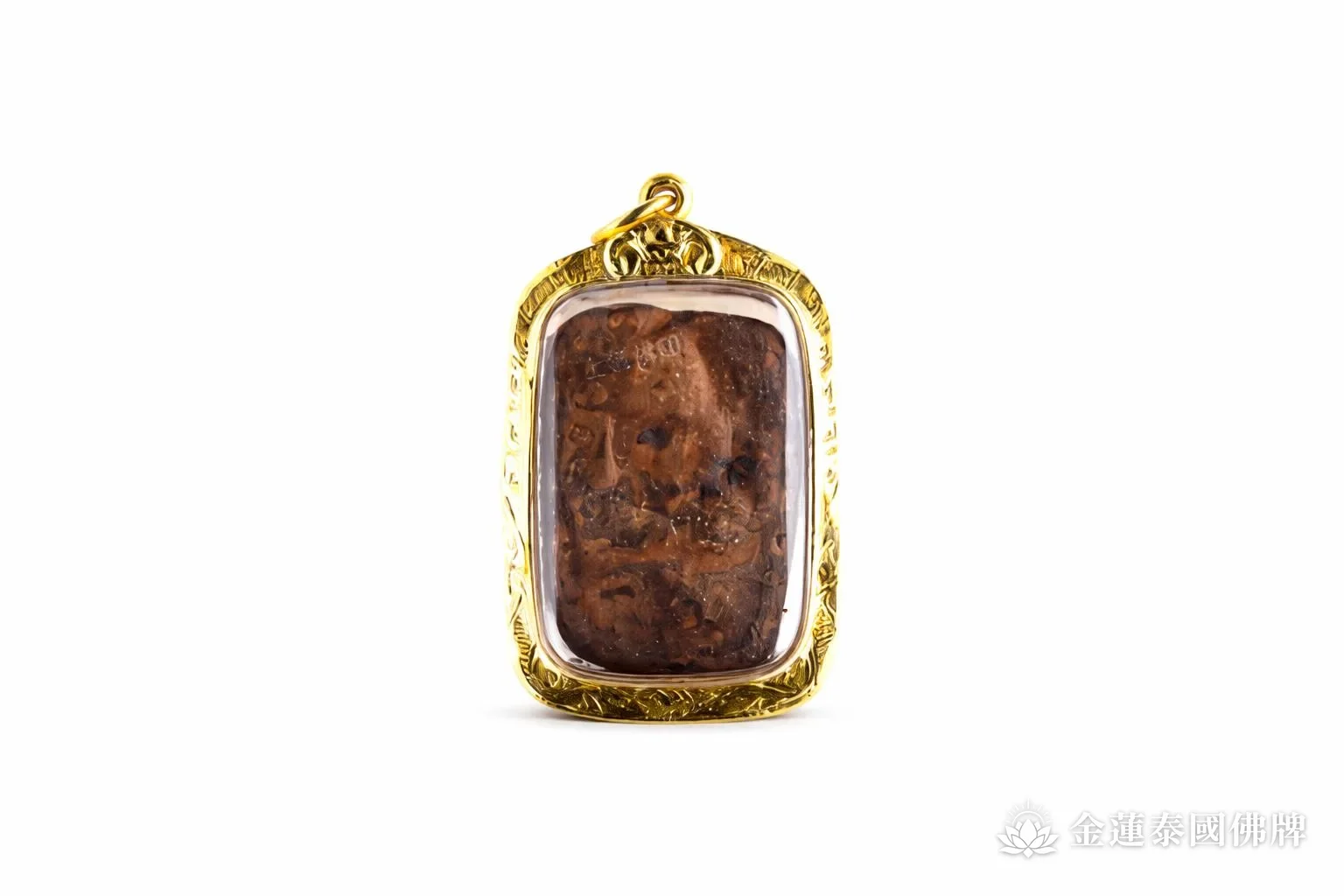 LP Parn BE 2460–2475 Sacred Animal Somdej "Fish Image" (Sacred Powder and Temple Clay, 80% Gold Case, With Authentication Card)US$1,135
The large mould (พิมพ์ใหญ่)
Also called the “principal Buddha mould”, it is the most sought after and most expensive of the five: a Buddha seated within an arched niche on a tiered throne. The number surviving is roughly similar to the Than Saem mould.
The stupa mould (พิมพ์ทรงเจดีย์)
The stupa mould is as popular as the large mould but rarer, probably because fewer were pressed. Its name comes from a neat observation: draw two lines from the tip of the Buddha’s topknot to the two corners of the bottom tier of the throne, and the body and throne fall almost entirely within the triangle, the outline as a whole like a stupa. The body is fuller than in the large mould, with a round face and broad chest, showing the influence of Chiang Saen Buddha images.
Some experts suggest Somdej Toh modelled this mould on the Emerald Buddha at the Temple of the Emerald Buddha; others think the craftsmen modelled it on the Emerald Buddha in its rainy-season attire, which is why the stupa mould’s head looks especially large. These are conjectures, with no settled answer.
The lotus-bud topknot mould (พิมพ์เกศบัวตูม)
You know it at a glance from the top of the head: the topknot is round like a lotus in bud. This mould is cut deepest, more than half the Buddha’s body rising above the face of the amulet, with thick lines and a particularly solemn look. It comes in narrow-lion-throne and wide-lion-throne versions, the wide version only recognised as standard by collectors about twenty years ago.
The Than Saem mould
This is the most common of the five standard moulds. It is cut fairly shallow, the Buddha’s body slimmest, the whole more delicate.
The bodhi-leaf mould (พิมพ์ปรกโพธิ์)
A ring of bodhi branches, about twenty, is carved over the arched niche, standing for the Buddha’s enlightenment under the bodhi tree. The picture above shows this style. It is the rarest of the five, and in early years most collectors didn’t even accept that Somdej Toh made it.
The turning point came in 1957: when the great stupa of Wat Mai Amataros in Bangkok was opened, bodhi-leaf mould Bang Khun Phrom Somdej were found, only 17 of them according to the records. After that, collectors came to believe Wat Rakhang had used this mould too, and today it is a very high-priced collector’s piece.
Why the “standard moulds” change
As the wide-throne lotus-bud and the bodhi-leaf moulds show, which moulds count as genuine is a consensus collectors have built up over decades, not something fixed from the start. Nor has anyone ever been able to say how many Wat Rakhang Somdej were made; on this, see what batches, numbers and limited runs mean on an amulet.
Modern Somdej are also classed by mould
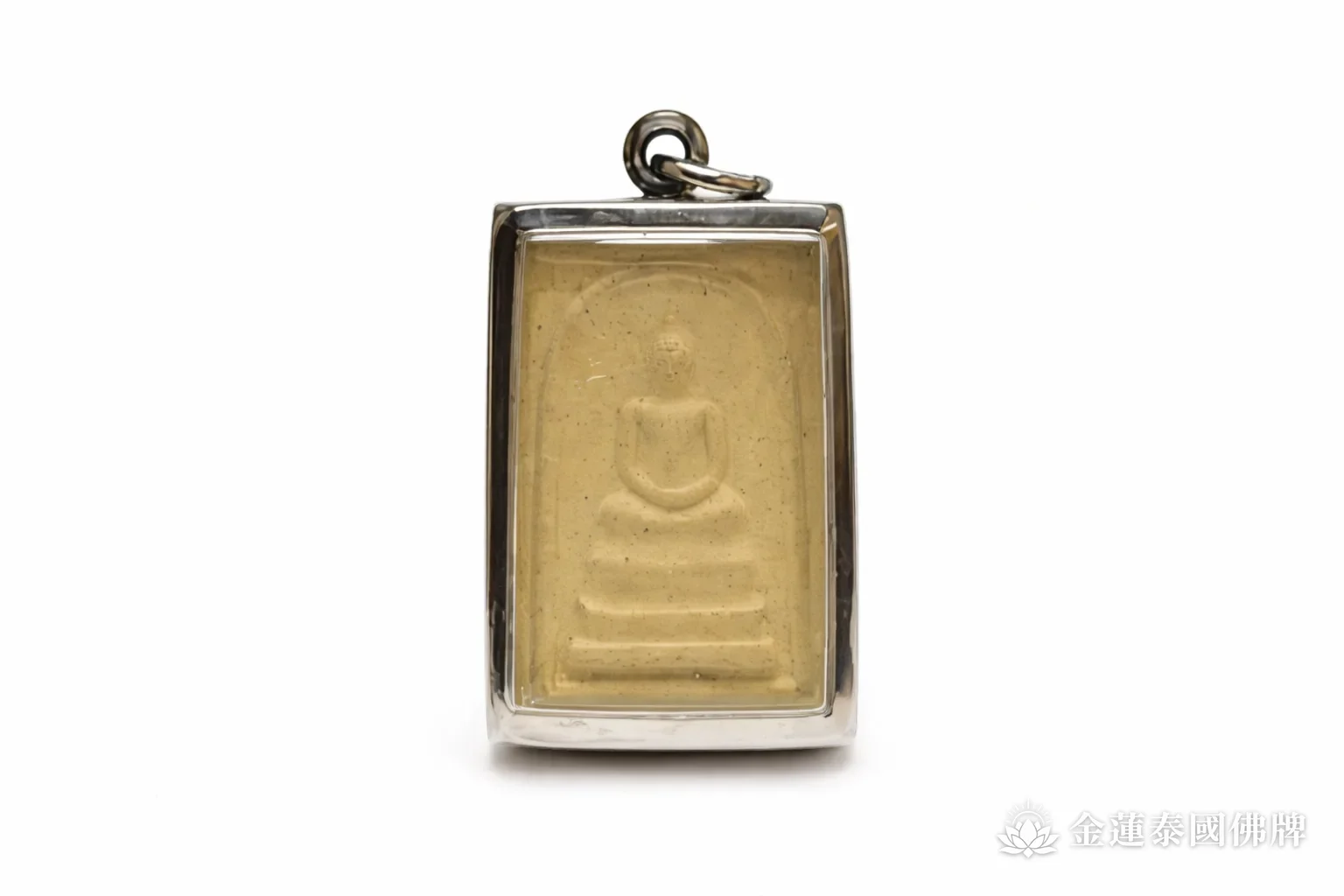
After Somdej Toh, many temples and monks made Somdej in this style, also divided by mould. Our LP Tim Wat Kut Ngong mini Somdej is a small mould called “Phim Khanaen”, only 2.8 cm. LP Tae’s BE 2523 Somdej and LP Phae’s BE 2534 Somdej “แพ ๕ พัน” show the common form of a Buddha in an arched niche on a tiered throne. More designs are in the Somdej section.
FAQ
Do different moulds differ in merit?
No. A mould changes only the look, which affects collector value. The safety and smooth fortune you wear a Somdej for have nothing to do with which mould it is.
How can I tell which mould my Somdej is?
For modern Somdej, the temple or seller usually states the mould name. For old Somdej you need to look at the topknot, throne, arched niche and thickness, together with the material; it is best to ask someone experienced.
Which of the five moulds is best?
The large mould has the highest collector value, while the stupa and bodhi-leaf moulds are prized for their rarity. For everyday wear, simply choose the one you like the look of.