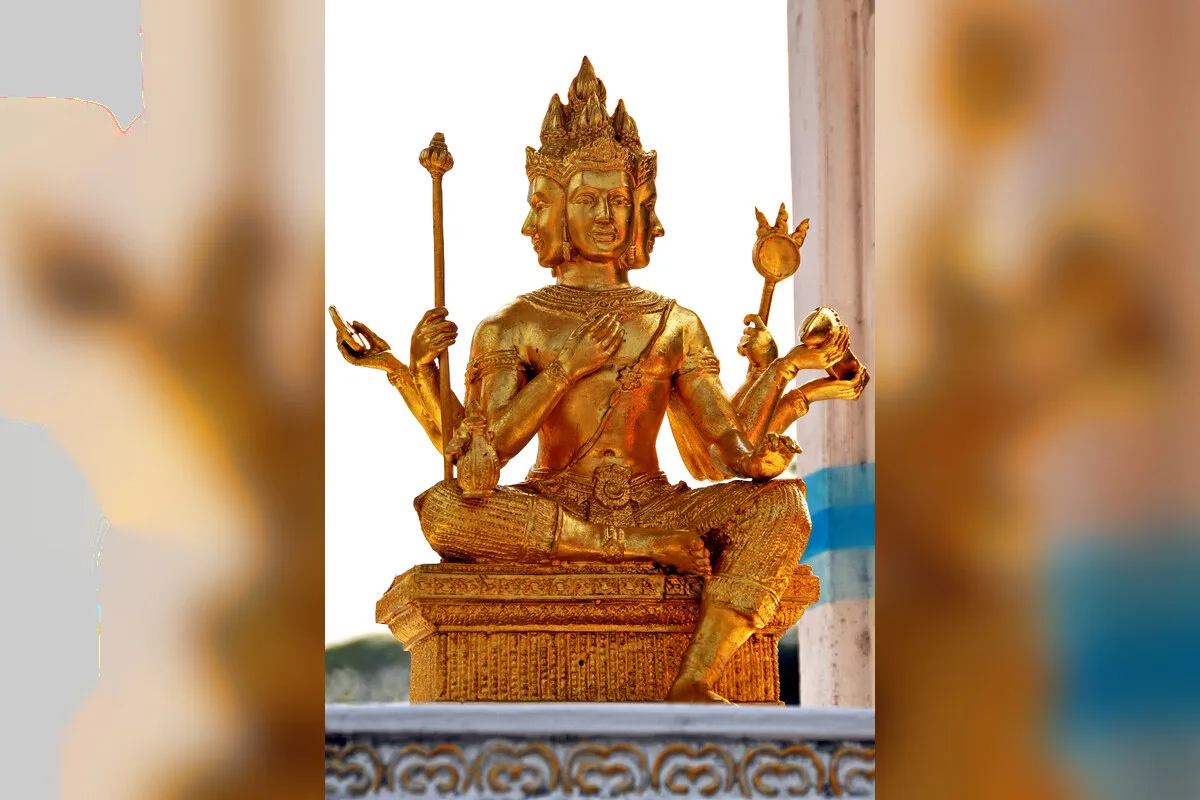
Many Thai Buddhists pray to Phra Phrom, and the one at Bangkok’s Erawan Shrine has incense burning from morning to night. But Phra Phrom wasn’t originally a Buddhist deity; he is the Hindu god Brahma. How did the creator god of India become the Phra Phrom Thais turn to whenever they need something? This piece goes back to the start.
In India: the creator, one of the three great gods
Phra Phrom is Brahma, one of the three great Hindu gods, responsible for creating the world; the other two are Vishnu, who preserves it, and Shiva, who destroys it. His four heads face north, south, east and west. The Indian Puranas tell several versions, a common one saying he originally had five heads, one of which was later destroyed by Shiva, leaving four.
Interestingly, for all Brahma’s high standing in India, temples dedicated to him are very few, the best known being the Brahma temple at Pushkar in Rajasthan. In Thailand, by contrast, Phra Phrom draws great crowds of worshippers.
Phra Phrom in our shop
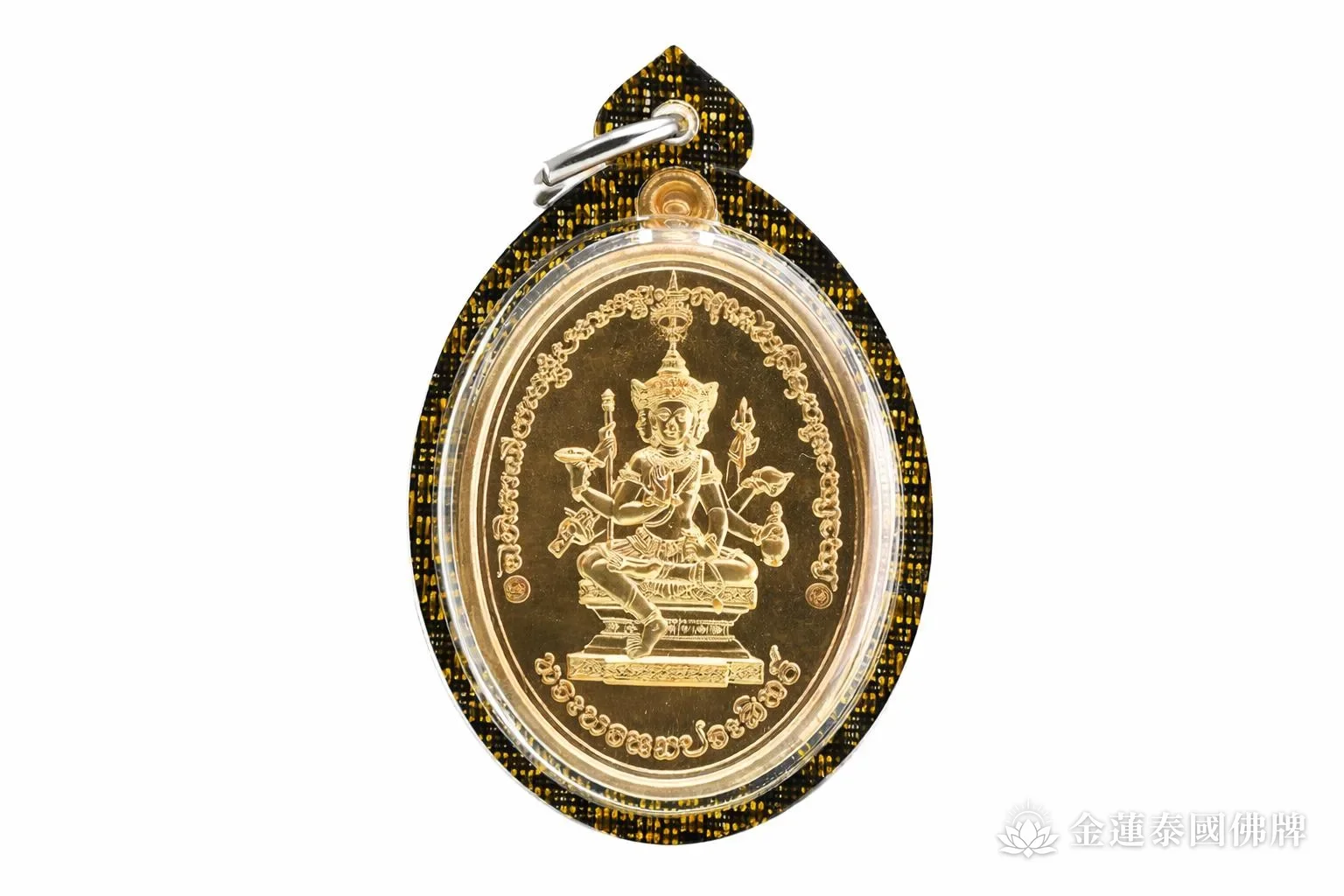 Phra Maha Surasak BE 2559–2560 First-batch Four-Faced Brahma Phra Phrom Prasit (Three-metal Bronze, Waterproof Case / Red Copper, Sterling Silver Case, Copper With Authentication Card)US$88
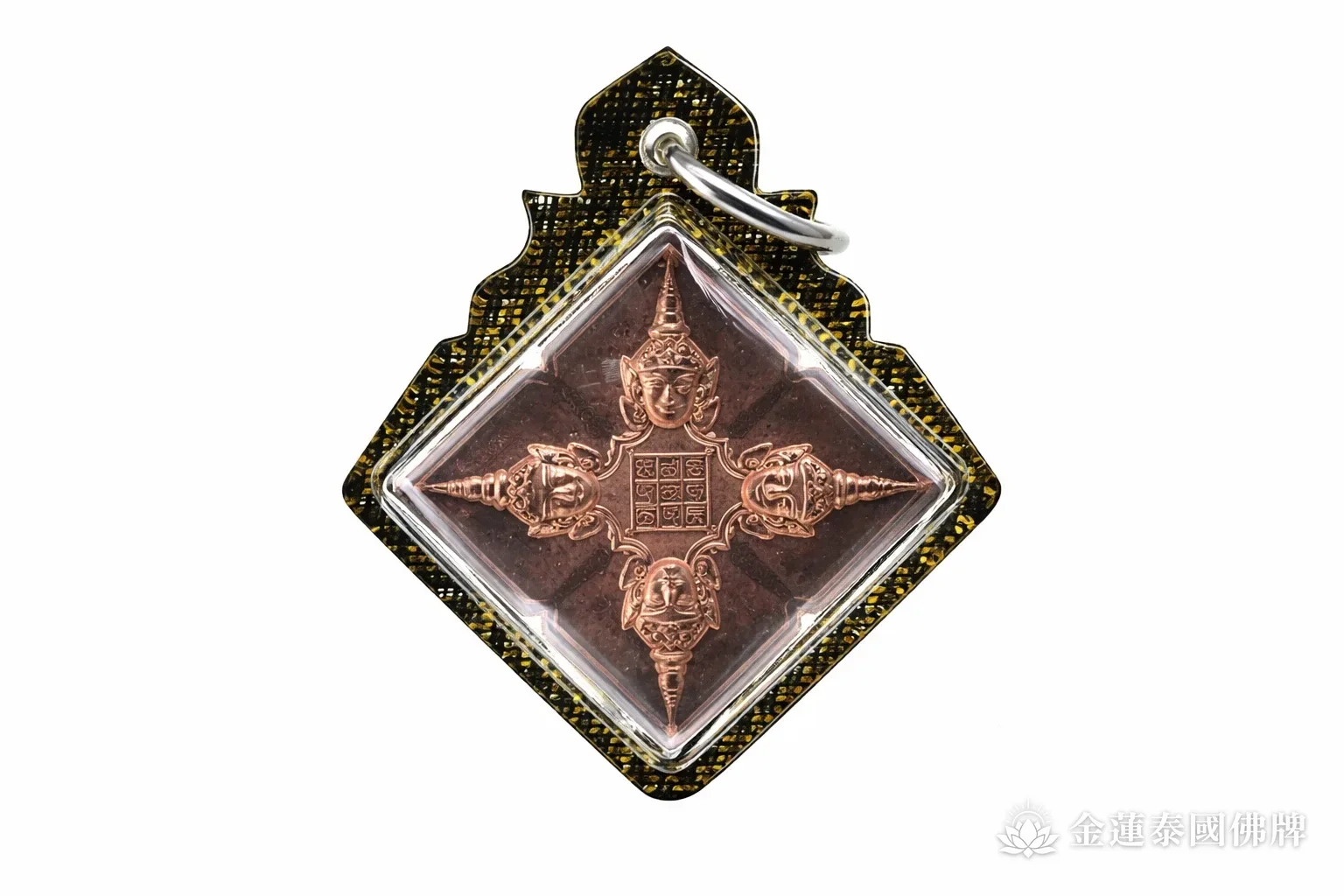 Ajarn Tiew BE 2556 TOT Royal Merit Four-Faced Brahma "Jaturaphak Maha Phrom" (Red Copper / Nine-metal / Sterling Silver / Pure Gold Committee / Sterling Silver, With Authentication Card)US$88
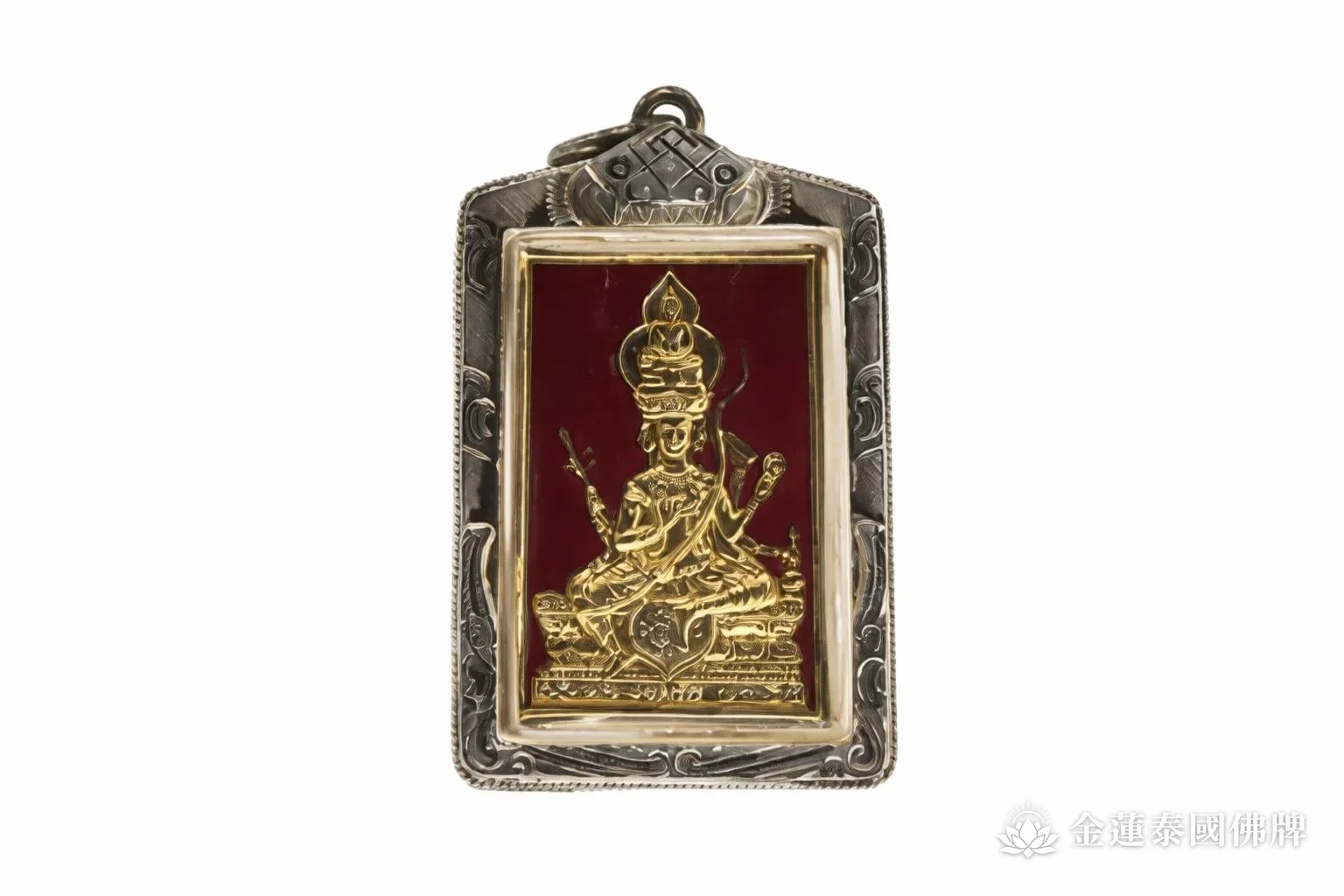 LP Kasem BE 2536 First-batch Four-Faced Brahma (Alpaca with Red Enamel, Sterling Silver Case)US$126
In the Buddhist scriptures: the Brahma who asked the Buddha to teach
Buddhism has Brahma too, but doesn’t regard him as the creator of the world. In the Buddhist view, Brahma is a deity of the Brahma realm, high in status but still within the cycle of rebirth.
The most famous passage in the scriptures is the Ayacana Sutta of the Samyutta Nikaya. After his enlightenment under a banyan tree by the Neranjara River at Uruvela, the Buddha felt that what he had realised was too profound for people to understand, and inclined not to teach. Brahma Sahampati, knowing this, came down from the Brahma realm before the Buddha, robe over one shoulder, right knee on the ground and palms together, and asked him to teach, saying there were still people in the world “with little dust in their eyes” who would understand if they heard.
So the Buddha looked over the world with his Buddha-eye and saw beings like lotuses in a pond: some still beneath the water, some just at the surface, some risen above it untouched by the mud. The Buddha agreed, saying “the doors to the deathless are open”.
On our BE 2516 “Maha Chakra Phet” Phra Phrom coin, the Thai title engraved at the bottom of the front, “องค์โลกาธิบดีสหัมบดีพรหม”, is this same Brahma Sahampati.
The four faces and the four sublime states
Buddhism has four ways of training the mind: loving-kindness (wishing others happiness), compassion (being unable to bear others’ suffering), sympathetic joy (rejoicing in others’ good) and equanimity (treating everyone equally), together called the “four immeasurables”. These are also called the “brahma-viharas”, the abodes of Brahma, so they are closely tied to Brahma.
Many people say Phra Phrom’s four faces stand for loving-kindness, compassion, sympathetic joy and equanimity. This is a popular explanation; we have checked the sources we have and found nothing saying which face matches which state. What is certain is that the four immeasurables are named after Brahma.
Why Thais pray to Phra Phrom for wishes
Part of Thai belief comes from Brahmanism. According to Thai Wikipedia, Thais believe Brahma has written each person’s fate, called “พรหมลิขิต” (written by Brahma), and those who pray to him sincerely and often receive his blessing, called “พรหมพร”. So when Thais have a wish, they naturally go to pray to Phra Phrom.
Most Phra Phrom images in Thailand today are modelled on the one at the Erawan Shrine. The Erawan Shrine was installed on 9 November 1956 (BE 2499), and Thais believe wishes made with dancing come true, so every day beside the shrine people hire dancers to give thanks. The shrine’s own story is in the story of Bangkok’s Erawan Shrine.
What Phra Phrom holds
Thai Wikipedia describes Brahma with four faces and prayer beads at his neck, holding a lotus, a scripture and a water pot, his mount a swan (หงส์). Phra Phrom on Thai amulets mostly has eight hands, and what they hold varies by monk and year; on our BE 2516 coin, for example, you can see a staff, a conch, prayer beads and a scripture.
Phra Phrom in our shop
We currently have several Phra Phrom by different monks from different years:
- Wat Don’s BE 2513 ceremony “Chakra Phet”, with authentication card
- The BE 2516 “Maha Chakra Phet” coin, gold-plated and silver-plated versions
- Ajarn Tiew’s BE 2561 “Udom Phokasap”, cast in nine-metal bronze
- LP Ruay’s BE 2556 first-batch “Ruay Som Prathana”, with competition certificate
- Luang Pu Nu In’s BE 2559 “Metta Barami” small figure, Metta in the batch name meaning loving-kindness
- LP Na’s BE 2561 first-batch “Phlik Chata”, a flower-powder amulet
- LP Hong’s BE 2547 Phra Phrom and Ganesha double-sided amulet
All are in the Phra Phrom section. Also from India is Ganesha.
FAQ
Is Phra Phrom Buddhist or Hindu?
His original form is the Hindu Brahma. The Buddhist scriptures have Brahma too, but don’t regard him as the creator. In Thailand the two traditions have merged, and many Buddhists also pray to Phra Phrom.
Is it all right for Buddhists to pray to Phra Phrom?
It is very common in Thailand. The deity who asked the Buddha to teach in the scriptures is Brahma himself, and Buddhism also regards Maha Brahma as a protecting deity. For what to watch out for when keeping one at home, see the altar and worship guide.
If I make a wish, must I give thanks?
Thais take this very seriously; a promise made is best kept. Give thanks according to your means; you don’t have to hire dancers.