
People seeing a luk om for the first time mostly take it for an ordinary bead: round, grey or brown, in a gold or waterproof case, with no Buddha and no monk’s likeness. In fact the luk om (ลูกอม, Look Om in Thai) is a very traditional protective item in Thailand, and some old masters’ luk om cost no less than amulets.
What a luk om is
Thai Wikipedia says “เครื่องราง” (protective charms) means things people believe ward off misfortune and protect them, such as takrut, yantra cloths and Lek Lai. The luk om is one of these: a monk rolls scripture powder, temple clay, herbs or other sacred materials into a round bead, chants over it, and gives it to devotees. The Thai ลูกอม literally means “a bead held in the mouth”, and in everyday Thai it also means a sweet, so some people call it a “sweet charm”.
Luk om have no fixed size, from under 1 cm to nearly 3 cm. The colour depends on the ingredients: scripture powder is mostly grey-white or beige, herbs make it browner, and it darkens with age.
Takrut & Look Om in our shop
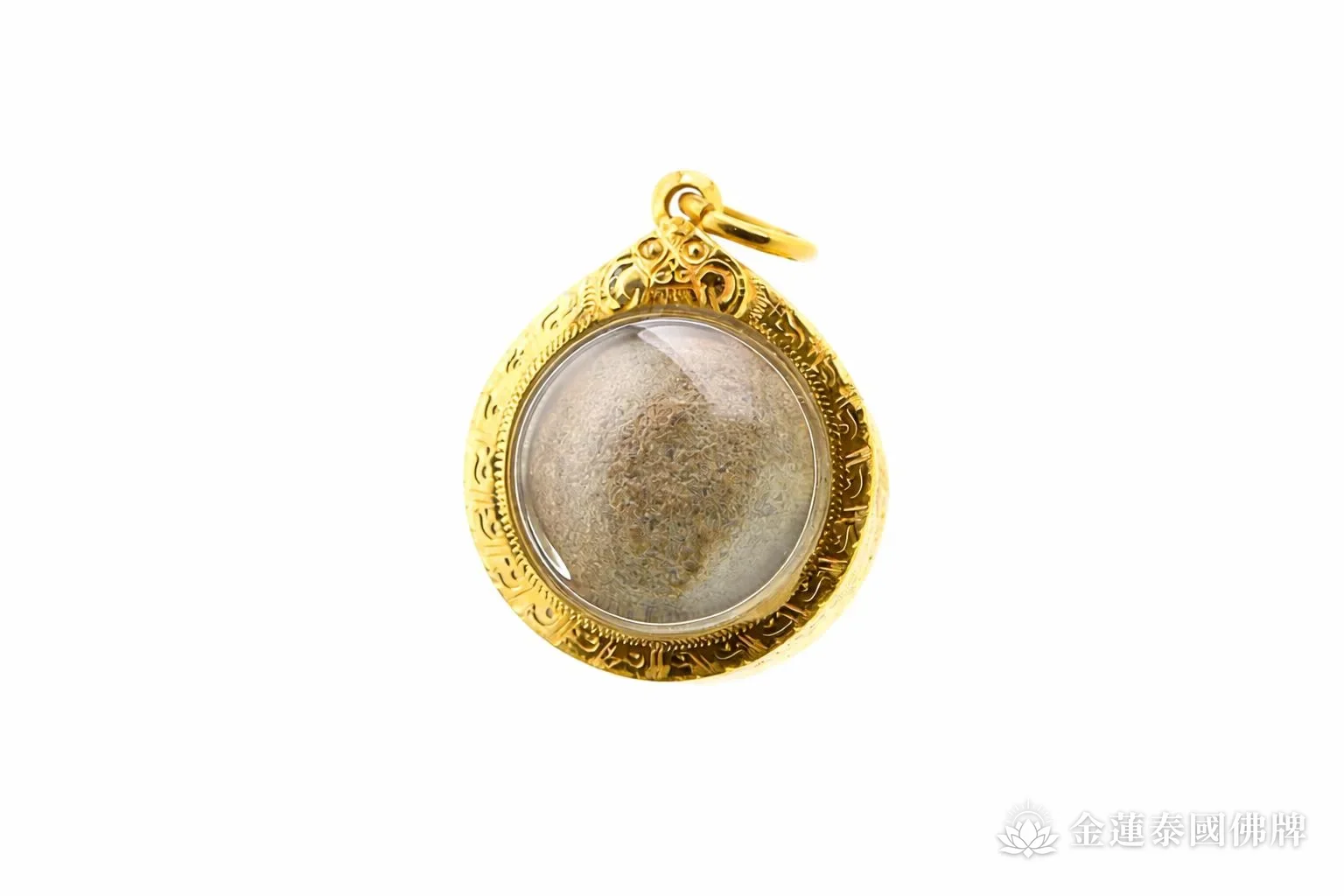 LP Parn Diamond Armour Luk Om "Sacred Animal Luk Om" Luk Om Yant Krop Phet (About BE 2460–2480, 80% Gold Case, with Authentication Card)US$888
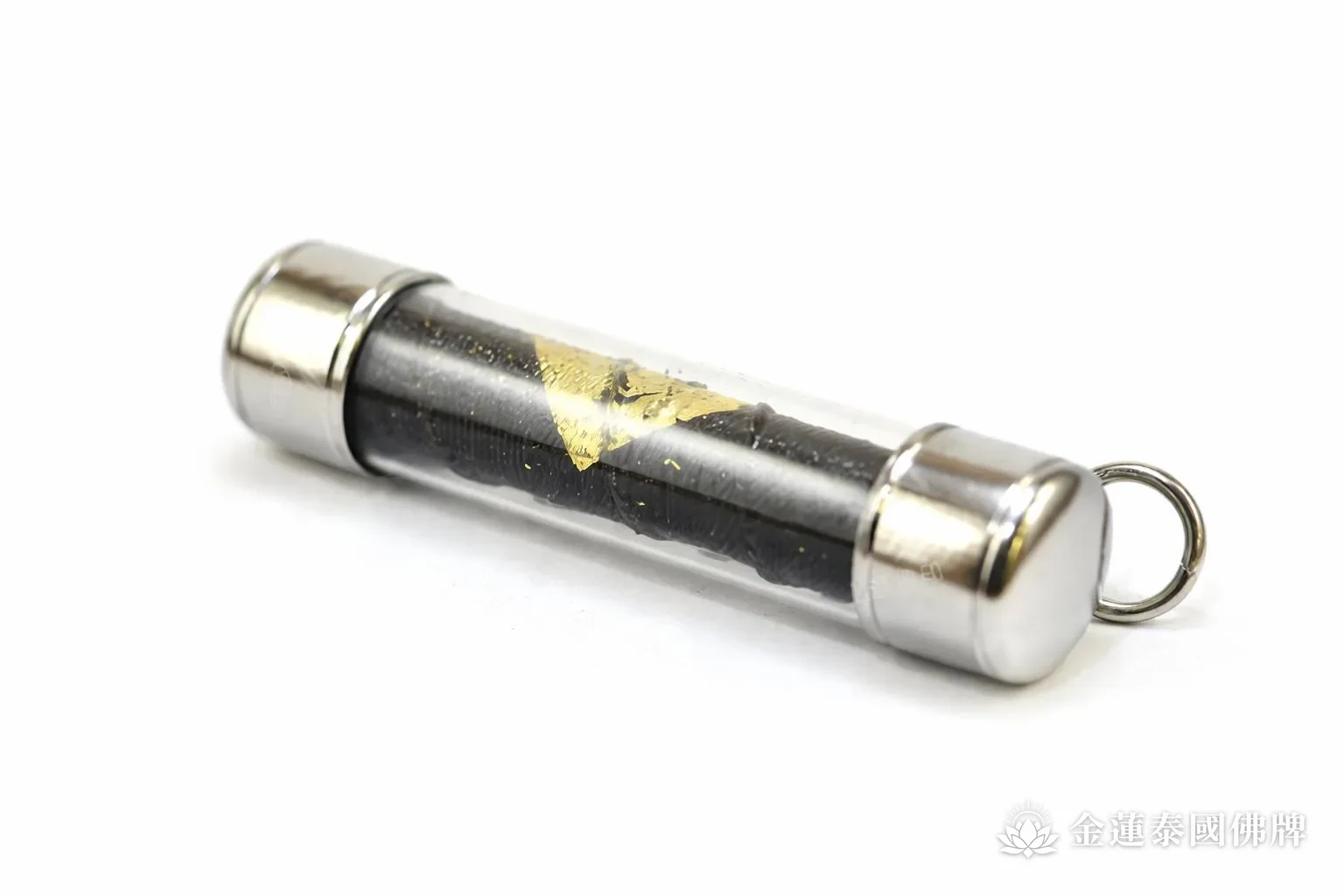 Luang Pu Boon (Wat Thung Hiang) BE 2557 Cambodian Scripture Takrut (Scripture with Gold Leaf, About 6 cm, Steel Case)US$49
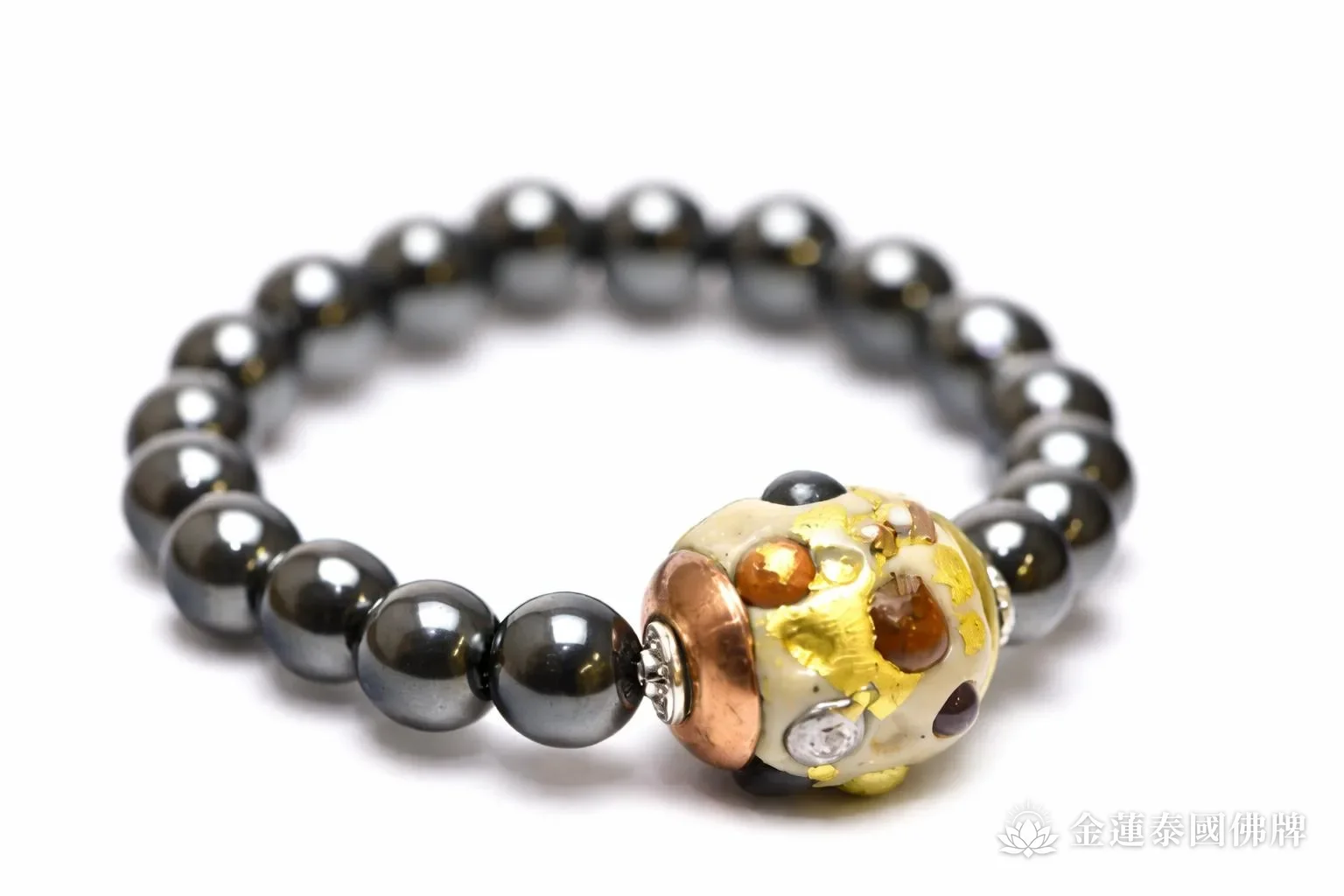 LP Somporn BE 2558 Lek Lai Luk Om (Lek Lai, Stone Inlay with Gold Leaf, About 3 cm, With Bracelet)US$45
Where scripture powder comes from
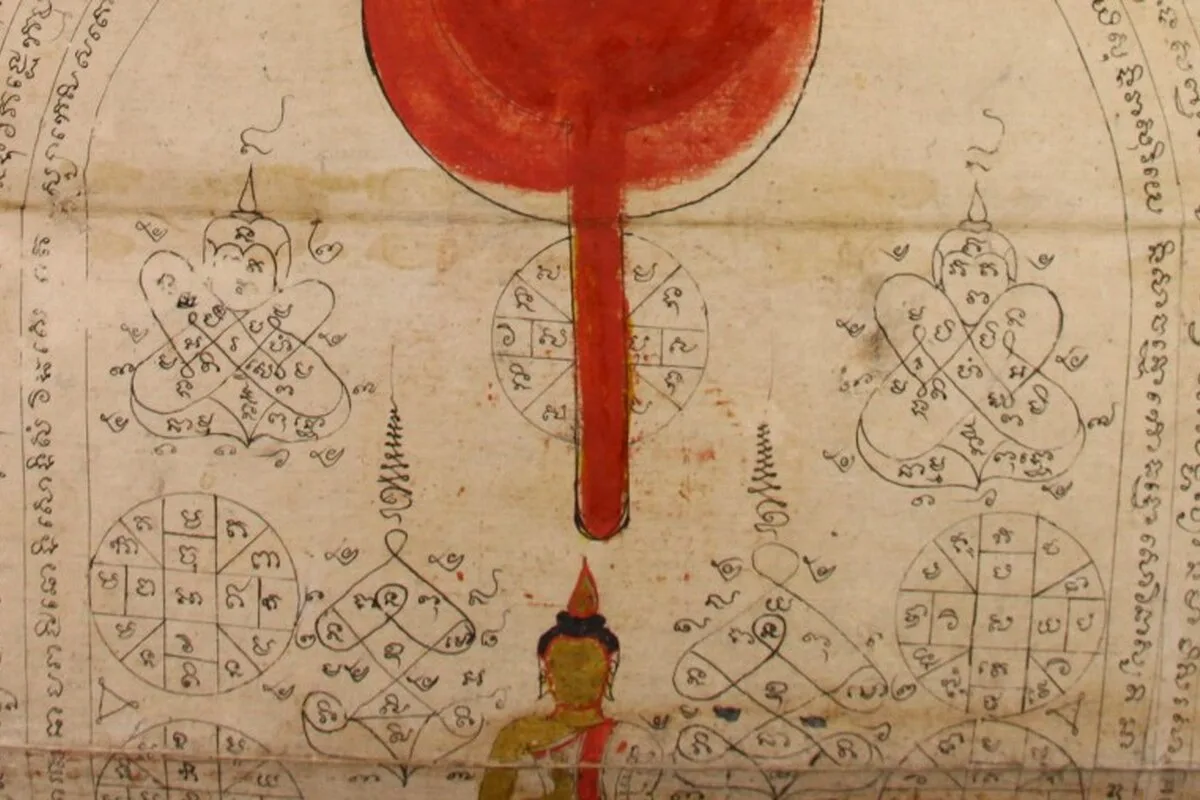
Many old masters’ luk om use “rubbed powder”: scripture and yantra are written one by one on a board while chanting, then rubbed off, and the powder collected is scripture powder. The nineteenth-century folding book above shows this kind of yantra; Thai monks write yantra and make takrut following drawings like these.
LP Sanguan of Wat Phai Phan Mue in Suphan Buri was a monk famous for his luk om. Thailand’s Ministry of Culture local culture database records that he learned yantra writing and powder rubbing from his teacher and began rolling scripture powder into luk om for villagers around BE 2510; at first people joked they looked like slingshot pellets, until word spread that a child wearing one had been bitten by a dog without the teeth going in, and people began coming to ask for them. We have his BE 2512–2536 goodwill luk om.
How luk om, takrut and amulets differ
An amulet has an image, a Buddha or monk you can recognise at a glance; a takrut is a metal sheet inscribed with yantra and rolled into a tube; a luk om is a round bead whose power lies in the sacred materials inside it. All three are blessed by monks; they differ in form. For a detailed comparison of takrut and amulets, see takrut versus amulets.
Thais generally feel luk om are mostly for goodwill and protection and takrut mostly for guarding against danger and warding off evil, but this is no hard rule; in the end it depends on the monk’s intention for that batch.
How to wear one
Most luk om today come in waterproof or gold cases and hang at the neck like amulets. The case has one or more loops: with one loop it hangs straight; some cases have loops on both sides so they can hang sideways in the middle of a necklace. Worn with amulets, the Buddha goes in the middle and luk om and takrut at the sides; see how many amulets to wear at once.
If uncased, a scripture-powder bead dislikes water and knocks, so it is best carried in a small box rather than loose in a trouser pocket.
What to look at when choosing
A luk om has no image, so it is hard to tell genuine from fake by looks alone, and two things matter even more than with amulets: first the provenance, which monk, which temple, roughly what year; second whether it has a card from a Thai certifying body. Old masters’ luk om are much copied, so one with a card gives more peace of mind; see what an amulet certificate card is.
Our luk om and takrut are all in the takrut and luk om section, for example Luang Pu Nam’s BE 2550 sacred powder luk om, Ajarn Nong’s Narai Plaeng Rup takrut and LP Kalong’s sterling silver exorcism and anti-black-magic takrut.
FAQ
Can a luk om be held in the mouth?
We don’t recommend it. Most luk om today are cased; just hang one at the neck or carry it with you.
Has a luk om gone bad if it darkens?
No. Scripture powder and herbs naturally darken over time, and experienced collectors actually like this old colour.
How many luk om can one person wear?
There is no limit, but too many on a necklace gets heavy; one or two with a main amulet is usually enough.